US export and trade compliance policy (Connecticut): Free template
Got contracts to review? While you're here for policies, let Cobrief make contract review effortless—start your free review now.
Customize this template for free
US export and trade compliance policy (Connecticut)
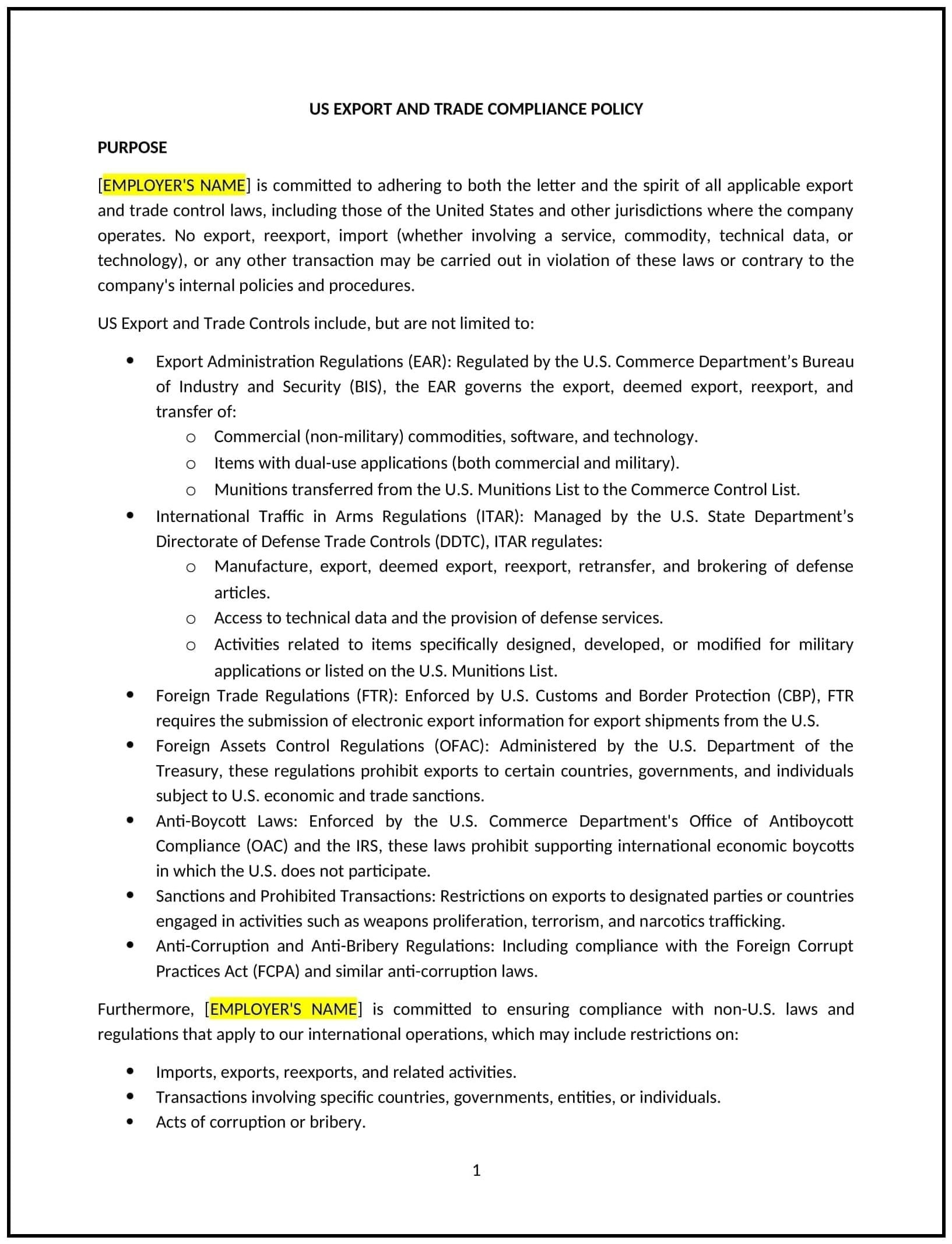
A US export and trade compliance policy helps Connecticut businesses ensure they are adhering to the rules and regulations governing the export of goods, services, and technology, including compliance with U.S. federal laws and international trade sanctions. This policy outlines the company’s approach to exporting products and services, managing trade restrictions, and ensuring that all transactions comply with U.S. export control laws, such as the Export Administration Regulations (EAR) and International Traffic in Arms Regulations (ITAR).
By implementing this policy, businesses can avoid legal penalties, mitigate risks associated with international trade, and maintain ethical business practices while expanding into global markets.
How to use this US export and trade compliance policy (Connecticut)
- Define export control laws: Clarify the relevant U.S. laws and regulations that govern the export of goods and services, such as the EAR, ITAR, and the Office of Foreign Assets Control (OFAC) sanctions regulations.
- Identify controlled items and services: Specify which products, services, technologies, or software are subject to export controls, and outline the process for determining whether an item requires an export license.
- Implement screening procedures: Establish a procedure for screening customers, vendors, and transactions against U.S. government watch lists (e.g., the Specially Designated Nationals list) to ensure compliance with sanctions and prevent transactions with prohibited entities or individuals.
- Require export licenses when necessary: Define when an export license is required and explain how employees should apply for and obtain the appropriate licenses from the U.S. government.
- Maintain records and documentation: Set requirements for recordkeeping and document retention related to export transactions, including export licenses, shipping records, and customer correspondence, to ensure the company can demonstrate compliance during audits.
- Train employees: Provide regular training on export control laws, sanctions regulations, and the company’s internal compliance procedures to ensure all employees involved in exports are knowledgeable and able to spot potential compliance issues.
- Monitor compliance: Implement a system for monitoring export activities and reviewing transactions for compliance, and designate an employee or department responsible for managing and overseeing compliance efforts.
- Address violations and corrective actions: Define the process for handling violations of the export compliance policy, including internal reporting, investigation, and corrective actions, as well as the potential consequences for non-compliance.
Benefits of using this US export and trade compliance policy (Connecticut)
This policy offers several benefits for Connecticut businesses:
- Reduces legal risks: By complying with U.S. export control laws and trade sanctions, the company can minimize the risk of legal penalties, including fines or restrictions on future exports.
- Enhances global business opportunities: A well-structured export compliance policy enables the business to safely and effectively expand into international markets while ensuring adherence to regulations.
- Ensures ethical trade practices: The policy helps prevent illegal or unethical transactions, supporting the company’s reputation and commitment to responsible global business practices.
- Improves operational efficiency: Clear guidelines and procedures streamline the export process, making it easier for employees to understand compliance requirements and take appropriate actions.
- Protects the company’s reputation: By following trade compliance regulations, the company can avoid reputational damage associated with sanctions violations or illegal exports, ensuring the business is seen as trustworthy and responsible.
Tips for using this US export and trade compliance policy (Connecticut)
- Communicate the policy clearly: Ensure that all employees involved in export activities understand the company’s compliance requirements and their role in ensuring adherence to export control laws.
- Perform regular audits: Conduct regular audits of export transactions to ensure compliance with U.S. export control laws and trade sanctions.
- Stay updated on regulations: Monitor changes to U.S. export laws, international trade sanctions, and related regulations to ensure that the company’s policies and procedures remain current and compliant.
- Provide ongoing training: Offer regular compliance training to employees to keep them informed about changes in export control laws and the company’s procedures for handling exports.
- Designate a compliance officer: Appoint a dedicated export compliance officer or team to oversee and manage all aspects of export control and trade compliance within the business.