US export and trade compliance policy (Georgia): Free template
Got contracts to review? While you're here for policies, let Cobrief make contract review effortless—start your free review now.
Customize this template for free
US export and trade compliance policy (Georgia)
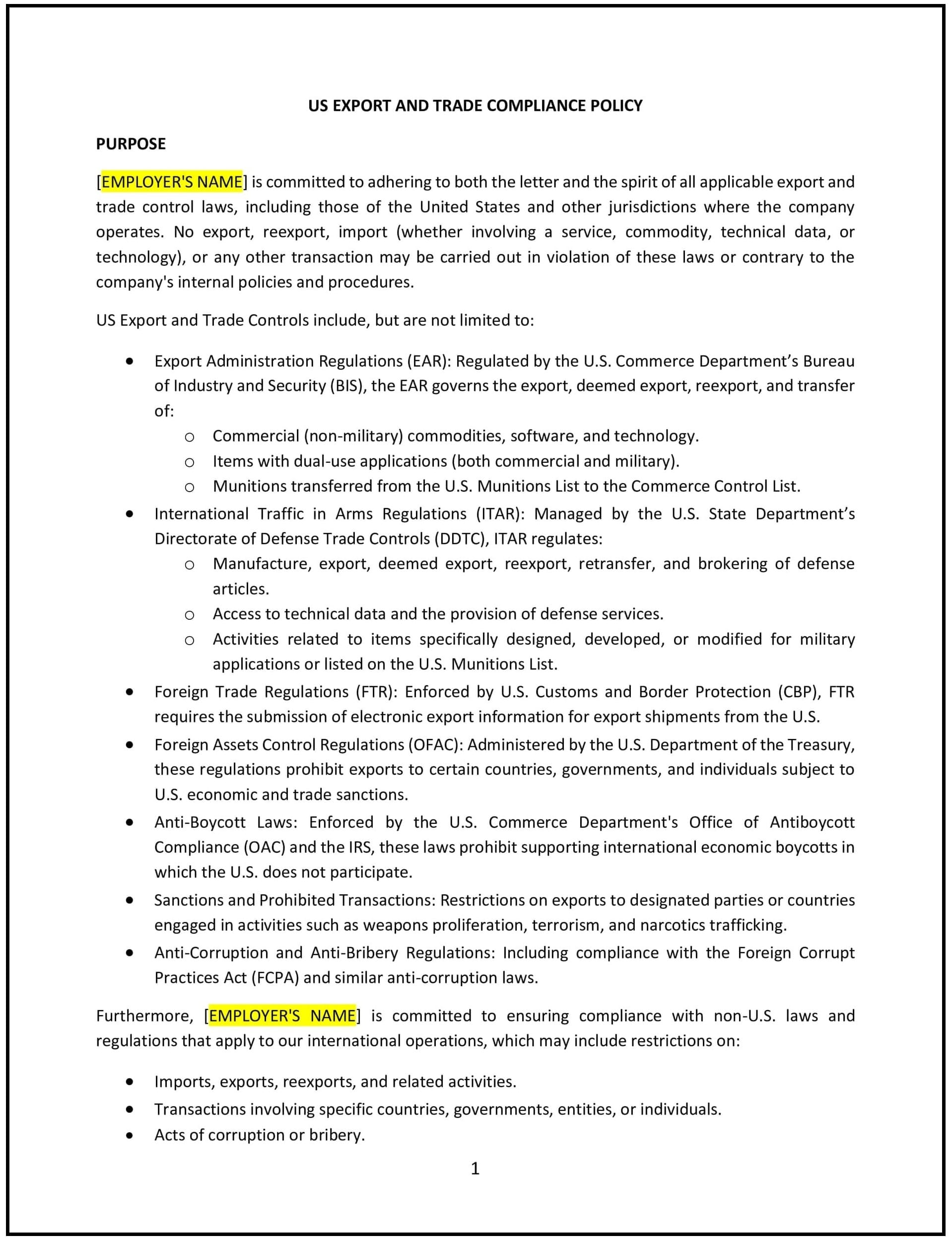
This US export and trade compliance policy is designed to help Georgia businesses manage export and trade activities in accordance with applicable laws and regulations. The policy outlines procedures for identifying export restrictions, screening transactions, and maintaining accurate records to support lawful trade operations.
By implementing this policy, businesses can mitigate risks, support ethical practices, and navigate the complexities of international trade effectively.
How to use this US export and trade compliance policy (Georgia)
- Identify regulated activities: Specify which export and trade activities are subject to oversight, such as shipping products, sharing technical data, or providing services internationally.
- Conduct due diligence: Require businesses to verify whether goods, technology, or services are restricted or require special licensing.
- Screen transactions: Implement procedures for screening customers, suppliers, and partners against restricted party lists.
- Maintain accurate documentation: Require employees to document trade activities, licenses, and communications for audit purposes.
- Provide training: Offer regular training to employees on trade compliance requirements and updates.
- Designate a compliance officer: Assign a responsible individual to oversee export and trade compliance efforts.
- Address violations: Specify procedures for investigating and addressing suspected or actual violations of trade laws.
- Review and update regularly: Periodically assess the policy to reflect changes in US and Georgia-specific trade regulations or business practices.
Benefits of using this US export and trade compliance policy (Georgia)
Implementing this policy provides several advantages for Georgia businesses:
- Reduces risks: Clear procedures help avoid penalties, fines, or reputational damage associated with non-compliance.
- Supports ethical practices: Promotes lawful and responsible trade operations.
- Enhances accountability: Designated oversight and documentation ensure traceability of trade activities.
- Builds credibility: Demonstrates a commitment to lawful trade practices, strengthening relationships with partners and customers.
- Reflects Georgia-specific practices: Tailoring the policy to local trade dynamics ensures relevance and practicality.
Tips for using this US export and trade compliance policy (Georgia)
- Communicate expectations: Share the policy with employees and partners involved in trade activities.
- Use technology: Leverage compliance software to streamline screening, licensing, and recordkeeping processes.
- Stay informed: Regularly monitor updates to US export control laws and adjust practices accordingly.
- Encourage reporting: Create a confidential channel for employees to report suspected trade compliance issues.
- Monitor effectiveness: Conduct periodic audits to ensure trade compliance efforts are effective and up-to-date.