US export and trade compliance policy (Iowa): Free template
Got contracts to review? While you're here for policies, let Cobrief make contract review effortless—start your free review now.
Customize this template for free
US export and trade compliance policy (Iowa)
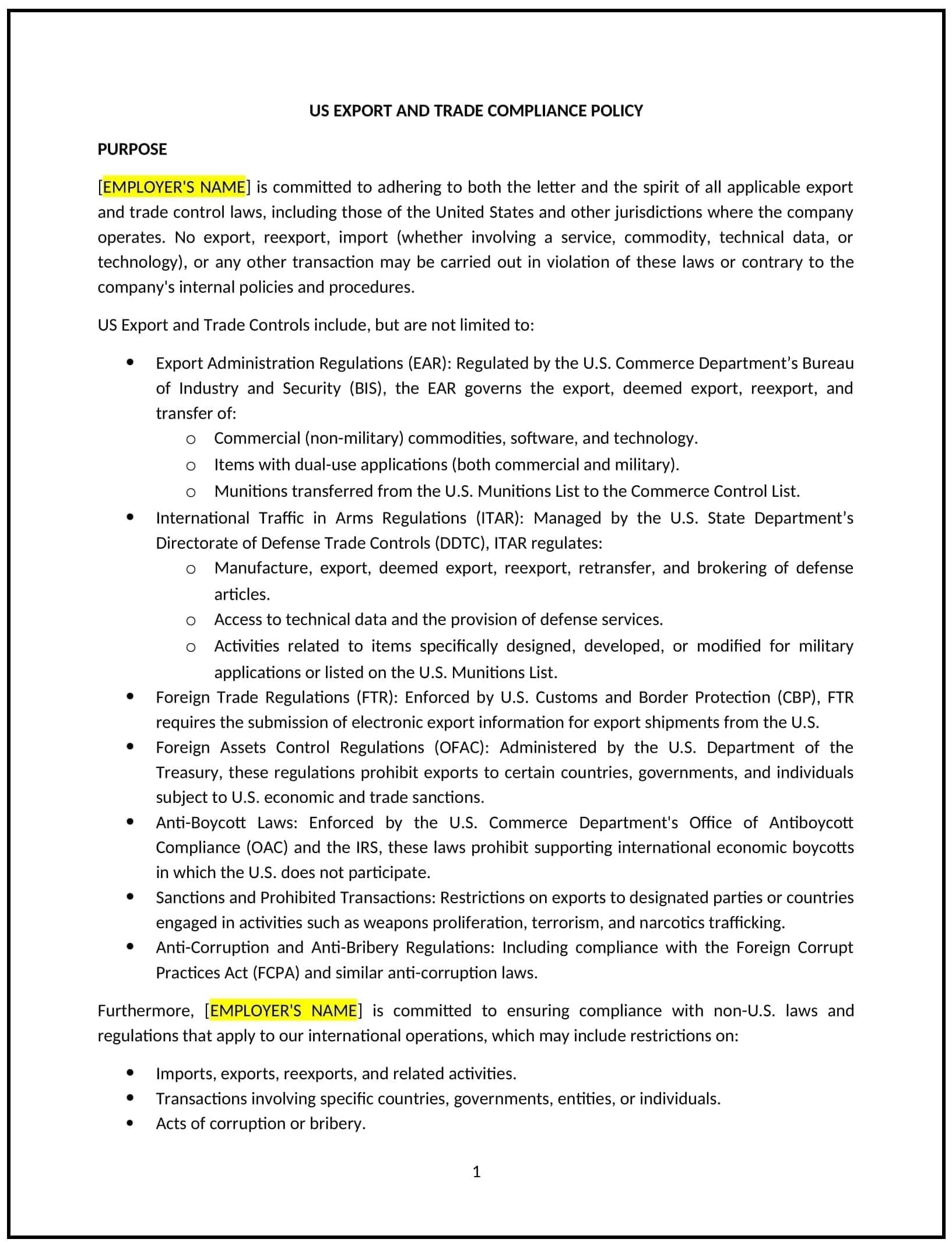
A US export and trade compliance policy helps Iowa businesses comply with federal laws and regulations governing the export of goods, services, and technology from the United States. This policy outlines the steps required to ensure that all export activities are aligned with the U.S. Export Administration Regulations (EAR), International Traffic in Arms Regulations (ITAR), and other relevant trade laws. The policy also addresses issues like restricted party screening, licensing requirements, and record-keeping practices.
By implementing this policy, businesses can minimize legal risks, prevent violations, and contribute to national security efforts.
How to use this US export and trade compliance policy (Iowa)
- Define export compliance requirements: Clearly specify which export regulations apply to your business, including the EAR, ITAR, and any other relevant laws for the export of goods, services, and technology.
- Implement screening procedures: Establish procedures for screening customers, vendors, and transactions against restricted parties lists, such as the U.S. Department of Commerce’s Denied Persons List and the U.S. Treasury’s Specially Designated Nationals (SDN) List.
- Outline licensing requirements: Specify the circumstances under which your business needs an export license, including the classification of goods and services, the end-user, and the destination country. Include procedures for obtaining and maintaining the necessary licenses.
- Address compliance training: Provide training for employees involved in export activities to ensure they understand the legal requirements, procedures for compliance, and the consequences of violations. Ensure employees are updated regularly on changes in export laws.
- Establish record-keeping practices: Set guidelines for maintaining export records, including documentation of transactions, licenses, and compliance activities, in accordance with U.S. government requirements.
- Define internal controls: Implement internal controls and audits to monitor compliance with the policy, identify potential violations, and address any issues before they lead to non-compliance.
- Review and update regularly: Periodically review and update the policy to ensure it reflects changes in export laws, regulations, or business operations.
Benefits of using this US export and trade compliance policy (Iowa)
This policy offers several key benefits for Iowa businesses:
- Reduces legal risk: By ensuring compliance with U.S. export regulations, businesses can reduce the risk of costly fines, penalties, and legal challenges associated with non-compliance.
- Protects national security: Compliant export practices help prevent the unauthorized transfer of sensitive technologies or goods to entities that could pose a threat to national security or violate U.S. foreign policy objectives.
- Enhances business reputation: Demonstrating a commitment to export compliance builds trust with customers, government authorities, and business partners, contributing to a positive company reputation.
- Streamlines export processes: Clear guidelines and procedures for obtaining licenses, screening parties, and maintaining records help streamline export processes and improve efficiency.
- Supports international business expansion: Compliance with export and trade laws is essential for businesses looking to expand internationally, ensuring that they can access global markets without legal or regulatory hurdles.
- Promotes internal accountability: By providing employees with clear guidelines and training, businesses foster a culture of compliance and accountability within their organization.
Tips for using this US export and trade compliance policy (Iowa)
- Communicate the policy clearly: Ensure that all employees involved in export activities understand the policy, including their roles and responsibilities in complying with U.S. export laws and regulations.
- Screen transactions diligently: Consistently check customers, suppliers, and transactions against restricted parties lists to prevent prohibited exports and mitigate the risk of violations.
- Regularly review export controls: Stay up to date with changes in export regulations and licensing requirements. Ensure that the compliance team is aware of any updates or amendments to U.S. export laws.
- Provide ongoing training: Regularly train employees on export compliance, particularly as regulations evolve, to keep them informed and reduce the risk of unintentional violations.
- Maintain thorough documentation: Establish a robust record-keeping system to ensure that all export transactions are properly documented and retained according to legal requirements.
- Conduct internal audits: Periodically audit your company’s export activities to ensure that internal controls are working effectively, and compliance standards are being met.