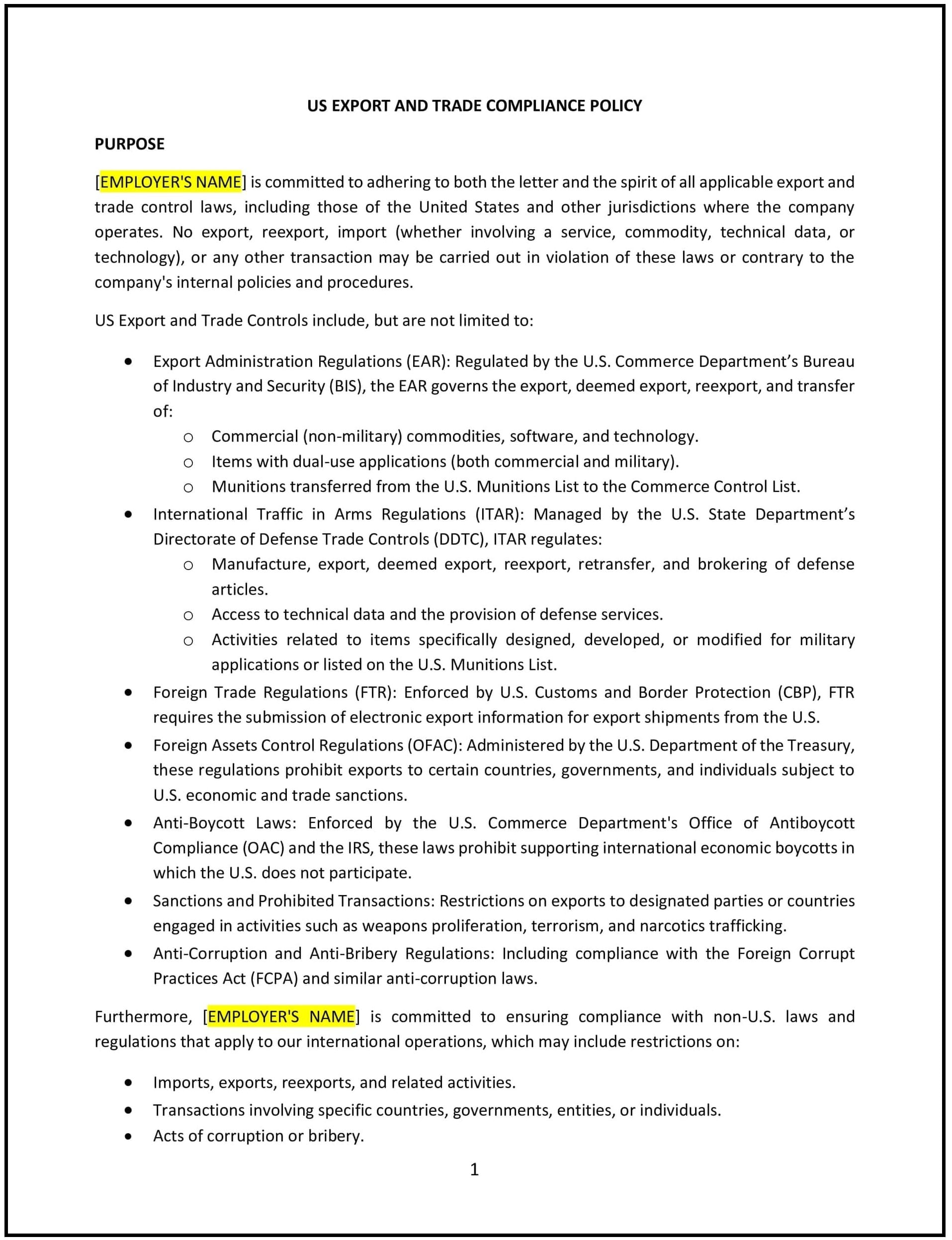
US trade and export compliance policy (West Virginia): Free template
Ensures adherence to federal trade regulations and export control laws for all business operations.
- Policies
- West Virginia
US trade and export compliance policy (West Virginia)
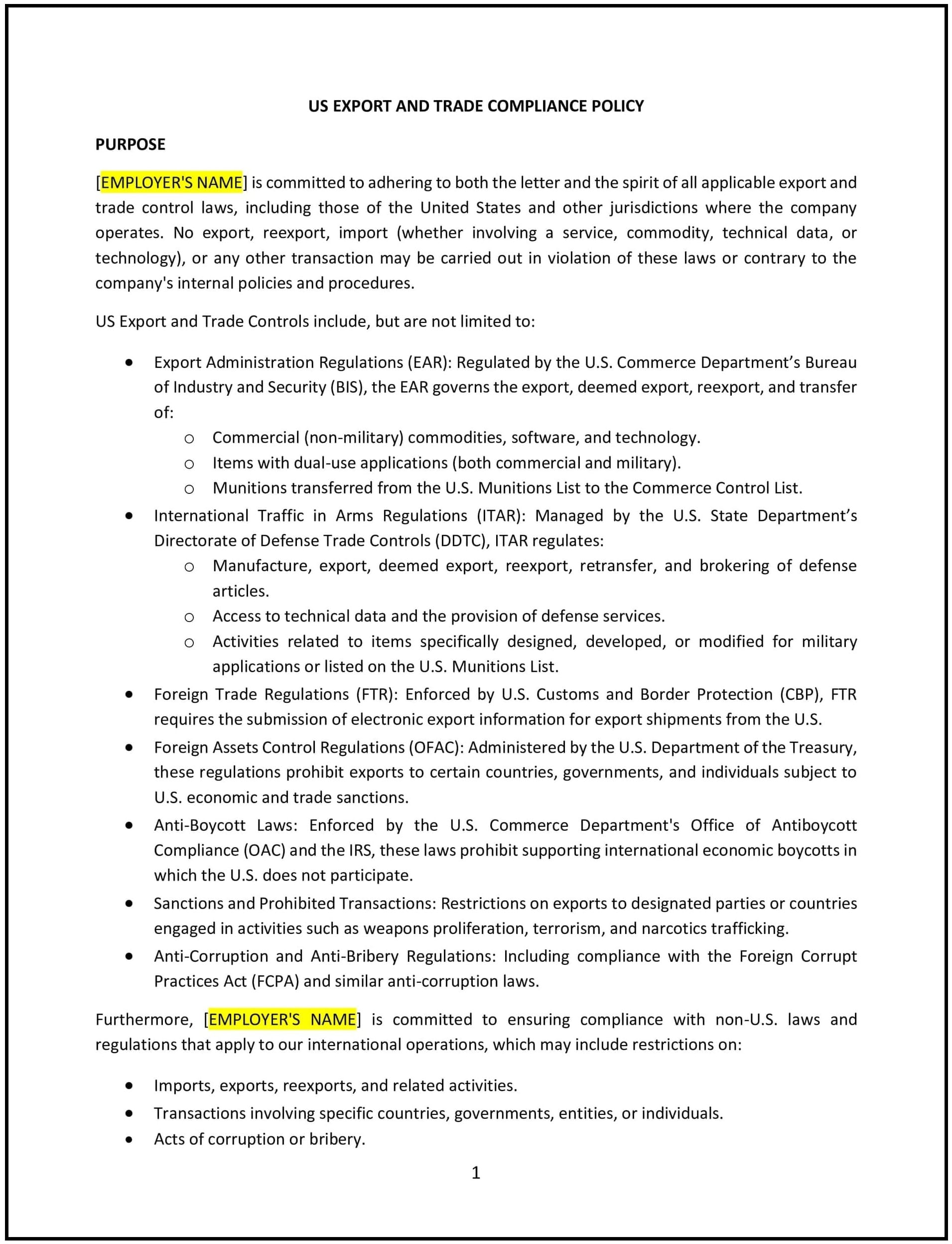
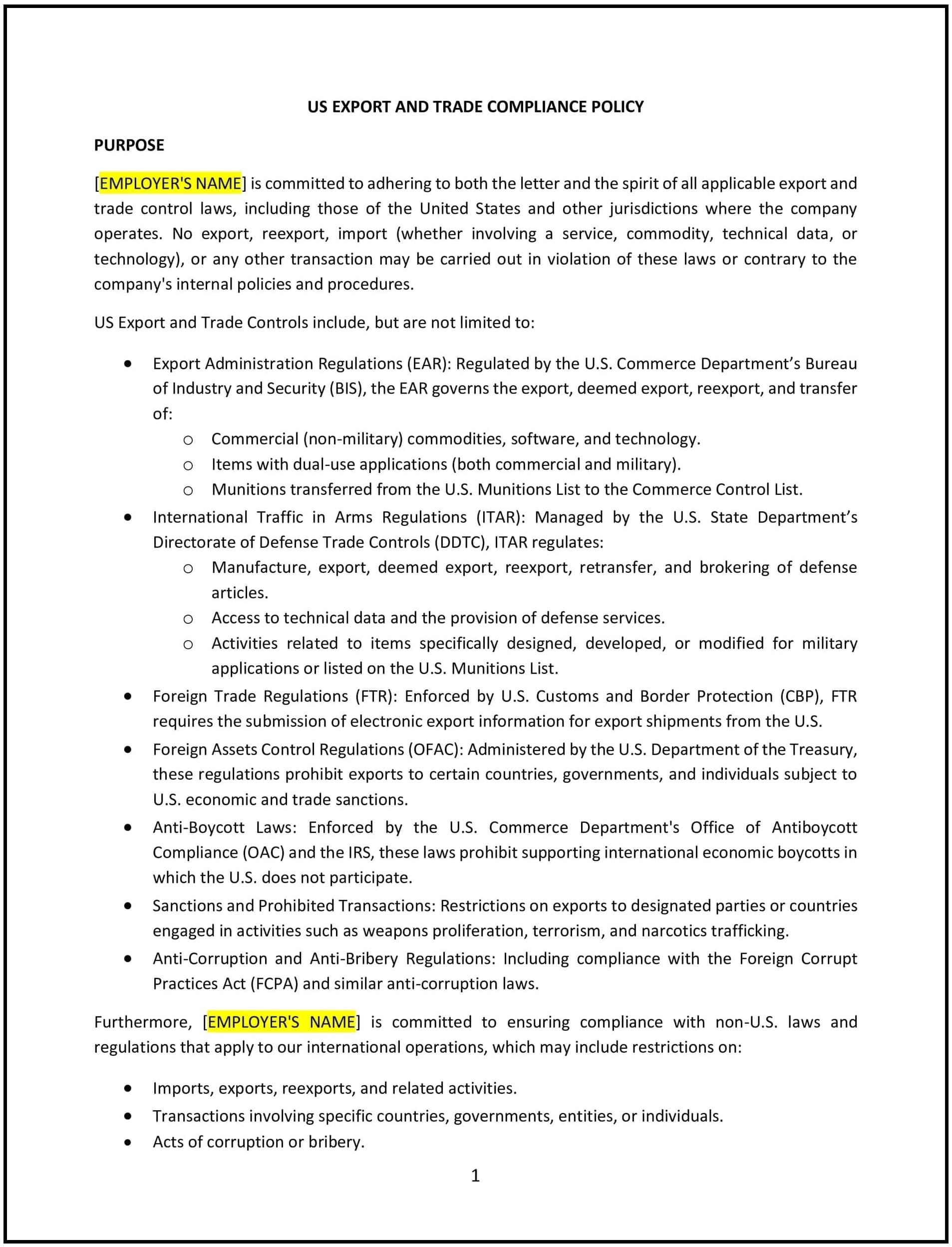
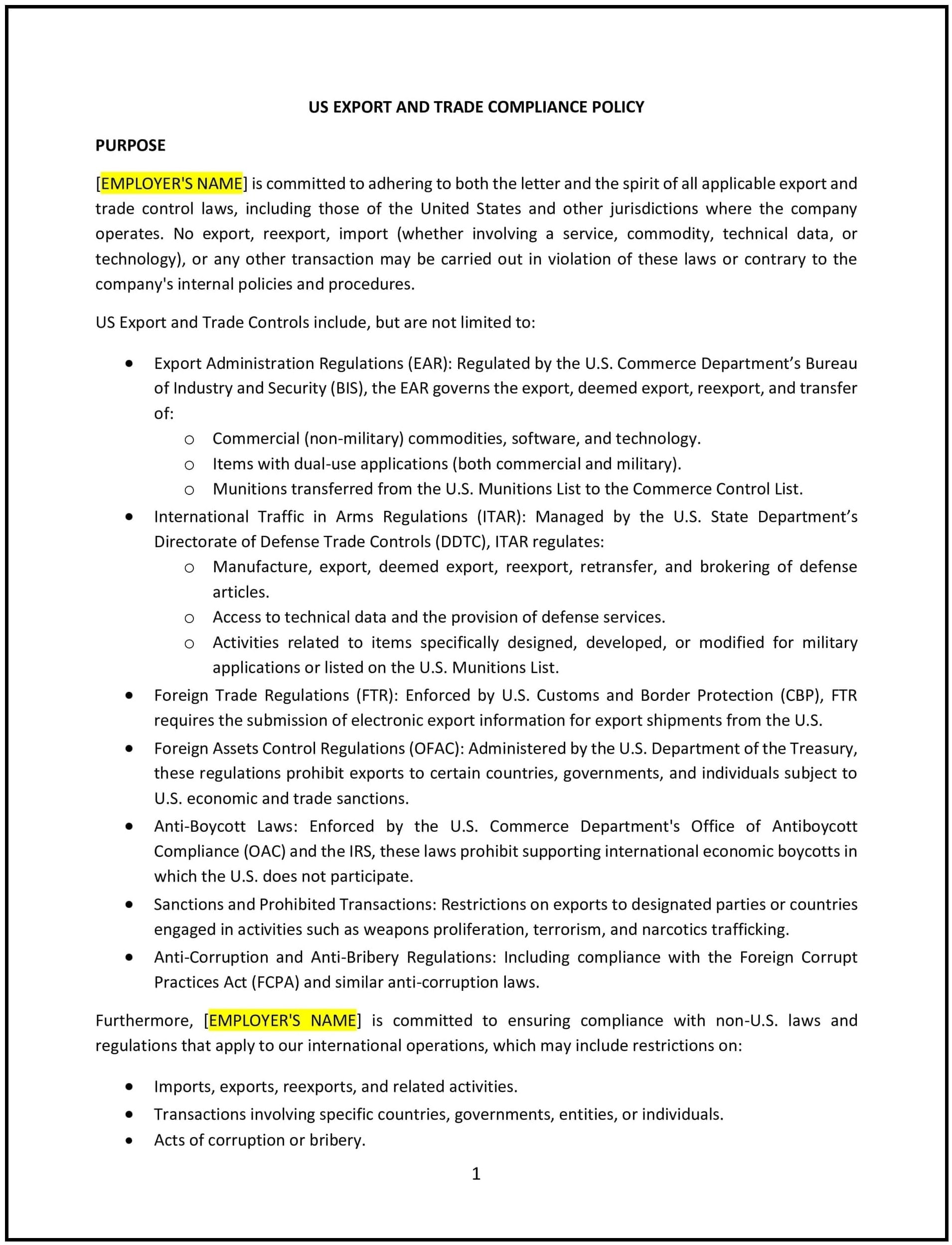
In West Virginia, a US trade and export compliance policy ensures that organizations adhere to federal and state laws governing the export of goods, services, technology, and information. This policy provides guidelines for managing export-related activities to prevent violations of trade regulations, such as the Export Administration Regulations (EAR) and the International Traffic in Arms Regulations (ITAR).
The policy outlines responsibilities, procedures for compliance, and protocols for addressing potential violations.
How to use this US trade and export compliance policy (West Virginia)
- Define compliance scope: Clearly outline the laws and regulations the policy covers, such as EAR, ITAR, and the Office of Foreign Assets Control (OFAC) sanctions.
- Establish responsibilities: Specify roles for employees, managers, and compliance officers in ensuring adherence to trade regulations.
- Outline export control procedures: Provide guidelines for screening transactions, obtaining necessary export licenses, and maintaining accurate documentation.
- Include training requirements: Require regular training for employees involved in export activities to stay updated on regulatory changes and compliance best practices.
- Detail violation response protocols: Establish procedures for reporting, investigating, and addressing potential compliance violations.
Benefits of using a US trade and export compliance policy (West Virginia)
- Supports compliance: Improves adherence to federal and international trade regulations, reducing the risk of penalties and legal liabilities.
- Protects organizational reputation: Demonstrates the organization’s commitment to ethical and lawful trade practices.
- Reduces risks: Minimizes the likelihood of inadvertent violations of export laws and sanctions.
- Enhances operational efficiency: Streamlines export procedures, ensuring consistent compliance across all transactions.
- Promotes accountability: Assigns clear responsibilities for managing trade compliance within the organization.
Tips for using a US trade and export compliance policy (West Virginia)
- Communicate the policy: Share the policy with employees involved in export activities and ensure they understand their roles and responsibilities.
- Train employees: Provide regular training on export compliance, including identifying restricted parties, understanding licensing requirements, and managing documentation.
- Monitor transactions: Implement systems to screen exports and flag potential compliance issues for further review.
- Maintain records: Keep detailed documentation of export transactions, licenses, and compliance audits to demonstrate adherence to regulations.
- Review periodically: Update the policy to reflect changes in trade regulations, federal laws, or organizational practices.
Frequently asked questions (FAQs)
Similar templates
Where deals go from offer to paid
