Use of outside counsel policy (Alaska): Free template
Got contracts to review? While you're here for policies, let Cobrief make contract review effortless—start your free review now.
Customize this template for free
Use of outside counsel policy (Alaska)
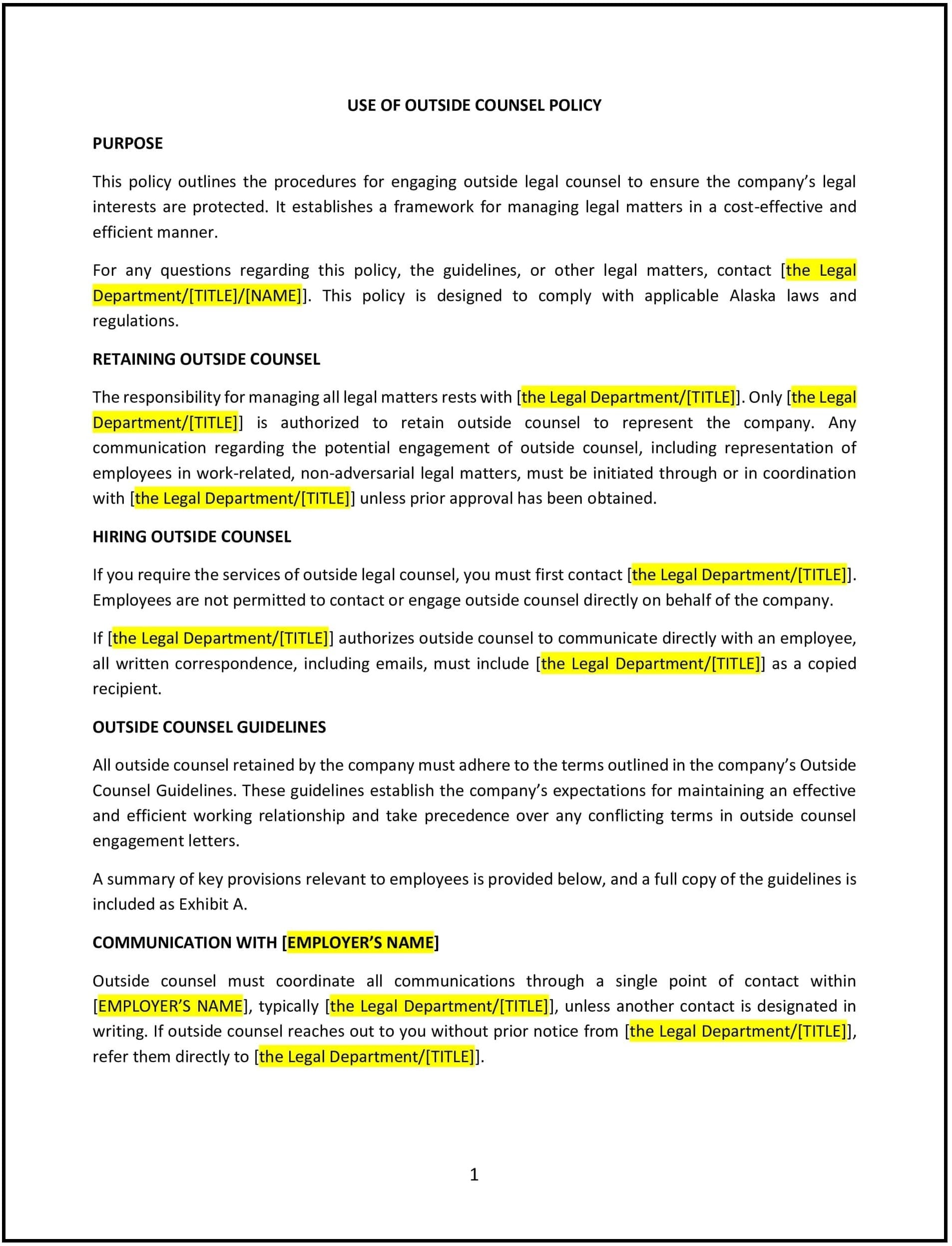
In Alaska, a use of outside counsel policy provides guidelines for engaging external legal advisors to address specific legal needs, manage complex cases, or supplement internal resources. This policy ensures that the use of outside counsel is cost-effective, strategically aligned with business goals, and compliant with legal and ethical standards.
By implementing this policy, businesses can streamline decision-making and maintain control over legal expenses.
How to use this use of outside counsel policy (Alaska)
- Define when to engage outside counsel: Specify circumstances where external legal support is appropriate, such as litigation, regulatory compliance, or specialized legal advice.
- Establish approval procedures: Require management or designated individuals to approve engagements to ensure alignment with company goals and budget.
- Include criteria for selecting counsel: Provide guidelines for evaluating and selecting legal advisors, including expertise, reputation, and cost structure.
- Address cost management: Outline expectations for billing, expense caps, and reporting to maintain transparency and control over legal costs.
- Emphasize confidentiality: Ensure that all communications and work with outside counsel are conducted securely and adhere to confidentiality agreements.
Benefits of using a use of outside counsel policy (Alaska)
A use of outside counsel policy provides several advantages for businesses in Alaska. Here’s how it helps:
- Ensures cost efficiency: Controls legal expenses by setting clear guidelines for when and how to engage external counsel.
- Enhances expertise: Enables access to specialized legal knowledge and skills for complex or industry-specific matters.
- Promotes consistency: Ensures that all engagements align with the company’s legal strategy and objectives.
- Protects confidentiality: Establishes secure processes for handling sensitive information shared with external legal advisors.
- Simplifies decision-making: Provides a structured approach for evaluating and selecting outside counsel.
Tips for using a use of outside counsel policy (Alaska)
- Tailor to business needs: Focus the policy on legal areas relevant to your business, such as employment law, regulatory compliance, or intellectual property.
- Monitor performance: Regularly evaluate the performance of outside counsel to ensure value and alignment with business objectives.
- Negotiate terms: Establish clear billing arrangements, including fixed fees or caps, to manage costs effectively.
- Maintain a preferred provider list: Develop and maintain a list of pre-approved legal firms or advisors to expedite engagement when needed.
- Update regularly: Revise the policy to reflect changes in legal requirements, business operations, or available resources.