Use of outside counsel policy (Georgia): Free template
Got contracts to review? While you're here for policies, let Cobrief make contract review effortless—start your free review now.
Customize this template for free
Use of outside counsel policy (Georgia)
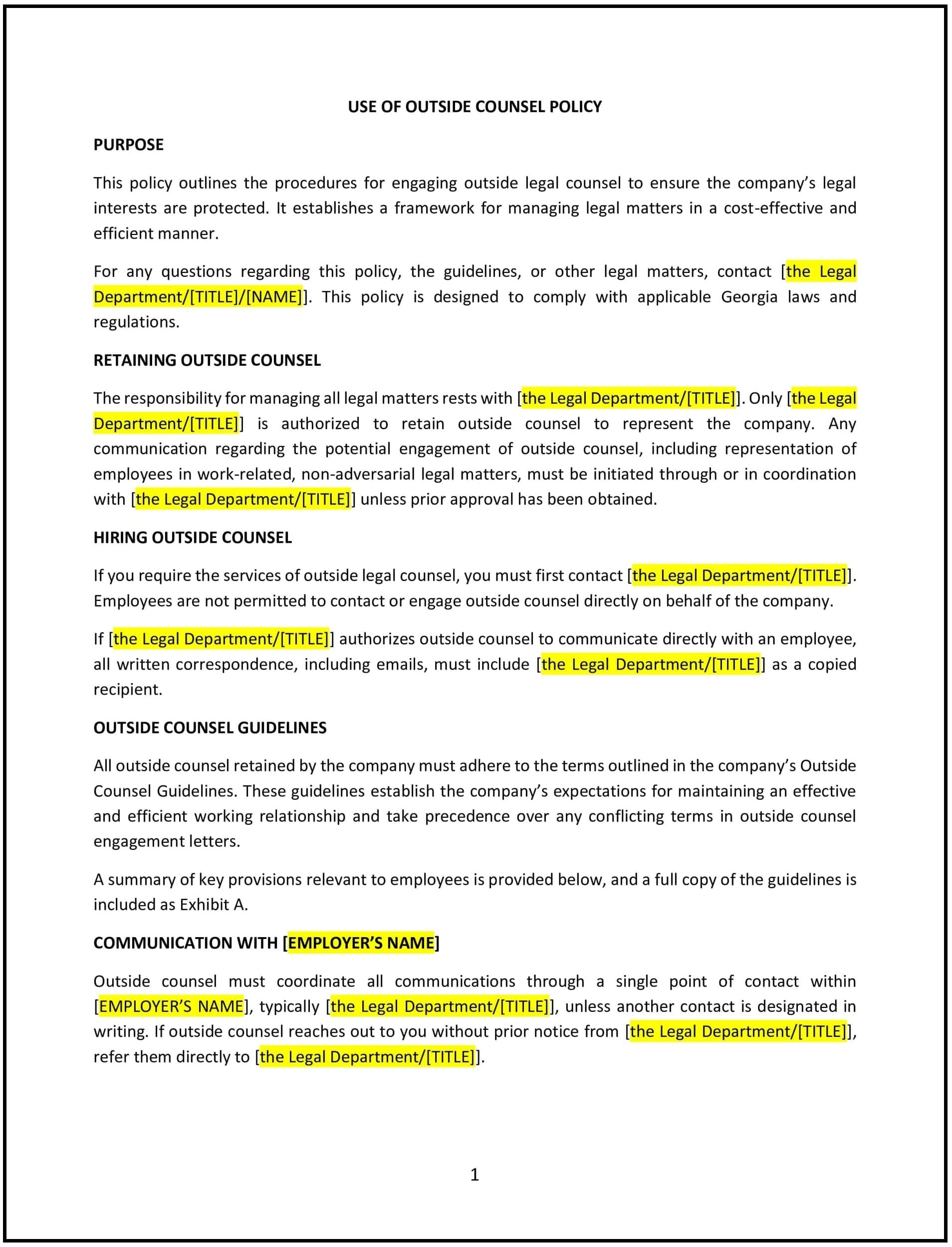
This use of outside counsel policy is designed to help Georgia businesses manage relationships with external legal advisors effectively. The policy outlines the circumstances under which outside counsel should be engaged, the approval process, and expectations for maintaining accountability and cost control.
By implementing this policy, businesses can ensure legal matters are addressed efficiently while managing expenses and maintaining alignment with organizational objectives.
How to use this use of outside counsel policy (Georgia)
- Define scope: Specify the types of legal matters requiring outside counsel, such as litigation, regulatory compliance, or specialized legal advice.
- Establish an approval process: Require management or a designated legal officer to approve the engagement of outside counsel before proceeding.
- Select qualified counsel: Outline criteria for choosing external lawyers or law firms, including expertise, experience, and cost considerations.
- Manage costs: Set expectations for budgeting, billing arrangements, and regular reporting of legal expenses.
- Maintain communication: Designate a point of contact within the business to coordinate with outside counsel and ensure alignment on priorities.
- Protect confidentiality: Require outside counsel to adhere to strict confidentiality standards and protect sensitive business information.
- Evaluate performance: Periodically assess the effectiveness and value of the services provided by outside counsel.
- Review and update regularly: Periodically assess the policy to reflect changes in Georgia legal practices or business needs.
Benefits of using this use of outside counsel policy (Georgia)
Implementing this policy provides several advantages for Georgia businesses:
- Improves efficiency: Clear guidelines help determine when and how to engage outside counsel effectively.
- Enhances cost management: Budgeting and monitoring expenses ensure legal services align with financial goals.
- Builds accountability: Regular performance reviews encourage high standards of service from outside counsel.
- Safeguards confidentiality: Clear expectations protect sensitive business information during legal engagements.
- Reflects Georgia-specific practices: Tailoring the policy to local legal and business dynamics ensures relevance and practicality.
Tips for using this use of outside counsel policy (Georgia)
- Communicate internally: Share the policy with relevant teams to ensure understanding of when to involve outside counsel.
- Build strong relationships: Develop a network of trusted legal professionals who understand your business and industry.
- Monitor legal expenses: Use detailed billing arrangements to track costs and ensure transparency.
- Align on goals: Clearly communicate expectations, priorities, and outcomes with outside counsel at the outset of any engagement.
- Seek feedback: Regularly review the policy and gather input from internal stakeholders and outside counsel to refine processes.