Use of outside counsel policy (Iowa): Free template
Got contracts to review? While you're here for policies, let Cobrief make contract review effortless—start your free review now.
Customize this template for free
Use of outside counsel policy (Iowa)
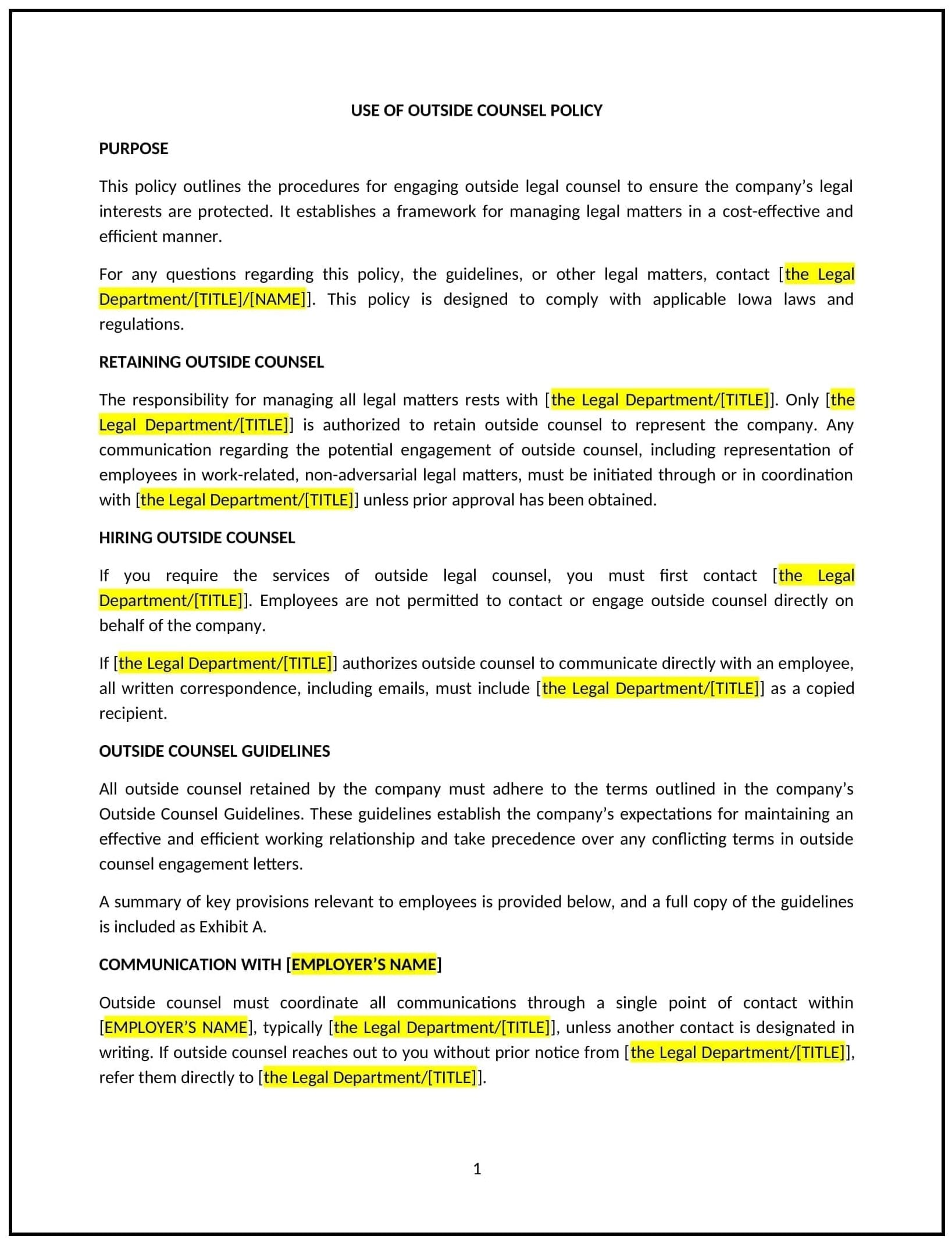
A use of outside counsel policy helps Iowa businesses manage relationships with external legal service providers, such as law firms, consultants, and legal advisors. This policy outlines the process for selecting, engaging, and overseeing outside counsel, including when and how to seek external legal assistance, the scope of services to be provided, and the budget for legal services. It also specifies expectations regarding billing, confidentiality, and communication between in-house and outside legal teams.
By implementing this policy, businesses can ensure that legal matters are handled efficiently, cost-effectively, and in accordance with company goals, while minimizing risks associated with outsourcing legal services.
How to use this use of outside counsel policy (Iowa)
- Define the criteria for engaging outside counsel: Clearly outline the conditions under which outside counsel should be engaged, such as when specialized expertise is needed, in situations where conflicts of interest exist, or when internal legal resources are unavailable.
- Set the selection process: Establish a process for selecting outside counsel, including factors such as expertise, experience, reputation, cost, and availability. Ensure that selection decisions align with the company’s legal and business needs.
- Establish billing guidelines: Define how outside counsel should bill the company for services, including hourly rates, flat fees, or retainer arrangements. Specify expectations regarding billing transparency, including detailed invoices, pre-approval of expenses, and the frequency of billing cycles.
- Set communication protocols: Outline how internal legal teams should communicate with outside counsel, including expectations for regular updates, status reports, and responses to urgent legal issues. Ensure clear lines of communication between in-house and outside teams.
- Establish confidentiality and conflict of interest provisions: Specify that outside counsel must adhere to strict confidentiality standards and disclose any potential conflicts of interest before engaging in legal matters. Ensure that confidentiality agreements are in place to protect sensitive company information.
- Monitor and review performance: Develop a system for monitoring and evaluating the performance of outside counsel, including tracking the effectiveness of their legal advice, adherence to budget, and overall contribution to business objectives. Set regular performance reviews or evaluations.
- Review and update regularly: Periodically review and update the policy to ensure that it reflects changes in legal requirements, business needs, or the availability of new legal service providers.
Benefits of using this use of outside counsel policy (Iowa)
This policy offers several key benefits for Iowa businesses:
- Cost control: A clear policy helps businesses manage the cost of legal services by setting expectations for billing and budget management, avoiding overpayment or unexpected expenses.
- Efficiency and expertise: By engaging outside counsel when necessary, businesses can access specialized legal expertise that in-house teams may not have, ensuring that legal matters are handled effectively and efficiently.
- Mitigates legal risks: By ensuring that outside counsel follows company protocols and adheres to confidentiality and conflict-of-interest provisions, businesses can reduce the risk of legal violations or disputes.
- Strengthens vendor relationships: Establishing clear expectations for the use of outside counsel helps build strong, transparent, and mutually beneficial relationships with legal service providers.
- Supports business goals: A well-managed outside counsel policy ensures that legal advice and services align with the company’s strategic objectives, helping to achieve business success while managing legal risk.
- Enhances decision-making: Having access to trusted outside counsel allows businesses to make well-informed legal decisions, minimizing uncertainty and providing clarity on complex legal matters.
Tips for using this use of outside counsel policy (Iowa)
- Communicate expectations clearly: Ensure that both internal legal teams and outside counsel understand the company’s expectations for legal services, billing, confidentiality, and communication.
- Establish a cost management system: Monitor and manage the costs associated with outside counsel by reviewing invoices, ensuring that legal work is completed within budget, and questioning charges that seem excessive or unclear.
- Regularly review legal service providers: Assess the performance of outside counsel periodically to ensure they continue to meet the company’s needs and provide value. Consider replacing providers if their performance does not align with expectations.
- Keep detailed records: Maintain detailed records of contracts, invoices, and communications with outside counsel to track services rendered and facilitate any future audits or reviews.
- Build long-term relationships with trusted firms: Over time, consider building long-term relationships with reliable outside counsel who are familiar with the business and its legal needs, which can lead to more efficient and cost-effective service.
- Stay current on legal developments: Stay informed about changes in the legal landscape that may affect the business and ensure that outside counsel is also up to date with relevant laws and regulations.