Use of outside counsel policy (Kansas): Free template
Got contracts to review? While you're here for policies, let Cobrief make contract review effortless—start your free review now.
Customize this template for free
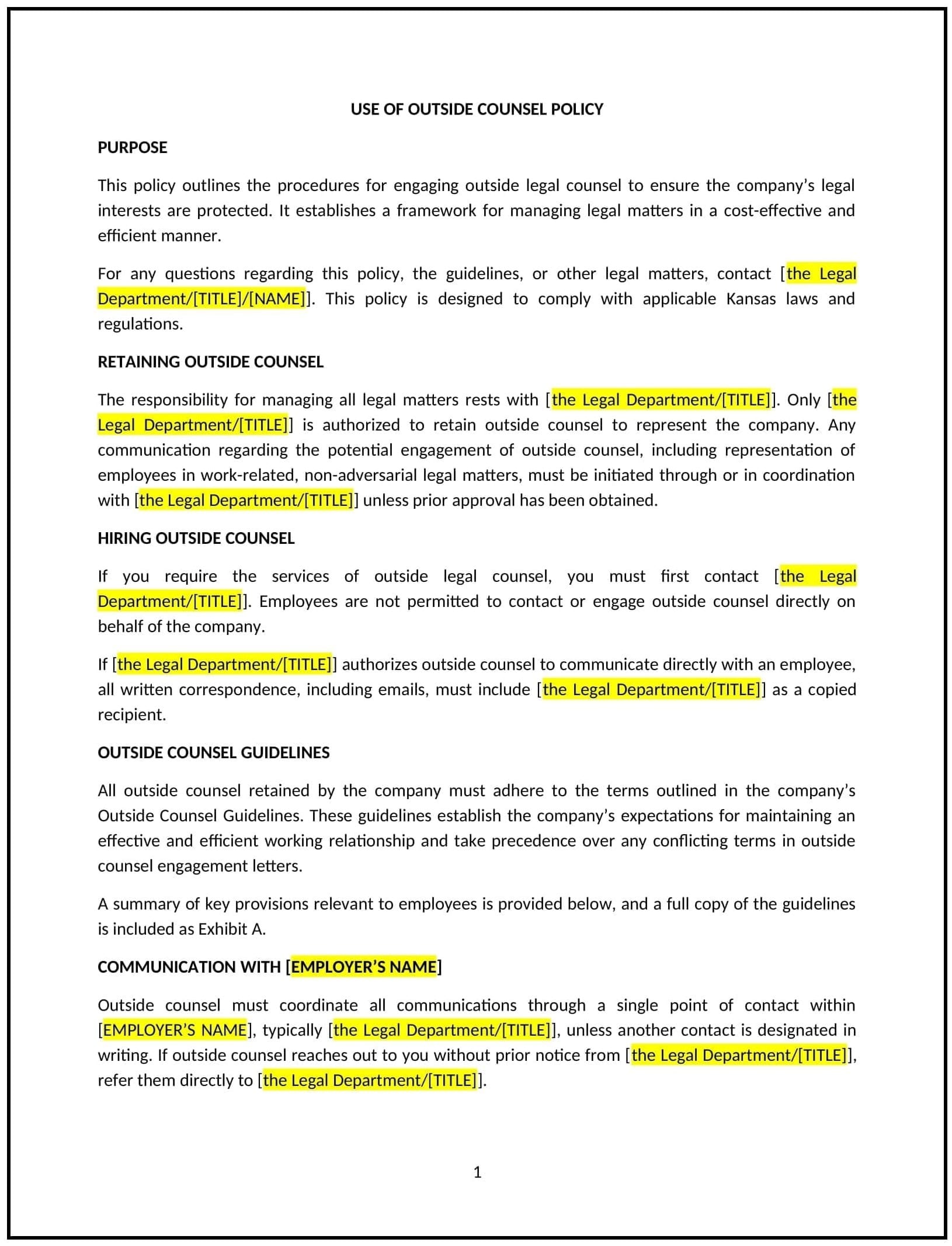
Use of outside counsel policy (Kansas)
A use of outside counsel policy helps Kansas businesses establish guidelines for engaging external legal services. This policy outlines when and how to utilize outside counsel, the selection process, and the responsibilities of both the business and the legal firms they hire.
By implementing this policy, businesses can ensure that they manage legal costs effectively, maintain proper oversight, and make informed decisions when seeking external legal assistance.
How to use this use of outside counsel policy (Kansas)
- Define the circumstances for using outside counsel: The policy should specify when the company should engage outside legal services, such as for specialized legal matters, complex litigation, or when in-house resources are unavailable or insufficient.
- Establish the selection process: The policy should outline the steps for selecting outside counsel, including criteria such as expertise, reputation, past performance, and the ability to meet the company’s needs. It may also include a process for seeking proposals or bids from multiple firms.
- Set approval procedures: The policy should require that outside counsel be approved by senior management or the legal department before being retained, ensuring that the need for external services is justified and aligned with the company’s goals.
- Define responsibilities: The policy should clarify the responsibilities of both the company and outside counsel, including expectations for communication, billing practices, confidentiality, and reporting. It should also cover the management of attorney-client privilege and conflict of interest checks.
- Address billing and fee arrangements: The policy should specify how billing will be handled, including preferred billing structures (e.g., hourly rates, flat fees, retainer agreements) and guidelines for approval of expenses and fees. It should ensure transparency and cost control.
- Require regular reporting and communication: The policy should mandate that outside counsel provide regular updates on the progress of cases, legal matters, or projects, and that these updates are shared with relevant internal stakeholders.
- Review and update regularly: The policy should be reviewed periodically to ensure it remains aligned with the company’s legal and operational needs, as well as to reflect any changes in legal regulations or industry standards.
Benefits of using a use of outside counsel policy (Kansas)
- Controls legal costs: A clear policy helps businesses manage legal expenses by setting guidelines for selecting cost-effective outside counsel and monitoring billing practices, leading to better budget control.
- Enhances consistency in legal services: The policy ensures that external legal services are used consistently and in line with company objectives, avoiding unnecessary duplication or misalignment of resources.
- Promotes transparency: By outlining billing arrangements and communication expectations, the policy fosters transparency in how legal services are procured and managed.
- Mitigates legal risks: A formal policy helps ensure that external legal advisors are properly vetted and engaged in a way that minimizes risks related to conflicts of interest, miscommunication, or ineffective representation.
- Improves oversight and accountability: With clear guidelines in place, businesses can better track the performance of outside counsel and ensure they are meeting agreed-upon deliverables and maintaining high standards of service.
- Strengthens relationships with legal partners: A structured approach to using outside counsel builds trust and clarity in business relationships, helping businesses maintain effective partnerships with legal service providers.
Tips for using this use of outside counsel policy (Kansas)
- Communicate the policy clearly: Ensure all employees involved in legal matters understand when and how to engage outside counsel, and that they follow the established procedures for selecting and working with external legal advisors.
- Set clear budget expectations: Establish guidelines for how much can be spent on legal services and require approval for legal expenses that exceed budgeted amounts, ensuring the company stays within financial limits.
- Foster collaborative relationships: Encourage open and regular communication between in-house teams and outside counsel to ensure legal matters are handled efficiently and in alignment with the company’s objectives.
- Maintain accurate records: Keep comprehensive records of outside counsel engagements, including contracts, billing information, and communication logs, to ensure accountability and transparency.
- Monitor legal outcomes: Regularly evaluate the performance of outside counsel to ensure they are delivering value and meeting expectations. This can help inform future decisions on whether to continue or change legal service providers.
- Review and update the policy periodically: The policy should be reviewed at least annually or whenever there are changes to the company’s legal needs, budget, or compliance requirements to ensure it remains current and effective.