Use of outside counsel policy (Maine): Free template
Got contracts to review? While you're here for policies, let Cobrief make contract review effortless—start your free review now.
Customize this template for free
Use of outside counsel policy (Maine): Free template
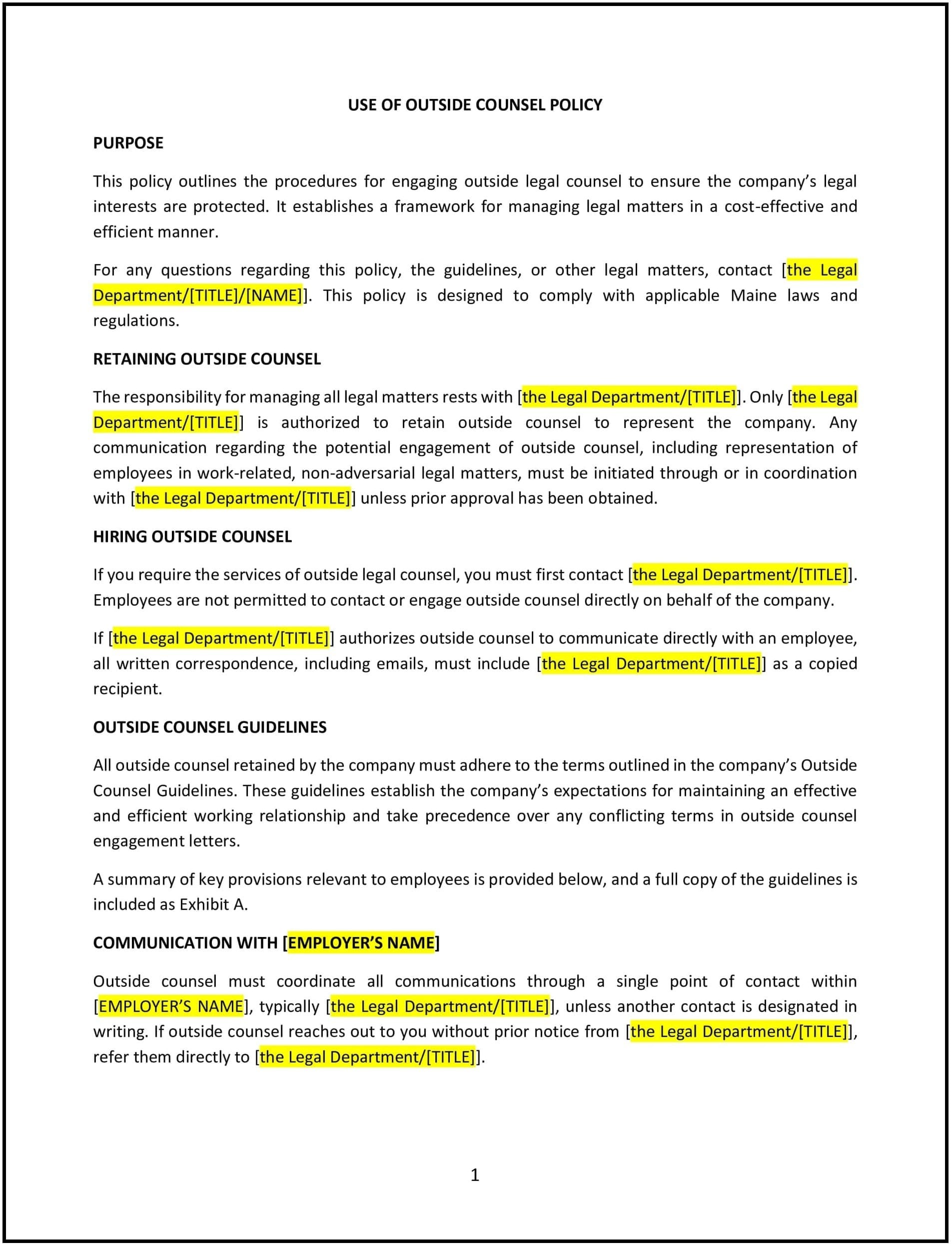
This use of outside counsel policy is designed to help Maine businesses establish clear guidelines for engaging and managing external legal counsel. It outlines when and how outside counsel should be used, ensuring that the business maintains control over legal matters, manages legal costs, and complies with relevant regulations.
By implementing this policy, Maine businesses can ensure that legal services are used efficiently, maintain consistency in legal representation, and protect the company’s interests in legal matters.
How to use this use of outside counsel policy (Maine)
- Define when to engage outside counsel: Specify the situations in which the business will engage external legal counsel, such as for complex legal matters, specialized legal expertise, or conflicts of interest that prevent in-house legal staff from providing unbiased representation.
- Set approval process: Outline the process for engaging outside counsel, including approval from senior management or the legal department, and ensure that the engagement aligns with the business’s needs and budget.
- Establish cost controls: Detail how fees for outside counsel will be managed, including guidelines for fee arrangements (e.g., hourly rates, flat fees), billing processes, and how to obtain cost estimates before engaging services.
- Maintain a list of preferred outside counsel: Identify a preferred list of legal firms or individual attorneys with whom the company regularly works, ensuring that they understand the business’s needs and objectives.
- Address conflict resolution: Specify procedures for handling any conflicts or issues with outside counsel, including how to address dissatisfaction with legal services and when to seek alternative representation.
- Set expectations for communication and reporting: Require regular communication between outside counsel and the business, including periodic updates on legal matters, status reports, and billing summaries.
- Review regularly: Update the policy as necessary to reflect changes in the business’s needs, legal requirements, or strategies for managing outside counsel.
Benefits of using this use of outside counsel policy (Maine)
Implementing this policy provides several benefits for Maine businesses:
- Improves cost management: Establishes clear guidelines for engaging outside counsel, helping businesses control legal costs and prevent excessive spending.
- Ensures consistency in legal services: Ensures that outside counsel understands the company’s objectives and can provide consistent and effective legal representation.
- Enhances efficiency: Provides a structured process for selecting and managing outside counsel, reducing the time and effort needed to engage legal services.
- Promotes transparency: Establishes clear communication and reporting procedures between outside counsel and the business, promoting transparency in legal matters.
- Reduces legal risks: Helps ensure that the company receives competent and timely legal advice, reducing the risk of legal issues or disputes.
Tips for using this use of outside counsel policy (Maine)
- Communicate expectations clearly: Ensure that all employees involved in legal matters understand the policy, including when to engage outside counsel and how to manage legal costs.
- Monitor legal costs: Regularly review invoices from outside counsel to ensure that fees are within the approved budget and that the services provided align with the company’s needs.
- Foster strong relationships: Build long-term relationships with trusted outside counsel to ensure consistency and familiarity with the business’s legal needs and objectives.
- Keep track of legal matters: Maintain records of all engagements with outside counsel, including details of the legal issue, fees, and outcomes, to ensure effective management of legal services.
- Stay flexible: Adjust the policy as necessary based on changes in the company’s legal needs, industry standards, or financial priorities.