Use of outside counsel policy (Minnesota): Free template
Got contracts to review? While you're here for policies, let Cobrief make contract review effortless—start your free review now.
Customize this template for free
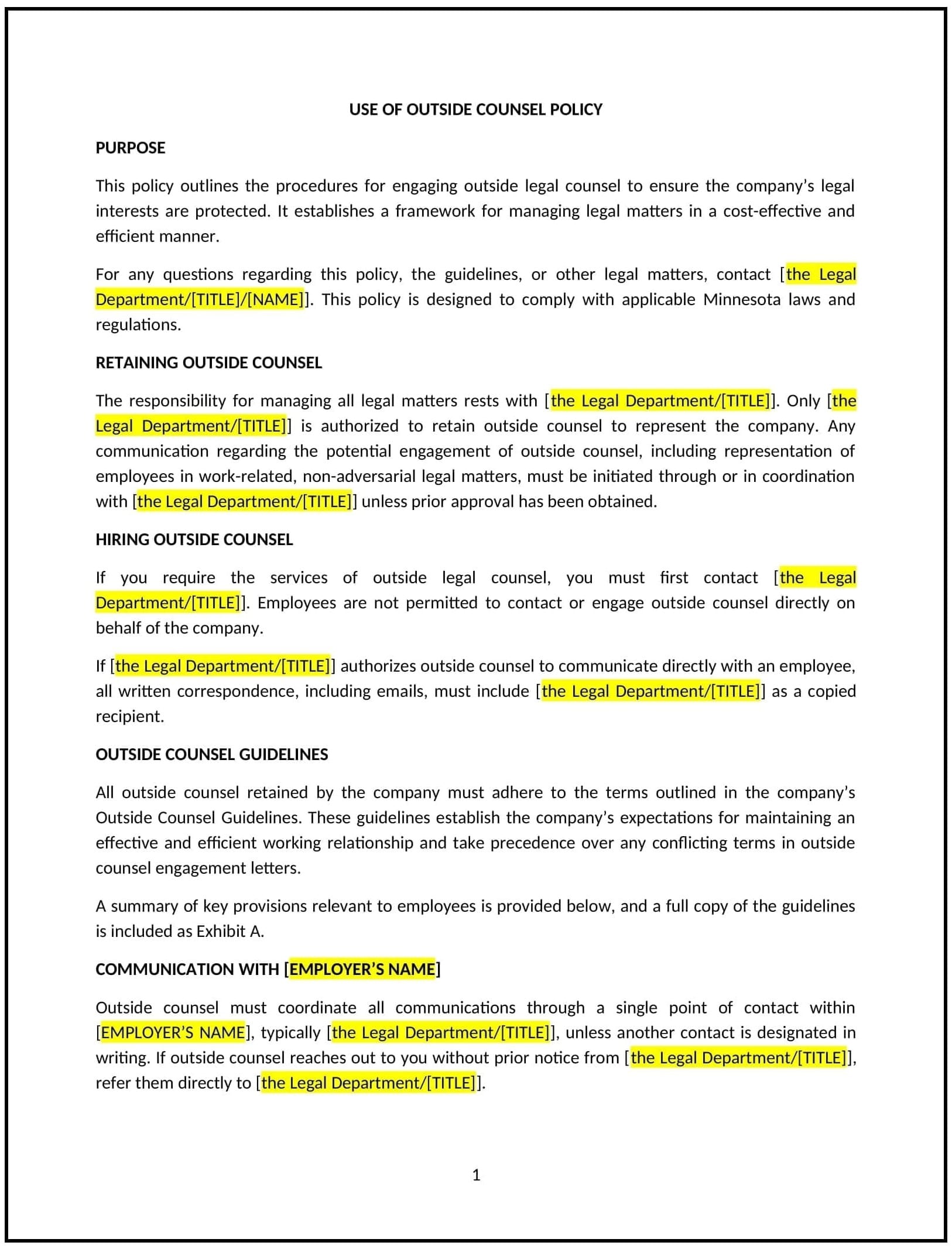
Use of outside counsel policy (Minnesota)
This use of outside counsel policy is designed to help Minnesota businesses establish guidelines for engaging and managing external legal counsel. The policy outlines when it is appropriate to hire outside counsel, the process for selecting legal firms, and the expectations regarding the scope of services and costs.
By implementing this policy, businesses can ensure that they engage the right legal expertise when needed, control legal costs, and maintain effective oversight of legal matters.
How to use this use of outside counsel policy (Minnesota)
- Define when to engage outside counsel: Specify the circumstances under which outside counsel should be engaged, such as for specialized legal matters, litigation, regulatory issues, or legal research.
- Set approval procedures: Establish a process for seeking approval before hiring outside counsel, ensuring that management or the legal department reviews and approves the decision. This process should include the factors that justify engaging outside counsel.
- Select qualified counsel: Define the criteria for selecting outside legal counsel, including expertise, experience with similar legal matters, reputation, and cost considerations. Businesses should aim to select firms or individuals with the necessary skills and knowledge to address the specific legal issue.
- Establish cost management procedures: Specify how fees for outside counsel will be managed, including budgeting, cost estimates, hourly rates, and any retainer agreements. Establish procedures for monitoring and controlling legal costs to ensure that the business receives value for money.
- Clarify the scope of work: Ensure that the scope of work for outside counsel is clearly defined, including expectations for deliverables, timelines, and communication protocols. Set clear boundaries around the work to avoid scope creep and unanticipated costs.
- Ensure oversight and communication: Establish procedures for ongoing communication between internal teams and outside counsel, ensuring that the business is kept informed of progress, legal risks, and costs.
- Review performance: Set guidelines for evaluating the performance of outside counsel, including the quality of legal services, timeliness, and adherence to budget. Conduct regular reviews to assess whether the engagement continues to meet the business’s needs.
Benefits of using a use of outside counsel policy (Minnesota)
Implementing this policy provides several advantages for Minnesota businesses:
- Reduces legal risk: By engaging qualified outside counsel for specific legal issues, businesses can ensure that they receive expert advice, reducing the risk of costly legal mistakes.
- Controls costs: Clear guidelines on managing legal fees and selecting counsel allow businesses to control legal costs, ensuring that external legal services are efficient and cost-effective.
- Improves decision-making: By having a structured process for engaging outside counsel, businesses can make informed decisions based on clear criteria, improving the overall quality of legal advice.
- Enhances accountability: The policy ensures that outside counsel are held accountable for their work, timelines, and costs, improving performance and preventing scope creep.
- Reflects Minnesota-specific considerations: The policy can be tailored to reflect Minnesota’s legal environment, including local regulations, practices, and the business’s specific industry needs.
Tips for using this use of outside counsel policy (Minnesota)
- Communicate expectations clearly: Ensure that all internal stakeholders are aware of the policy and understand the process for engaging outside counsel, including the approval steps and criteria for selection.
- Monitor costs closely: Regularly monitor the fees and expenses associated with outside counsel to ensure that the work is staying within budget. Request regular updates and cost breakdowns to avoid unexpected charges.
- Build strong relationships: Foster strong, collaborative relationships with outside counsel to ensure effective communication, smooth workflows, and a shared understanding of the business’s needs.
- Review periodically: Review the policy regularly to ensure it remains relevant and effective, and update it as necessary to account for changes in business practices or legal requirements.
- Set performance metrics: Establish measurable criteria to evaluate the performance of outside counsel, including responsiveness, quality of legal work, and adherence to budget.