Got contracts to review? While you're here for policies, let Cobrief make contract review effortless—start your free review now.
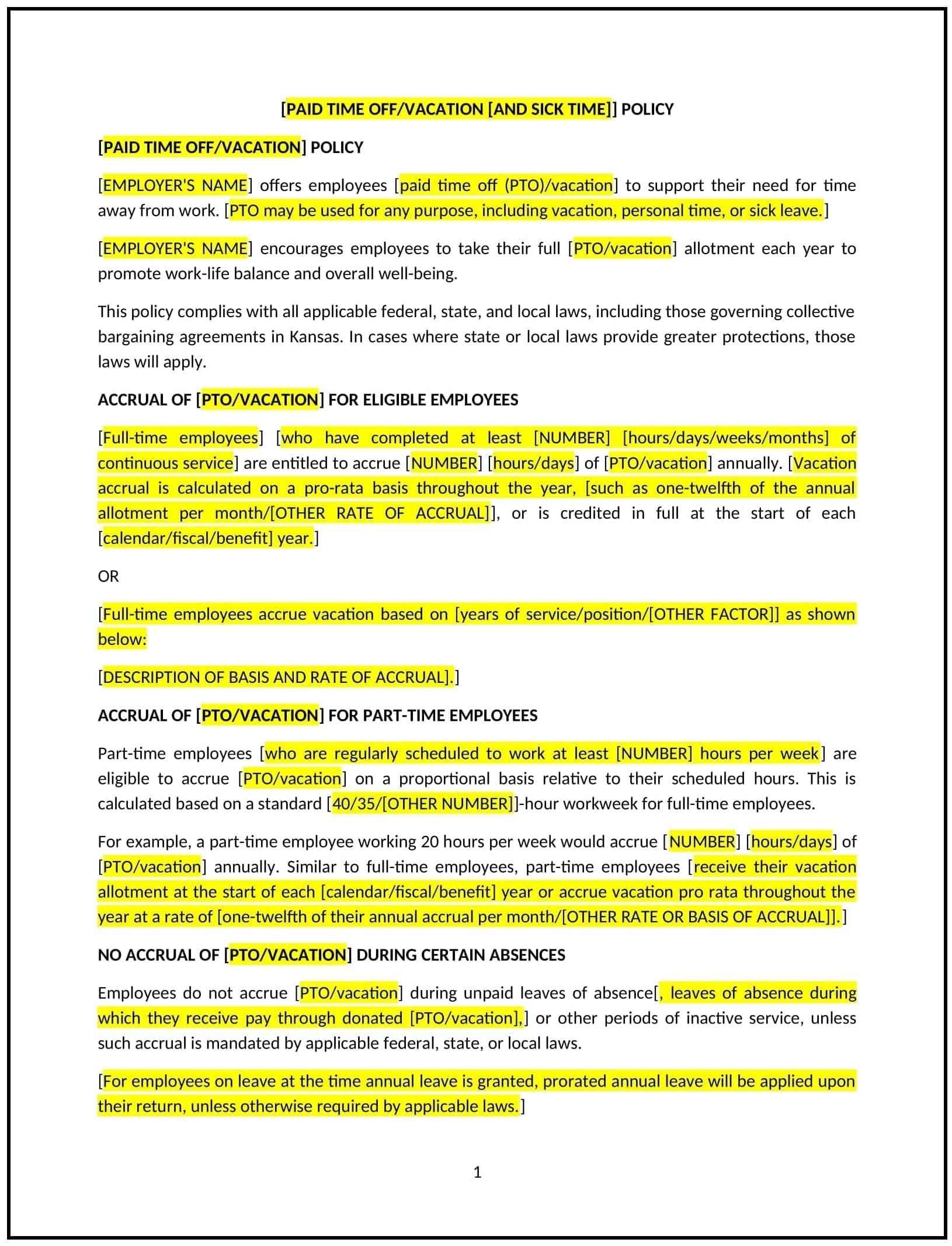
Customize this template for free
Vacation policy (Kansas)
A vacation policy helps Kansas businesses manage employee time off, ensuring that employees have a clear understanding of their vacation entitlements, how to request time off, and any associated guidelines for scheduling and usage. This policy aims to balance employees' need for rest with the operational needs of the business.
By implementing this policy, businesses can promote employee well-being, reduce burnout, and maintain productivity while allowing employees the time off they need to recharge.
How to use this vacation policy (Kansas)
- Define vacation accrual: The policy should specify how vacation time is accrued, whether it is based on length of service, hours worked, or another method. It should also define the rate at which employees accrue vacation time.
- Set vacation time entitlements: The policy should outline how much vacation time employees are entitled to per year, considering factors like job level, seniority, or company tenure. The policy may provide for different vacation entitlements based on these factors.
- Clarify request procedures: The policy should specify how employees should request vacation time, including how much advance notice is required and any documentation or forms needed to request time off.
- Address blackout periods: The policy should state if there are any times during the year (such as busy seasons or critical business periods) when vacation requests may be restricted or not approved, helping businesses maintain staffing during peak times.
- Set limits on carryover: The policy should outline whether unused vacation time can be carried over to the next year and if so, what the maximum carryover limit is. It may also specify the expiration of unused vacation after a certain period.
- Determine payout policies: The policy should specify whether unused vacation time will be paid out to employees upon termination or resignation, and under what conditions.
- Review and update regularly: The policy should be reviewed periodically to ensure it aligns with changes in business operations, employee needs, and any relevant laws or regulations.
Benefits of using a vacation policy (Kansas)
- Promotes work-life balance: A clear vacation policy ensures that employees take regular breaks to rest and recharge, which can lead to improved well-being and job satisfaction.
- Enhances productivity: Allowing employees the time off they need can prevent burnout, leading to improved performance, focus, and overall productivity when they return to work.
- Reduces confusion and misunderstandings: A clearly defined vacation policy helps prevent conflicts or misunderstandings about vacation entitlements, approvals, and scheduling.
- Increases employee retention: Offering reasonable vacation entitlements and supporting employees in using their vacation time can increase job satisfaction and retention, especially in competitive job markets.
- Supports legal compliance: By setting clear guidelines for vacation accrual, usage, and payout, businesses can ensure they comply with state and federal labor laws regarding employee leave.
- Improves morale: A fair and transparent vacation policy helps employees feel valued and supported, which can contribute to higher morale and stronger organizational culture.
Tips for using this vacation policy (Kansas)
- Communicate the policy clearly: Ensure that all employees understand the vacation policy, including how to accrue time off, how to request vacation, and any restrictions or guidelines for usage.
- Plan for business continuity: Businesses should encourage employees to plan vacations in advance and set clear expectations for how workloads will be managed when someone is on leave.
- Monitor vacation accrual: Keep track of employees’ vacation time balances to avoid confusion and ensure they are aware of how much time off they have accrued.
- Encourage regular use of vacation time: Businesses should encourage employees to take regular time off throughout the year to promote work-life balance and avoid employees accumulating large amounts of unused vacation time.
- Review and update the policy regularly: Regularly review the policy to ensure it reflects changes in business operations, employee needs, and applicable laws. This helps maintain a fair and efficient system.