Violence in the workplace policy (California): Free template
Got contracts to review? While you're here for policies, let Cobrief make contract review effortless—start your free review now.
Customize this template for free
Violence in the workplace policy (California)
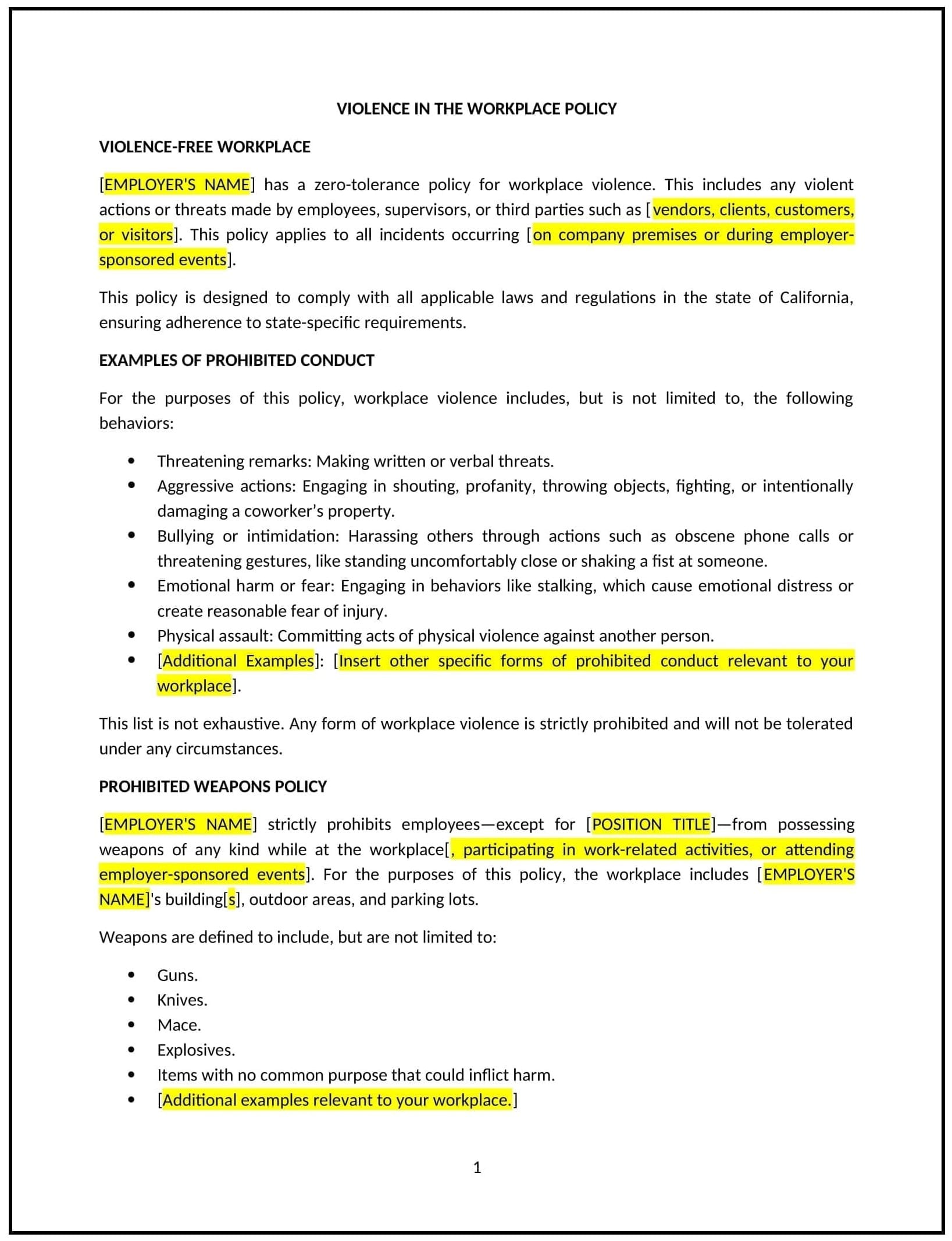
In California, a violence in the workplace policy provides businesses with guidelines for preventing, addressing, and mitigating workplace violence. This policy ensures compliance with California labor laws and safety regulations, including the California Occupational Safety and Health Act (Cal/OSHA), which requires employers to maintain a safe work environment.
This policy outlines prohibited behaviors, reporting procedures, and the business’s response to incidents of workplace violence. By implementing this policy, California businesses can protect employees, reduce risks, and maintain a secure workplace.
How to use this violence in the workplace policy (California)
- Define prohibited behaviors: Clearly outline unacceptable actions, such as threats, harassment, physical violence, or intimidation.
- Communicate reporting procedures: Provide employees with clear instructions for reporting concerns or incidents of workplace violence, ensuring confidentiality and non-retaliation.
- Establish response protocols: Detail how the business will respond to reports of workplace violence, including investigation procedures and disciplinary actions.
- Promote awareness: Offer regular training to employees and managers on recognizing, preventing, and addressing workplace violence.
- Ensure a safe environment: Assess workplace risks regularly and implement measures, such as security systems or employee assistance programs, to maintain safety.
Benefits of using this violence in the workplace policy (California)
This policy offers several advantages for California businesses:
- Supports compliance: Reflects Cal/OSHA requirements for maintaining a safe and secure workplace.
- Protects employees: Promotes a culture of safety by addressing and preventing workplace violence.
- Reduces risks: Minimizes potential legal liabilities and reputational damage associated with workplace violence incidents.
- Enhances awareness: Educates employees on recognizing warning signs and reporting potential threats.
- Builds trust: Demonstrates the business’s commitment to employee safety and well-being.
Tips for using this violence in the workplace policy (California)
- Reflect California-specific laws: Ensure compliance with Cal/OSHA standards and any local ordinances regarding workplace safety.
- Train employees: Provide regular training on identifying and responding to workplace violence.
- Encourage open communication: Foster a culture where employees feel comfortable reporting concerns without fear of retaliation.
- Conduct safety audits: Regularly assess workplace risks and address vulnerabilities to prevent violence.
- Review regularly: Update the policy to reflect changes in California laws, workplace conditions, or best practices.