Violence in the workplace policy (Connecticut): Free template
Got contracts to review? While you're here for policies, let Cobrief make contract review effortless—start your free review now.
Customize this template for free
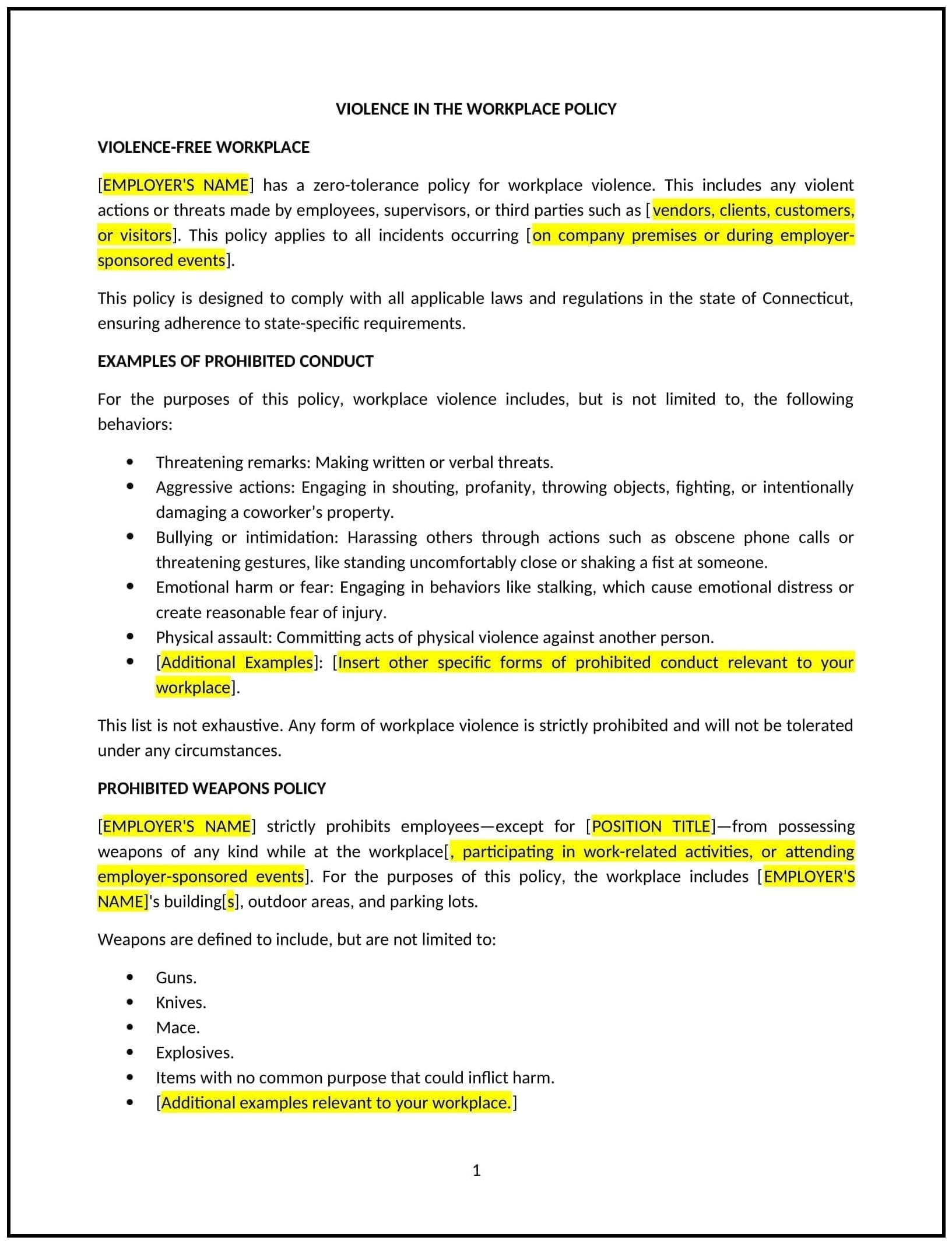
Violence in the workplace policy (Connecticut)
A violence in the workplace policy helps Connecticut businesses establish a zero-tolerance approach to workplace violence, creating a safe and secure environment for all employees. This policy outlines the company’s commitment to preventing violence, addressing violent incidents, and taking appropriate actions to ensure the safety of employees, visitors, and contractors.
By implementing this policy, businesses can reduce the risk of violent incidents, ensure legal compliance, and foster a positive work environment that promotes respect, professionalism, and safety.
How to use this violence in the workplace policy (Connecticut)
- Define workplace violence: Clearly define what constitutes workplace violence, including physical assault, verbal threats, intimidation, bullying, and harassment. Make sure employees understand that any form of violence or threat is unacceptable.
- Establish reporting procedures: Outline the process for employees to report violent incidents or threats, ensuring that the process is confidential and accessible. Encourage employees to report incidents immediately without fear of retaliation.
- Specify prohibited behaviors: List the types of behaviors that are strictly prohibited in the workplace, such as physical altercations, threats, and harassment, and explain the consequences for engaging in these behaviors.
- Provide safety protocols: Include procedures for handling violent situations, such as evacuating employees, contacting law enforcement, or notifying security personnel. Define roles and responsibilities in the event of a violent incident.
- Address conflict resolution: Promote conflict resolution and de-escalation techniques, encouraging employees to resolve disputes professionally and without resorting to violence.
- Provide employee support: Offer support services for employees who are affected by workplace violence, such as counseling, employee assistance programs (EAPs), and medical assistance.
- Implement preventive measures: Establish workplace security measures, such as monitoring access points, using security personnel, and providing training to employees and managers on how to prevent and respond to violence in the workplace.
- Conduct regular training: Ensure that all employees receive training on the violence prevention policy, how to recognize early signs of conflict, and how to respond to incidents safely and professionally.
Benefits of using this violence in the workplace policy (Connecticut)
This policy offers several benefits for Connecticut businesses:
- Promotes a safe work environment: The policy helps create a workplace where employees feel safe and respected, reducing the risk of injury and fostering a positive, productive environment.
- Reduces legal risks: By addressing workplace violence proactively, the policy helps ensure compliance with state and federal laws, reducing the risk of legal liability and potential lawsuits.
- Increases employee morale: Employees who feel safe at work are more likely to be engaged, productive, and loyal, improving overall morale and retention.
- Prevents workplace disruptions: By setting clear guidelines and expectations, the policy helps prevent violent incidents that could disrupt business operations and create a toxic work environment.
- Supports mental and emotional well-being: Providing support for victims of workplace violence, including counseling and resources, helps employees recover and reduces the long-term effects of trauma.
Tips for using this violence in the workplace policy (Connecticut)
- Communicate the policy clearly: Ensure that all employees are aware of the policy and understand the behaviors that are not tolerated, as well as the steps to take if they experience or witness workplace violence.
- Implement preventive measures: Regularly assess the workplace for potential risks and make improvements to reduce the likelihood of violent incidents, such as installing security measures or conducting regular safety drills.
- Offer regular training: Provide employees with training on conflict resolution, violence prevention, and emergency response procedures to ensure that they are prepared to handle difficult situations.
- Foster a supportive environment: Encourage open communication about workplace safety and well-being, and create an environment where employees feel comfortable reporting concerns without fear of retaliation.
- Review and update the policy: Regularly review and update the policy to ensure it aligns with current laws, industry best practices, and evolving workplace needs.