Violence in the workplace policy (Iowa): Free template
Got contracts to review? While you're here for policies, let Cobrief make contract review effortless—start your free review now.
Customize this template for free
Violence in the workplace policy (Iowa)
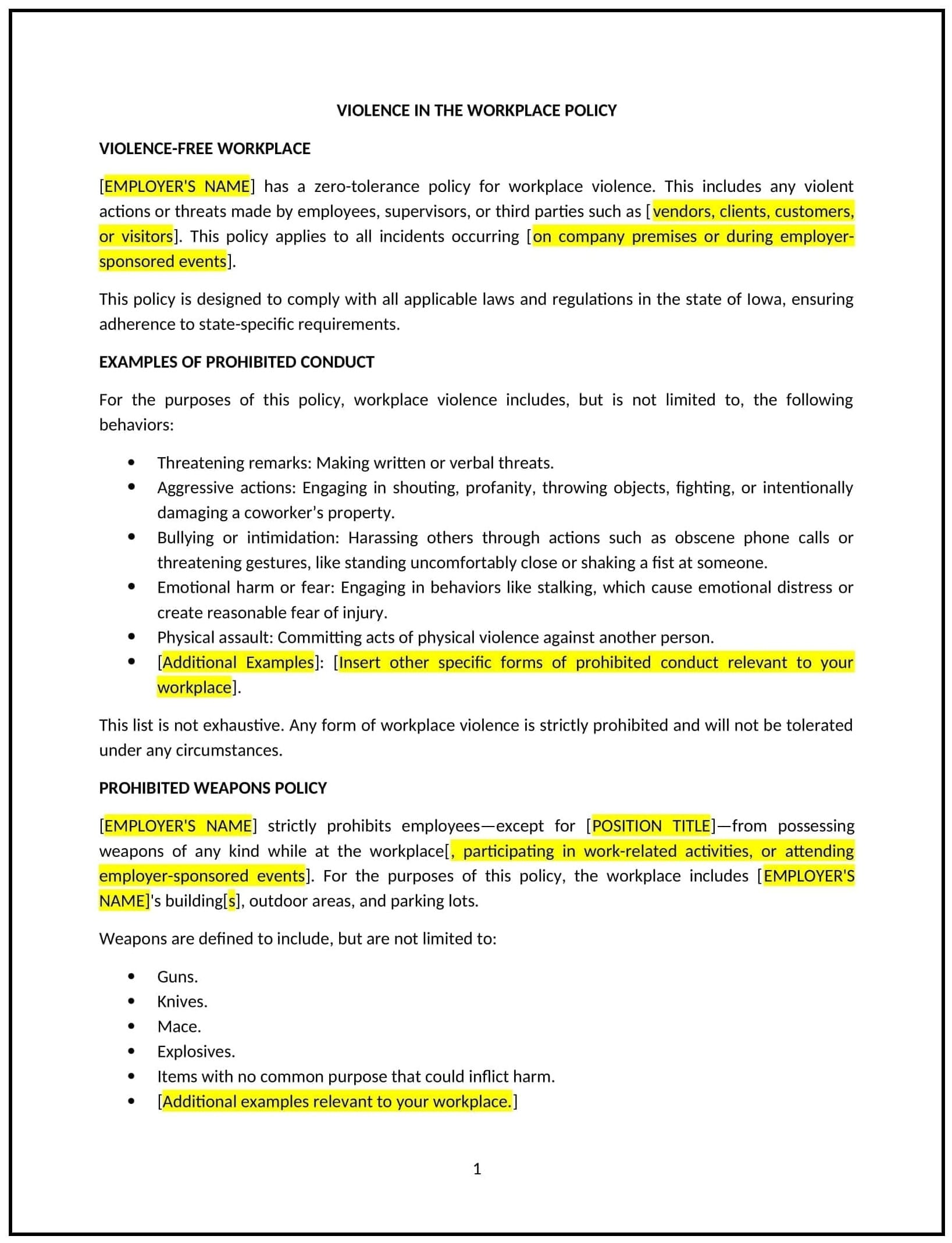
A violence in the workplace policy helps Iowa businesses establish clear expectations and procedures for preventing and responding to violence in the workplace. This policy defines workplace violence, outlines the behaviors that are not tolerated, and provides a framework for addressing and reporting incidents of violence. It emphasizes creating a safe and respectful work environment for all employees, customers, and visitors.
By implementing this policy, businesses can prevent incidents of workplace violence, respond effectively when they occur, and ensure that employees feel safe and supported while at work.
How to use this violence in the workplace policy (Iowa)
- Define workplace violence: Clearly define what constitutes workplace violence, including physical violence, verbal threats, harassment, bullying, and other aggressive behaviors that could harm individuals or disrupt the workplace.
- Set behavioral expectations: Outline the behaviors that are unacceptable in the workplace, including physical aggression, threatening language, intimidation, and other violent or disruptive actions. Provide examples to help employees understand the boundaries.
- Establish a reporting procedure: Create a clear and confidential process for employees to report incidents of workplace violence, including how to report, who to report to, and what information is needed. Ensure that employees know where to turn for help.
- Detail the response process: Specify the steps that will be taken in response to reported incidents, including investigation procedures, possible disciplinary actions, and how the company will support victims of workplace violence.
- Promote de-escalation strategies: Encourage employees to use de-escalation techniques when faced with potentially violent situations. Provide training on conflict resolution, effective communication, and stress management to help prevent violence.
- Provide support for affected employees: Outline the resources available for employees who are affected by workplace violence, such as counseling services, employee assistance programs (EAPs), or temporary work accommodations.
- Implement preventive measures: Promote a workplace culture that emphasizes respect, inclusivity, and zero tolerance for violence. Implement regular training and awareness programs to reinforce the company’s commitment to a safe work environment.
- Review and update regularly: Periodically review and update the policy to ensure it aligns with changing laws, best practices, and employee feedback, while addressing any emerging threats to workplace safety.
Benefits of using this violence in the workplace policy (Iowa)
This policy offers several key benefits for Iowa businesses:
- Promotes a safe work environment: By clearly defining and addressing workplace violence, businesses can create an environment where employees feel secure, respected, and supported.
- Reduces legal risks: A comprehensive policy helps businesses mitigate the risk of legal liability by addressing workplace violence proactively and documenting the steps taken to prevent and respond to incidents.
- Increases employee well-being: Employees are more likely to feel safe and valued when they know that their employer is committed to preventing and addressing violence, which can lead to improved morale and job satisfaction.
- Enhances productivity: A safe work environment fosters greater focus and collaboration, which can lead to higher productivity and better outcomes for the business.
- Strengthens the company’s reputation: Businesses that prioritize workplace safety and the well-being of their employees enhance their reputation both internally and externally, demonstrating their commitment to ethical practices and employee care.
- Supports compliance with regulations: Implementing a violence in the workplace policy helps businesses comply with state and federal regulations designed to protect employees from harm and maintain a safe workplace.
Tips for using this violence in the workplace policy (Iowa)
- Communicate the policy clearly: Ensure that all employees understand the violence in the workplace policy, including how to report incidents, what constitutes unacceptable behavior, and the resources available for support.
- Provide regular training: Conduct regular training on preventing and responding to workplace violence, including conflict resolution, de-escalation strategies, and how to recognize warning signs of violence.
- Foster a culture of respect: Encourage a workplace culture where respect, inclusivity, and professionalism are valued. Promote open communication and address issues before they escalate into violence.
- Ensure confidentiality: Maintain confidentiality when handling reports of violence to protect the privacy and safety of employees involved. Employees should feel confident that they can report incidents without fear of retaliation or exposure.
- Monitor the effectiveness of the policy: Regularly evaluate the effectiveness of the policy and reporting mechanisms, seeking feedback from employees to ensure that the policy is meeting its goals of preventing and addressing workplace violence.
- Take swift action: Respond promptly to reports of violence or threats, investigating the incident thoroughly, taking appropriate action, and offering support to employees affected by the situation.