Violence in the workplace policy (Kansas): Free template
Got contracts to review? While you're here for policies, let Cobrief make contract review effortless—start your free review now.
Customize this template for free
Violence in the workplace policy (Kansas)
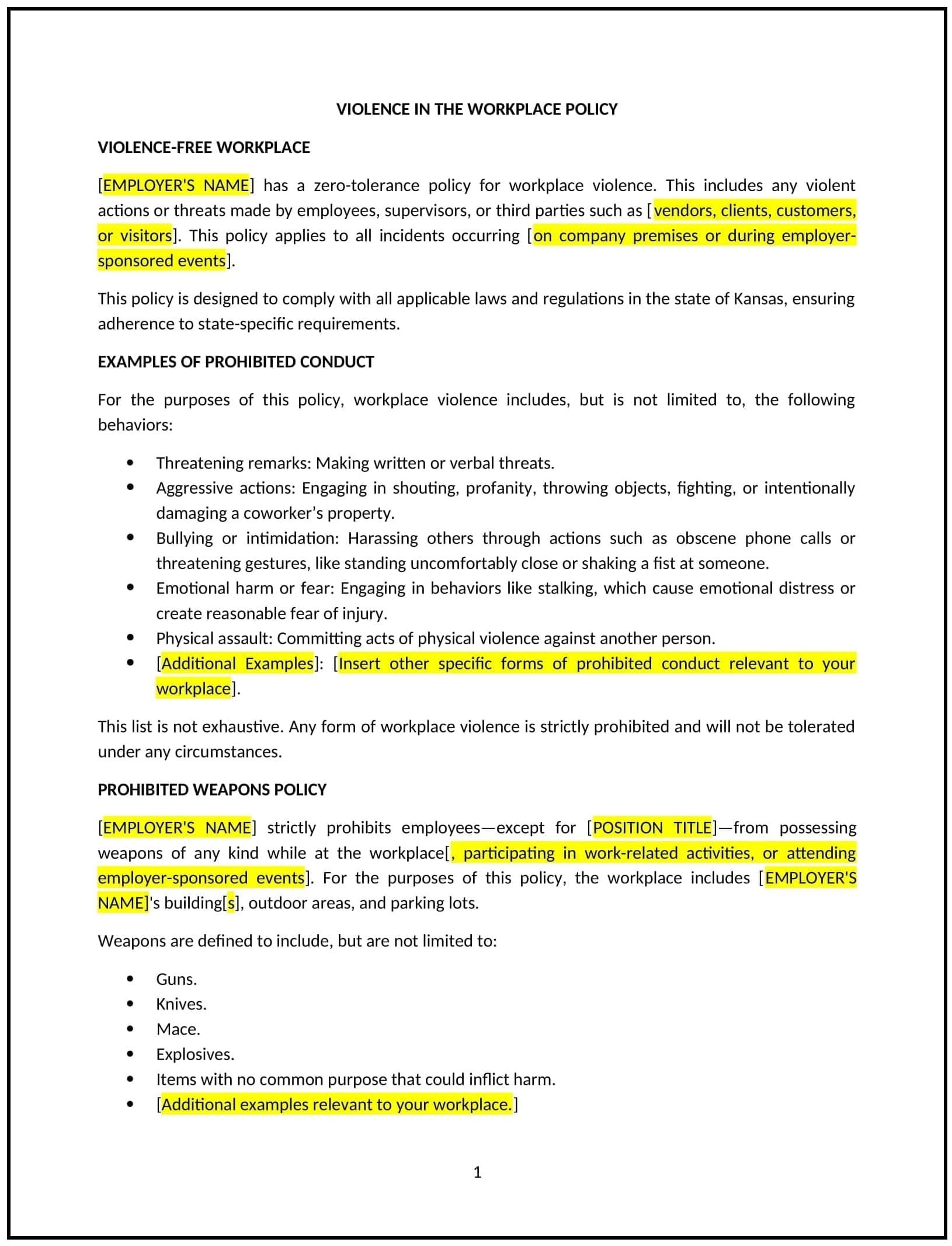
A violence in the workplace policy helps Kansas businesses establish clear guidelines for preventing, identifying, and addressing workplace violence. This policy outlines what constitutes workplace violence, the responsibilities of employees and employers, and the procedures to follow if an incident occurs. It emphasizes maintaining a safe and respectful work environment for all employees.
By implementing this policy, businesses can reduce the risk of violent incidents, protect employees, and foster a positive work environment.
How to use this violence in the workplace policy (Kansas)
- Define workplace violence: The policy should provide a clear definition of workplace violence, which may include physical violence, verbal threats, harassment, or other forms of aggression that create a hostile work environment.
- Set expectations for behavior: The policy should outline acceptable behavior within the workplace, emphasizing respect, professionalism, and cooperation among employees, and setting clear boundaries for unacceptable conduct.
- Establish reporting procedures: The policy should provide a clear process for employees to report any incidents of violence, threats, or suspicious behavior. This should include the channels through which employees can report concerns (e.g., HR, security, management).
- Outline prevention strategies: The policy should include measures to prevent violence, such as training programs on conflict resolution, promoting open communication, and encouraging a culture of respect and safety.
- Specify disciplinary actions: The policy should define the consequences for employees who engage in violent behavior, including warnings, suspension, termination, or legal action depending on the severity of the incident.
- Provide support for affected employees: The policy should include provisions for supporting employees who have been victims of workplace violence, including access to counseling services, employee assistance programs (EAPs), and leave for recovery if necessary.
- Review and update regularly: The policy should be reviewed periodically to ensure it remains effective, reflects changes in company culture or legal requirements, and addresses new risks as they arise.
Benefits of using a violence in the workplace policy (Kansas)
- Enhances workplace safety: A clear policy helps prevent violent incidents by setting expectations for behavior, promoting early intervention, and providing a framework for dealing with conflicts before they escalate.
- Protects employees and reduces harm: By addressing workplace violence proactively, businesses can protect employees from physical, emotional, or psychological harm, ensuring a safer environment for everyone.
- Promotes a positive work environment: A violence-free workplace fosters an atmosphere of respect and professionalism, which can improve employee morale, productivity, and overall job satisfaction.
- Reduces legal risks: Having a formal policy helps businesses avoid legal liability by ensuring that they take appropriate action to prevent and address workplace violence, demonstrating a commitment to employee safety.
- Improves employee retention: Employees who feel safe and supported are more likely to stay with the company, reducing turnover and the costs associated with recruitment and training new employees.
- Builds a strong company reputation: Companies that prioritize safety and employee well-being are viewed more positively by clients, customers, and potential employees, strengthening the company’s reputation and brand.
Tips for using this violence in the workplace policy (Kansas)
- Communicate the policy clearly: Ensure all employees are aware of the violence in the workplace policy and understand the expectations for behavior, how to report incidents, and the resources available for support.
- Provide regular training: Offer training on conflict resolution, de-escalation techniques, and how to identify and respond to potential violence in the workplace. This helps employees feel empowered to handle difficult situations safely.
- Encourage a culture of respect: Promote open communication, inclusivity, and mutual respect to prevent conflicts from escalating into violent situations. Encourage employees to speak up if they notice warning signs of potential violence.
- Monitor and evaluate the effectiveness of the policy: Businesses should regularly review incident reports, feedback from employees, and the effectiveness of prevention measures to identify areas for improvement and ensure the policy is working as intended.
- Take immediate action: If a violent incident does occur, businesses should act swiftly to address the situation, provide support to affected employees, and investigate the incident thoroughly. Taking prompt action can help prevent future incidents and maintain trust in the policy.
- Review and update the policy regularly: The policy should be revisited periodically, especially after any incidents of workplace violence, to ensure it remains relevant, comprehensive, and aligned with best practices in safety and employee well-being.