Got contracts to review? While you're here for policies, let Cobrief make contract review effortless—start your free review now.
Customize this template for free
Weapons policy (New Hampshire)
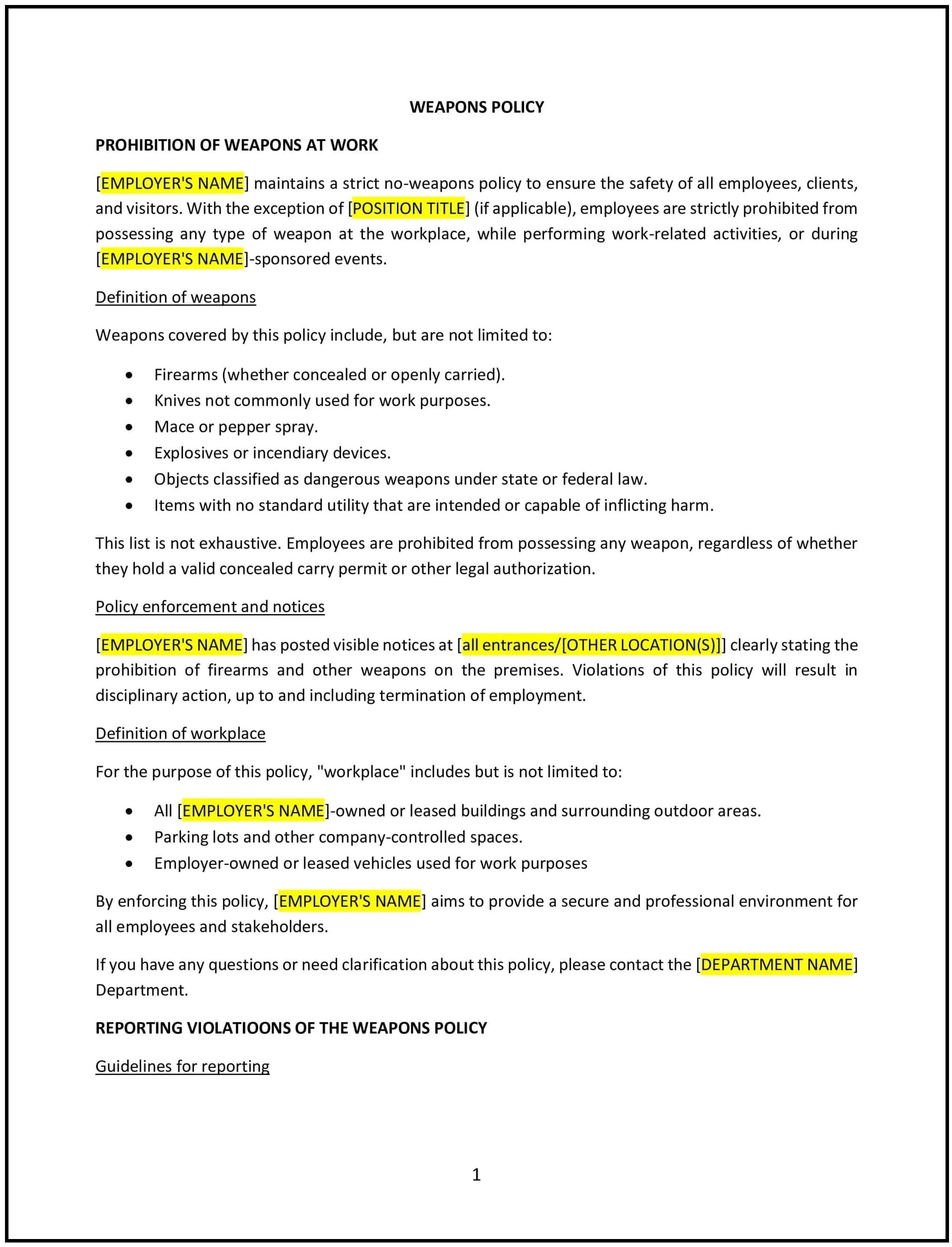
A weapons policy helps New Hampshire businesses establish clear guidelines regarding the possession, use, and storage of weapons in the workplace. This policy aims to maintain a safe and secure environment for all employees, visitors, and customers by prohibiting unauthorized weapons on company premises or during company-sponsored activities.
By implementing this policy, businesses can reduce the risk of workplace violence, ensure a safer working environment, and communicate their commitment to employee well-being.
How to use this weapons policy (New Hampshire)
- Define weapons: Clearly define what constitutes a weapon under the policy, including firearms, knives, explosives, or any other items that could be used to cause harm.
- Establish a prohibition on weapons: State that employees, visitors, and contractors are prohibited from bringing weapons onto company premises or carrying them during work-related activities, unless legally permitted (e.g., law enforcement officers).
- Outline exceptions: Identify any exceptions to the policy, such as law enforcement personnel or employees who are authorized for specific duties that require the possession of a weapon.
- Detail storage procedures: If exceptions apply, specify the conditions under which weapons can be stored, such as secure, locked areas, and who is responsible for securing the weapons.
- Address enforcement: Specify the consequences of violating the weapons policy, including potential disciplinary action or legal consequences for employees found in violation.
- Set procedures for reporting: Provide employees with a clear reporting procedure if they encounter a weapon in the workplace, or if they feel threatened by another person possessing a weapon.
- Train employees: Ensure that employees are trained on the weapons policy, including the importance of maintaining a weapons-free workplace and how to report potential threats.
- Review and update: Periodically review and update the weapons policy to ensure it remains aligned with evolving legal regulations and company needs.
Benefits of using this weapons policy (New Hampshire)
This policy provides several benefits for New Hampshire businesses:
- Promotes employee safety: A clear weapons policy ensures that employees work in an environment free from the threat of violence or harm from weapons.
- Reduces risk of incidents: By clearly prohibiting weapons on company premises, businesses reduce the risk of dangerous situations arising from the possession of weapons.
- Protects business reputation: A firm stance against weapons in the workplace helps maintain a professional image, reassuring clients and customers that safety is a top priority.
- Enhances compliance: A well-established weapons policy helps businesses comply with state and federal laws regarding weapons and firearms.
- Fosters a positive work environment: Employees will feel safer and more comfortable knowing that their employer is committed to maintaining a weapons-free and secure workplace.
Tips for using this weapons policy (New Hampshire)
- Communicate the policy clearly: Make sure all employees are aware of the weapons policy and understand its importance. Provide training to reinforce the message and ensure everyone knows what is considered a weapon.
- Provide clear reporting procedures: Employees should feel comfortable reporting any violations of the weapons policy or any perceived threats. Create an environment where reporting is encouraged and taken seriously.
- Regularly review the policy: Ensure that the weapons policy is regularly reviewed to reflect any changes in legal requirements or business operations, and update it as necessary.
- Enforce consistently: Make sure the weapons policy is consistently enforced across all levels of the organization to ensure fairness and maintain a safe workplace.
- Educate about legal exceptions: Clearly communicate any legal exceptions to the policy, such as exemptions for law enforcement officers or other qualified personnel, so there is no confusion.