Witness and victim of crime leave policy (Hawaiʻi): Free template
Got contracts to review? While you're here for policies, let Cobrief make contract review effortless—start your free review now.
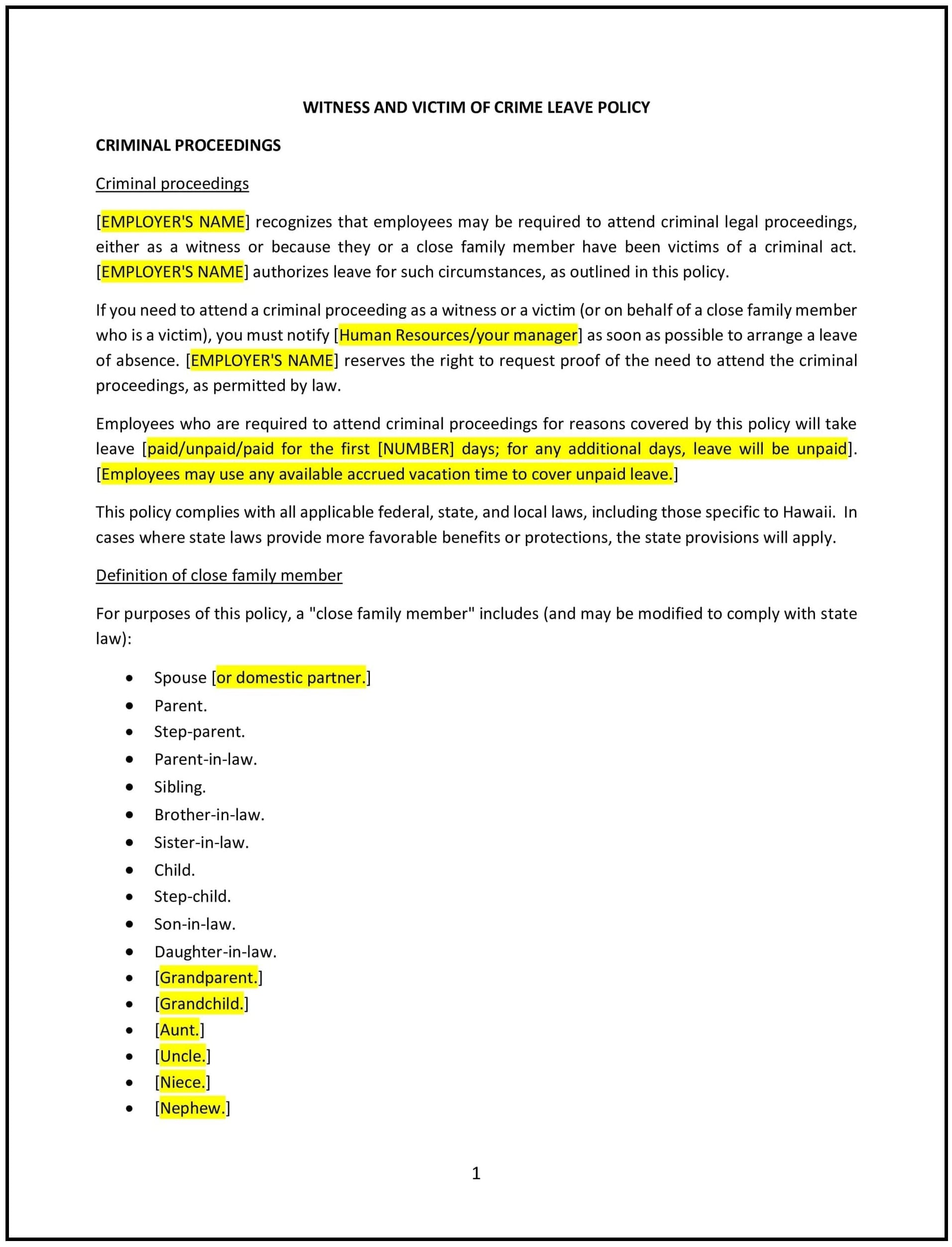
Customize this template for free
Witness and victim of crime leave policy (Hawaiʻi)
A witness and victim of crime leave policy helps Hawaiʻi businesses support employees who are victims of or witnesses to a crime. This policy outlines procedures for granting time off to attend court proceedings, seek medical care, or address other crime-related needs, while considering Hawaiʻi’s cultural values and legal framework. It is designed to promote employee well-being, provide necessary support, and demonstrate compassion during challenging times.
By implementing this policy, businesses in Hawaiʻi can foster a supportive workplace culture, enhance employee trust, and contribute to the community’s safety and recovery.
How to use this witness and victim of crime leave policy (Hawaiʻi)
- Define eligibility: Clearly outline which employees are eligible for leave, such as victims of crime, witnesses, or immediate family members of victims.
- Specify covered activities: Identify the types of activities covered by the leave, such as attending court hearings, seeking medical care, or meeting with law enforcement.
- Establish leave duration: Specify the amount of leave available, such as a set number of days per year, and whether it is paid or unpaid.
- Outline request procedures: Describe the process for requesting leave, including advance notice requirements and necessary documentation, such as court summons or police reports.
- Maintain confidentiality: Ensure that employees’ personal information and circumstances are handled with sensitivity and confidentiality.
- Communicate the policy: Share the policy with employees during onboarding and through internal communications to ensure awareness and understanding.
- Train managers: Educate managers on the policy’s guidelines, including how to handle leave requests with empathy and discretion.
- Monitor and update the policy: Regularly review the policy’s effectiveness and make adjustments as needed to reflect changes in laws or business needs.
Benefits of using this witness and victim of crime leave policy (Hawaiʻi)
This policy offers several advantages for Hawaiʻi businesses:
- Supports employee well-being: Providing leave demonstrates the business’s commitment to supporting employees during difficult times.
- Builds trust: A compassionate and fair policy fosters trust between employees and management.
- Enhances workplace culture: A supportive environment contributes to a positive and inclusive workplace culture.
- Aligns with community values: The policy reflects Hawaiʻi’s emphasis on community, compassion, and mutual support.
- Reduces stress: Employees can focus on addressing crime-related needs without worrying about job security or lost income.
- Improves retention: Offering support during challenging situations can increase employee loyalty and reduce turnover.
- Demonstrates social responsibility: The policy shows the business’s commitment to contributing to the community’s safety and recovery.
Tips for using this witness and victim of crime leave policy (Hawaiʻi)
- Communicate the policy effectively: Share the policy with employees during onboarding and through regular reminders, such as emails or training sessions.
- Handle requests with sensitivity: Ensure that managers handle leave requests with empathy, discretion, and respect for employees’ privacy.
- Provide resources: Offer information about local support services, such as victim advocacy organizations or counseling resources.
- Be flexible: Work with employees to accommodate their needs while maintaining business operations.
- Train managers: Educate managers on the policy’s guidelines and the importance of supporting employees during challenging times.
- Review the policy periodically: Update the policy as needed to reflect changes in laws, workplace dynamics, or business needs.