Witness and victim of crime leave policy (Iowa): Free template
Got contracts to review? While you're here for policies, let Cobrief make contract review effortless—start your free review now.
Customize this template for free
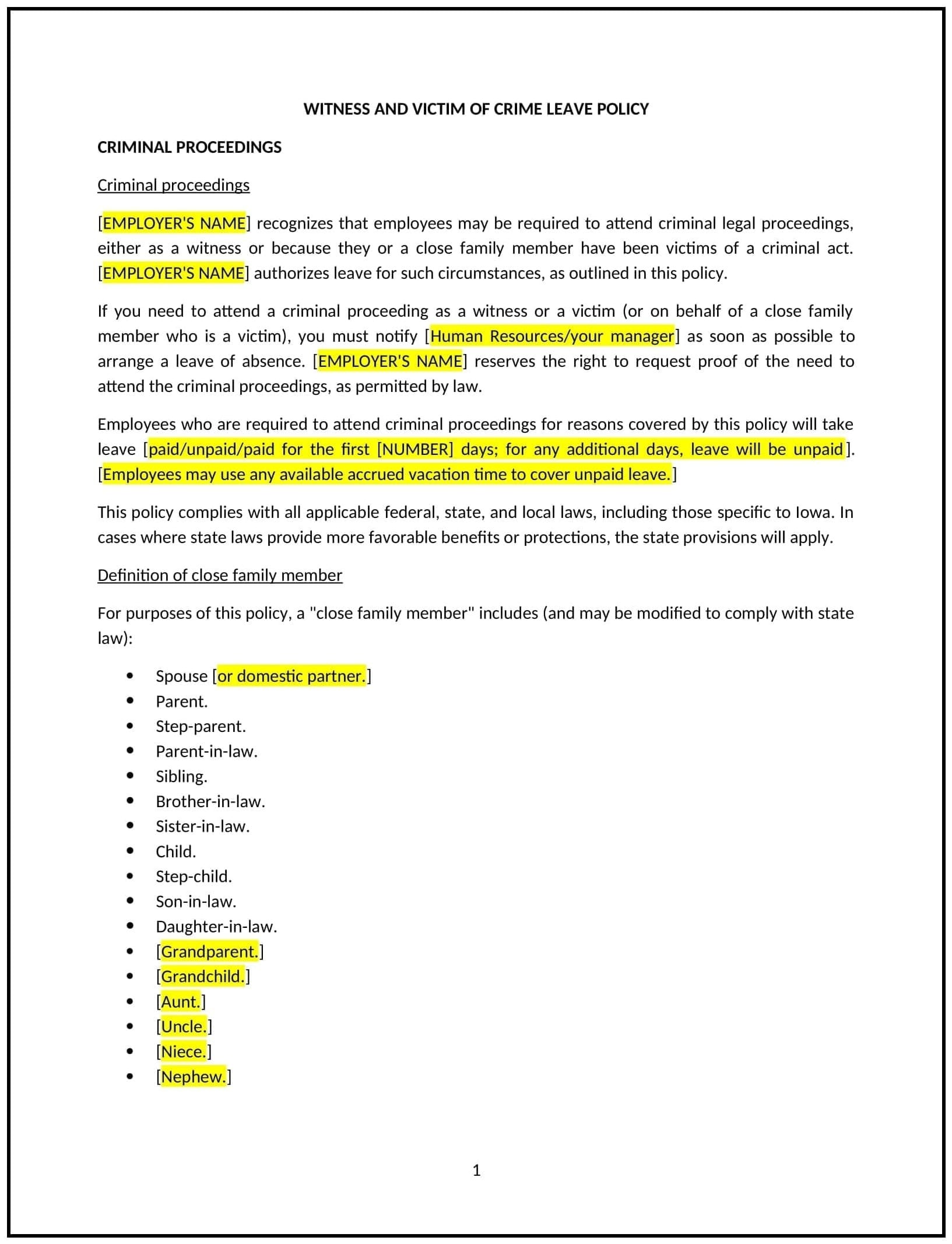
Witness and victim of crime leave policy (Iowa)
A witness and victim of crime leave policy helps Iowa businesses manage time off for employees who need to attend court or related proceedings due to being a victim or a witness of a crime. This policy outlines the employee’s rights to take leave, the documentation required, and how the leave is managed. It ensures that employees can fulfill their civic duties without suffering financial consequences and that businesses can maintain clarity and consistency when dealing with leave requests related to crime-related matters.
By implementing this policy, businesses can show their support for employees during difficult circumstances, while ensuring the organization supports compliance with state regulations and continues to operate smoothly.
How to use this witness and victim of crime leave policy (Iowa)
- Define eligibility: Clearly outline who is eligible for leave under this policy, including employees who are victims of crime or witnesses required to attend criminal court proceedings related to the crime.
- Set the scope of leave: Specify the types of events that qualify for leave, such as attending court hearings, trials, or legal proceedings directly related to the crime, as well as any necessary documentation to prove participation in these events.
- Establish documentation requirements: Set guidelines for the documentation required to request leave, such as court subpoenas, police reports, or legal notices. Ensure that employees know when and how to provide these documents to request time off.
- Clarify compensation: State whether the time off will be paid or unpaid, and if any paid time off (PTO) or vacation days can be used for this leave. If the business is required to provide paid leave by law, specify the terms of compensation.
- Address the duration of leave: Define how much time off employees are entitled to take for crime-related leave, whether it is limited to a specific number of days or based on the length of the legal proceedings.
- Specify the process for requesting leave: Outline the steps employees need to follow to request leave, including how far in advance the request should be made, who to notify, and any additional steps to ensure the leave is processed smoothly.
- Review and update regularly: Periodically review the policy to ensure it is in line with changes in state law or the needs of the business, and to ensure employees are informed of their rights regarding crime-related leave.
Benefits of using this witness and victim of crime leave policy (Iowa)
This policy offers several key benefits for Iowa businesses:
- Supports employees in difficult circumstances: By providing time off for employees to attend court or other legal proceedings, businesses demonstrate a commitment to supporting employees who are victims or witnesses of crime.
- Increases employee retention: Offering this benefit can help build employee loyalty, as employees will feel valued and supported during challenging personal situations.
- Reduces legal risks: Having a clear and well-defined policy for crime-related leave helps businesses comply with state laws and avoids potential legal issues related to leave entitlement.
- Enhances business reputation: Businesses that provide leave for witnesses and victims of crime are seen as responsible and compassionate employers, which can improve the company’s reputation and employee morale.
- Fosters a respectful work environment: Providing leave for crime-related matters shows that the company respects employees’ rights and acknowledges the importance of fulfilling civic duties and personal well-being.
- Reduces workplace disruptions: By allowing employees to take time off for legal matters, businesses can prevent workplace disruptions that may occur if employees are forced to choose between their personal responsibilities and work.
Tips for using this witness and victim of crime leave policy (Iowa)
- Communicate the policy clearly: Ensure that employees are aware of their rights under the policy and understand how to request time off for crime-related matters. Include the policy in the employee handbook and discuss it during onboarding.
- Provide a straightforward request process: Make it easy for employees to request crime-related leave by providing clear steps, ensuring they know who to contact and what documentation is required.
- Be flexible with leave requests: Recognize that court schedules and legal proceedings can be unpredictable, so offer flexibility when possible to accommodate employees’ needs.
- Ensure timely processing: Ensure that leave requests are processed in a timely manner so employees can attend legal proceedings without unnecessary delays or complications.
- Maintain confidentiality: Handle any crime-related leave requests confidentially to protect employees’ privacy and avoid disclosing sensitive details about their involvement in criminal matters.
- Review the policy regularly: Periodically assess whether the policy meets both employee needs and business goals. Update the policy if necessary to reflect changes in state laws or company practices.