Witness and victim of crime leave policy (Kansas): Free template
Got contracts to review? While you're here for policies, let Cobrief make contract review effortless—start your free review now.
Customize this template for free
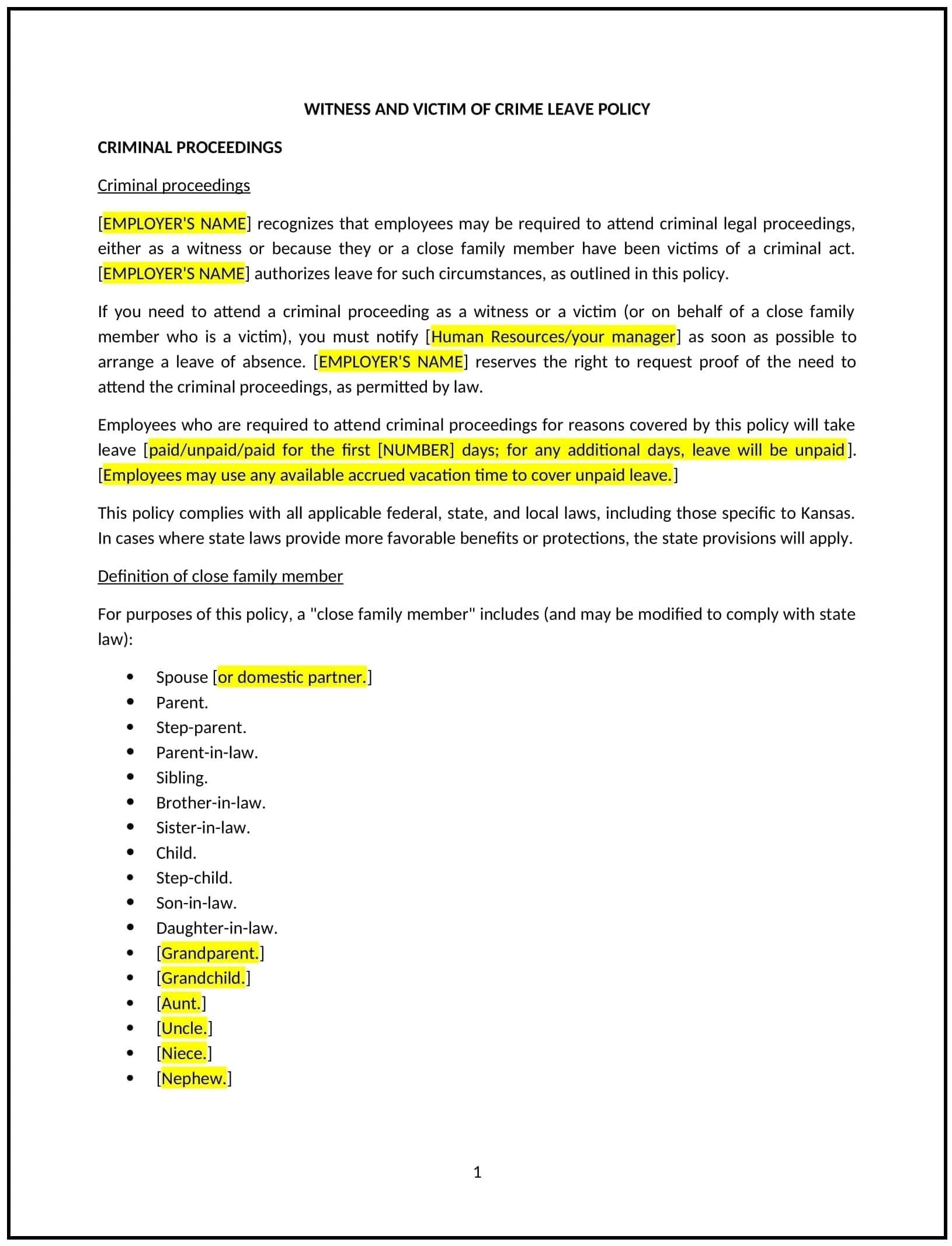
Witness and victim of crime leave policy (Kansas)
A witness and victim of crime leave policy helps Kansas businesses manage the leave entitlements of employees who are witnesses to or victims of a crime. This policy outlines the circumstances under which employees can take time off to attend court proceedings, participate in legal matters, or recover from crimes that have impacted them. It provides clarity on the process for requesting leave and the type of support available for affected employees.
By implementing this policy, businesses can support employees during difficult times, while ensuring they can fulfill their legal obligations and personal recovery needs without sacrificing their job security.
How to use this witness and victim of crime leave policy (Kansas)
- Define eligibility: The policy should specify the conditions under which employees are eligible for leave, such as if they are a witness in a criminal case, a victim of a crime, or if they need time off to attend hearings, trials, or to meet with law enforcement or legal counsel.
- Outline the types of leave available: The policy should state whether the leave is paid, unpaid, or if it can be used as part of an employee’s personal or vacation time. It should also clarify whether the leave is separate from other types of leave (e.g., sick leave or vacation).
- Set reporting requirements: The policy should specify how employees should request leave, including the amount of notice required, any documentation that may be needed (such as court summons or police reports), and the process for notifying supervisors or HR.
- Address job protection: The policy should ensure that employees are not penalized for taking time off to participate in legal proceedings, and they are entitled to return to their job or a similar position after the leave period ends.
- Provide resources and support: The policy should include information on any resources available to employees, such as counseling or employee assistance programs (EAPs), and how to access support during the legal process.
- Review and update regularly: The policy should be reviewed periodically to ensure it remains in line with any changes in state or federal law, as well as the evolving needs of the business.
Benefits of using a witness and victim of crime leave policy (Kansas)
- Supports employees during difficult times: The policy provides employees with the time and resources they need to recover from a crime or fulfill their legal obligations without the added stress of worrying about job security.
- Promotes a positive work culture: Offering support to employees in challenging situations demonstrates the company’s commitment to employee well-being, fostering trust and loyalty.
- Ensures legal compliance: A clear policy helps businesses stay compliant with state laws related to crime victims and witnesses, avoiding potential legal liabilities.
- Enhances employee retention: By providing leave for victims and witnesses of crime, businesses show that they value their employees’ needs, which can increase job satisfaction and employee retention.
- Minimizes workplace disruption: Allowing employees the time they need to attend to legal matters ensures that employees are not distracted or burdened by unresolved personal issues, which can help maintain productivity and focus at work.
- Reduces potential legal risks: Offering time off for crime victims or witnesses may reduce the risk of legal claims against the business related to employee rights, ensuring that employees are treated fairly during the leave process.
Tips for using this witness and victim of crime leave policy (Kansas)
- Communicate the policy clearly: Ensure that employees are aware of the leave options available to them in the event they are victims of or witnesses to a crime. Provide training or information sessions on the policy’s details.
- Maintain privacy and confidentiality: Handle all employee requests for crime-related leave with discretion, respecting the privacy of the individual involved, and ensuring that personal details are kept confidential.
- Encourage timely reporting: Employees should be encouraged to provide notice as early as possible to ensure smooth planning and coverage of their responsibilities while they are on leave.
- Offer flexibility in leave scheduling: While maintaining business needs, businesses should be flexible in granting leave to employees based on court dates or legal proceedings, recognizing the unpredictability of such matters.
- Monitor the use of leave: Keep accurate records of all leave taken for crime-related matters to manage leave balances, ensure appropriate approval processes are followed, and prevent misuse.
- Review and update the policy regularly: Periodically evaluate the policy to ensure it is meeting employee needs, aligned with legal changes, and remains in line with the business’s operational requirements.