Witness and victim of crime leave policy (Maine): Free template
Got contracts to review? While you're here for policies, let Cobrief make contract review effortless—start your free review now.
Customize this template for free
Witness and victim of crime leave policy (Maine): Free template
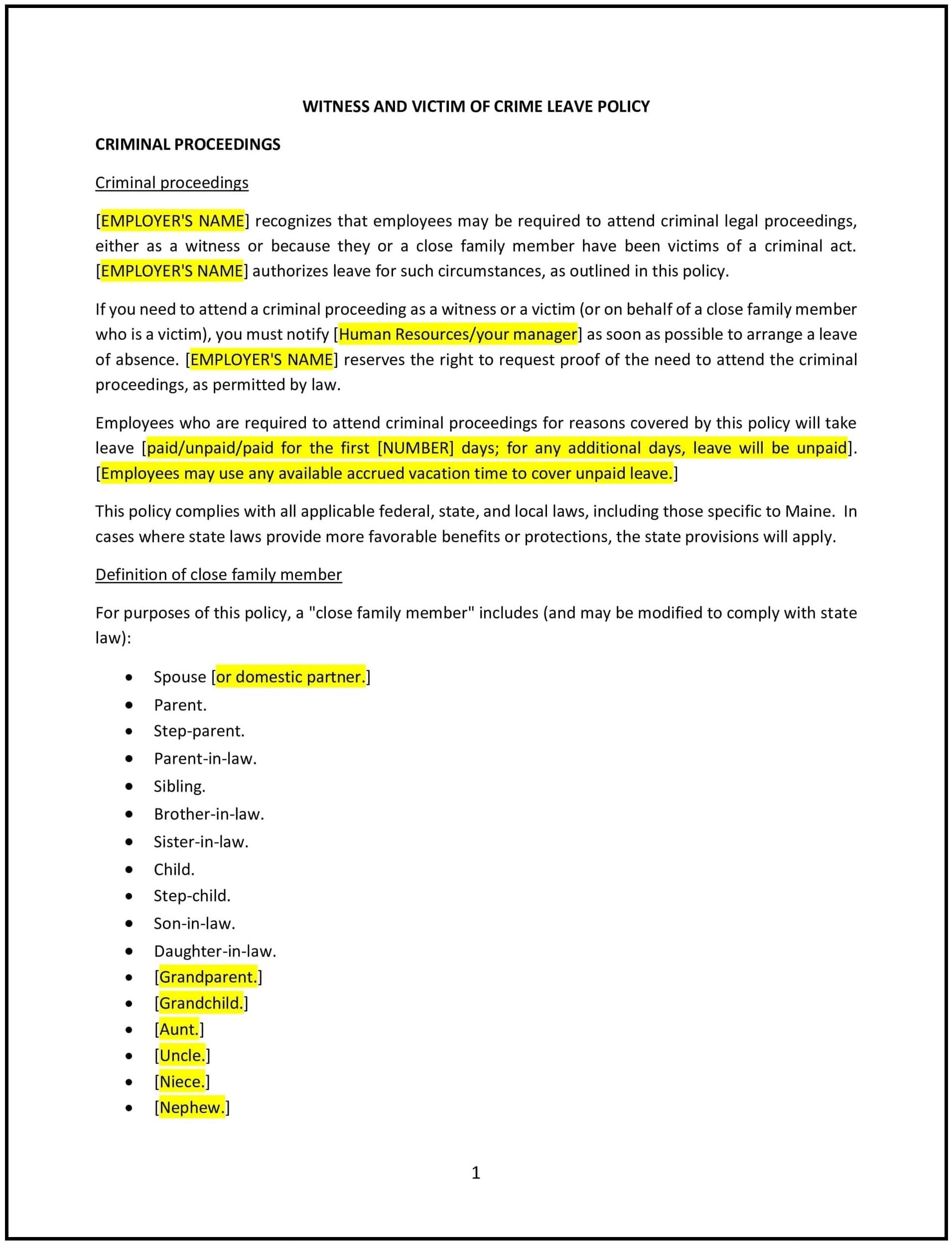
This witness and victim of crime leave policy is designed to help Maine businesses comply with state laws regarding leave for employees who are victims of a crime or witnesses in criminal proceedings. The policy outlines the circumstances under which employees can take time off to participate in criminal justice processes and how the company will manage these absences while maintaining business operations.
By implementing this policy, Maine businesses can ensure that they support employees in times of need, support compliance with legal requirements, and manage employee absences efficiently.
How to use this witness and victim of crime leave policy (Maine)
- Define eligibility: Specify which employees are eligible for leave under this policy, including full-time or part-time employees who are victims of a crime or are required to serve as a witness in a criminal case.
- Outline qualifying situations: Clearly define what constitutes a qualifying event, such as being the direct victim of a crime, being subpoenaed as a witness, or needing time off for legal proceedings related to the crime.
- Set leave entitlements: Specify the amount of leave employees are entitled to take for crime-related situations, whether it is paid or unpaid, and how much time off can be taken for court appearances, legal meetings, or recovery.
- Establish documentation requirements: Outline the documentation employees need to provide to support their request for leave, such as court subpoenas, police reports, or statements from law enforcement or attorneys.
- Define pay policies: Clarify whether the leave will be paid or unpaid. Some businesses may offer paid leave as a benefit, while others may offer unpaid leave or allow employees to use other available leave (e.g., vacation days).
- Ensure job protection: Specify that employees will be protected from retaliation for taking leave under this policy and that they will return to the same or an equivalent position once their leave is over.
- Review regularly: Periodically review the policy to reflect any changes in Maine state laws, business needs, or employee feedback.
Benefits of using this witness and victim of crime leave policy (Maine)
Implementing this policy provides several benefits for Maine businesses:
- Ensures legal compliance: Helps businesses comply with Maine’s laws regarding leave for victims and witnesses of crime, minimizing legal risks.
- Promotes employee well-being: Supports employees during difficult times, whether they are victims of crime or required to serve as witnesses, fostering goodwill and loyalty.
- Reduces workplace disruption: Establishes clear guidelines for managing time off, ensuring that employee absences due to crime-related matters are handled smoothly and fairly.
- Enhances transparency: Provides employees with clear information about their rights and the process for requesting leave, reducing misunderstandings and potential conflicts.
- Protects business interests: Ensures that employees are not unfairly penalized for participating in the criminal justice system, supporting a positive work environment.
Tips for using this witness and victim of crime leave policy (Maine)
- Communicate the policy clearly: Ensure that all employees are aware of the policy, including how to request leave, what documentation is required, and the circumstances under which leave will be granted.
- Ensure confidentiality: Handle all requests for leave and related documentation confidentially to protect the privacy of employees involved in criminal proceedings.
- Train managers: Provide training for managers and HR staff to ensure they understand how to process requests for leave, the rights of the employee, and the business’s obligations under the policy.
- Monitor compliance: Track instances of leave taken under this policy to ensure that the business remains compliant with state laws and that the policy is applied consistently.
- Provide support: Offer additional support, such as counseling or referrals to employee assistance programs (EAPs), for employees who are victims of crime, to help them cope during difficult times.