Got contracts to review? While you're here for policies, let Cobrief make contract review effortless—start your free review now.
Customize this template for free
Workplace bullying policy (Kansas)
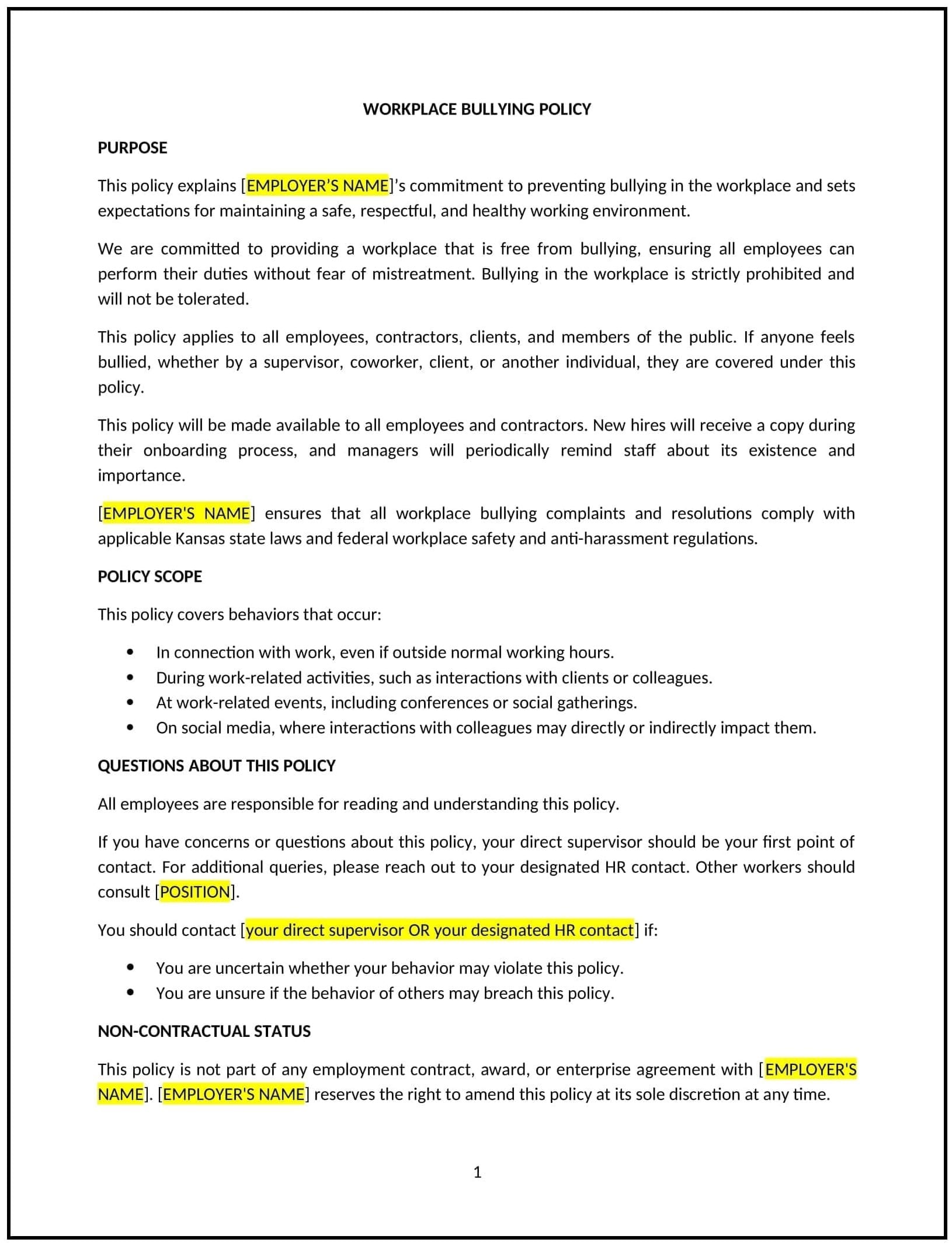
A workplace bullying policy helps Kansas businesses define, prevent, and address bullying in the workplace. This policy outlines what constitutes workplace bullying, sets expectations for behavior, and provides a clear process for reporting and dealing with complaints. The goal is to maintain a safe, respectful, and productive work environment for all employees.
By implementing this policy, businesses can foster a positive work culture, reduce conflicts, and ensure that all employees are treated with dignity and respect.
How to use this workplace bullying policy (Kansas)
- Define workplace bullying: The policy should clearly define what constitutes workplace bullying, which may include verbal, physical, or psychological abuse, intimidation, humiliation, or any behavior that undermines an employee’s dignity or well-being.
- Set expectations for behavior: The policy should outline acceptable and unacceptable behaviors in the workplace. It should emphasize that all employees are expected to treat one another with respect and professionalism, and that bullying will not be tolerated.
- Establish reporting procedures: The policy should provide a clear, confidential process for employees to report bullying incidents. Employees should feel safe to report bullying without fear of retaliation.
- Outline the investigation process: The policy should detail how bullying complaints will be investigated, who will conduct the investigation, and the steps that will be taken to address the issue. It should also ensure that investigations are conducted fairly and promptly.
- Specify disciplinary actions: The policy should outline the potential consequences for employees found guilty of bullying, which may include counseling, warnings, suspension, or termination, depending on the severity of the behavior.
- Provide support for affected employees: The policy should include provisions for supporting employees who are victims of bullying, such as access to counseling services, employee assistance programs (EAPs), and steps for addressing their concerns.
- Review and update regularly: The policy should be reviewed periodically to ensure it remains relevant and effective, taking into account any changes in laws or business needs.
Benefits of using a workplace bullying policy (Kansas)
- Promotes a positive work environment: By setting clear expectations and addressing bullying behaviors, businesses can foster a work environment based on respect, collaboration, and trust.
- Reduces employee turnover: A workplace that addresses bullying effectively is more likely to retain employees, as employees are less likely to leave a company where they feel safe and respected.
- Increases employee productivity: Employees who feel safe and valued are more likely to be engaged in their work, leading to improved productivity, performance, and morale.
- Improves legal and reputational standing: A formal policy can help businesses demonstrate their commitment to workplace safety and employee well-being, reducing the risk of legal action and enhancing the company’s reputation.
- Encourages early intervention: A well-defined policy provides employees and managers with a clear understanding of how to address and resolve bullying issues before they escalate.
- Enhances employee satisfaction: Employees who know that their employer is committed to preventing and addressing bullying are more likely to feel satisfied with their workplace, leading to higher job satisfaction and engagement.
Tips for using this workplace bullying policy (Kansas)
- Communicate the policy clearly: Ensure that all employees are aware of the workplace bullying policy and know how to report any incidents of bullying. The policy should be included in the employee handbook and regularly discussed in training sessions.
- Encourage a culture of respect: Promote open communication, inclusivity, and mutual respect within the workplace. Encourage employees to support one another and address concerns early before they escalate.
- Provide training on bullying prevention: Regularly train employees, supervisors, and managers on recognizing, preventing, and addressing bullying behaviors. This can help ensure that everyone understands the policy and how to apply it effectively.
- Address complaints promptly: When bullying complaints are made, businesses should investigate them promptly and fairly. Taking quick action helps prevent the situation from escalating and shows that the company takes bullying seriously.
- Monitor and evaluate the policy’s effectiveness: Businesses should track bullying complaints, assess the outcomes of investigations, and gather feedback from employees to determine whether the policy is working as intended and where improvements may be needed.
- Regularly review and update the policy: The policy should be updated as needed to address new developments, changes in laws, or feedback from employees to ensure it remains relevant and effective.