Workplace illness and injury policy (Hawaiʻi): Free template
Got contracts to review? While you're here for policies, let Cobrief make contract review effortless—start your free review now.
Customize this template for free
Workplace illness and injury policy (Hawaiʻi)
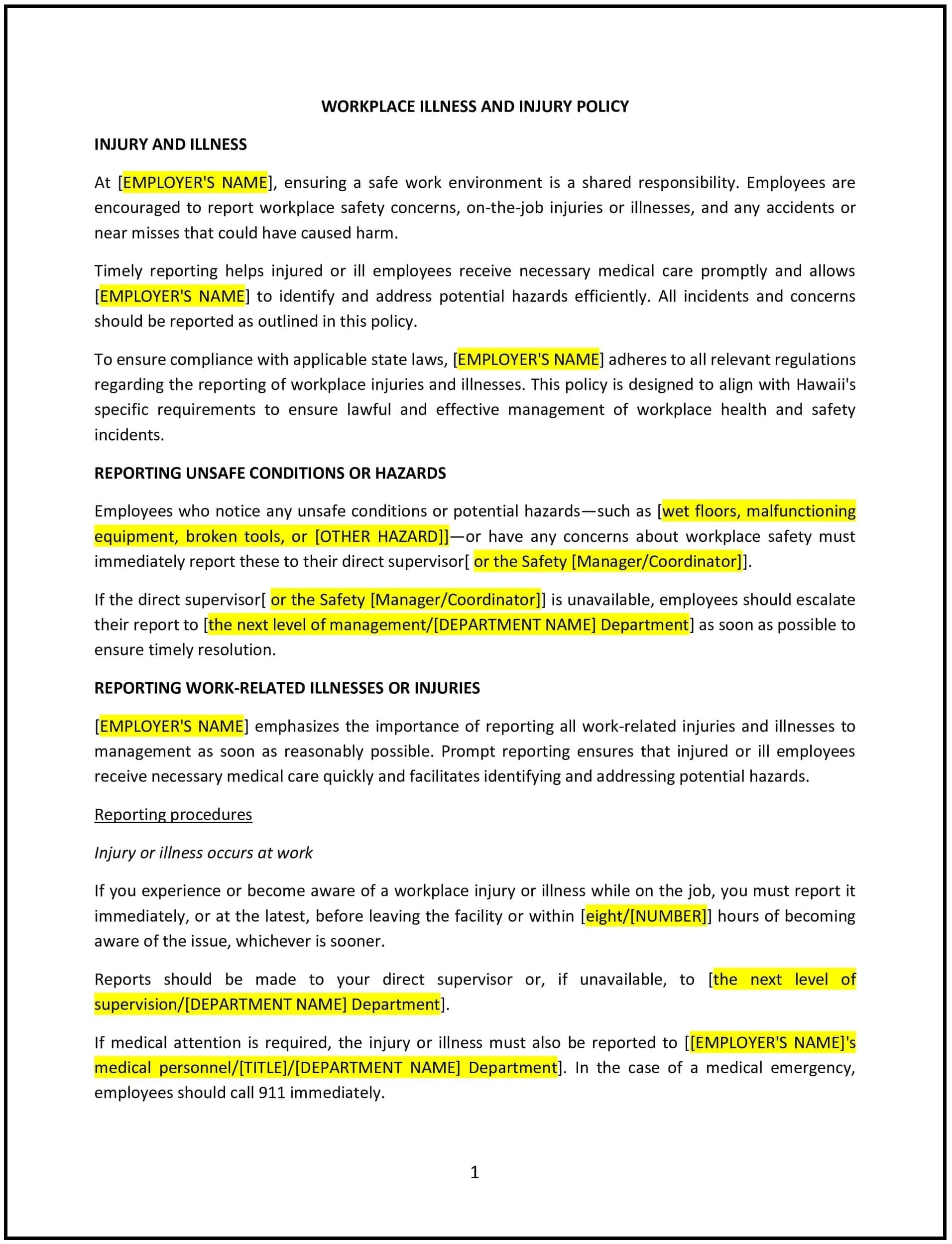
A workplace illness and injury policy helps Hawaiʻi businesses establish clear guidelines for addressing employee health and safety concerns, including work-related illnesses, injuries, and medical emergencies. This policy outlines procedures for reporting incidents, seeking medical care, and returning to work, while considering Hawaiʻi’s unique cultural values and emphasis on community well-being. It is designed to promote a safe and supportive work environment, protect employee health, and minimize disruptions to business operations.
By implementing this policy, businesses in Hawaiʻi can demonstrate their commitment to employee safety, reduce workplace risks, and foster a culture of care and responsibility.
How to use this workplace illness and injury policy (Hawaiʻi)
- Define scope: Clearly explain what constitutes a workplace illness or injury, including physical injuries, illnesses caused by work conditions, and mental health concerns.
- Establish reporting procedures: Outline how employees should report illnesses or injuries, including whom to contact and what information to provide.
- Provide medical care guidelines: Specify the steps employees should take to seek medical attention, such as visiting an approved healthcare provider or emergency facility.
- Address workers’ compensation: Explain how employees can file workers’ compensation claims and what support the business will provide during the process.
- Outline return-to-work procedures: Describe the process for employees to return to work after an illness or injury, including any necessary accommodations or restrictions.
- Communicate the policy: Share the policy with employees during onboarding and through internal communications to ensure awareness and understanding.
- Train employees and managers: Educate staff on the policy’s guidelines, including how to report incidents, seek medical care, and support colleagues returning to work.
- Monitor and update the policy: Regularly review the policy’s effectiveness and make adjustments as needed to reflect changes in workplace dynamics or safety needs.
Benefits of using this workplace illness and injury policy (Hawaiʻi)
This policy offers several advantages for Hawaiʻi businesses:
- Promotes employee safety: Clear guidelines help prevent workplace illnesses and injuries and ensure timely medical care when incidents occur.
- Supports employee well-being: Providing resources and support demonstrates the business’s commitment to employee health and recovery.
- Reduces risks: Proactive measures minimize the likelihood of workplace incidents and their potential impacts on the business.
- Enhances workplace culture: A policy that prioritizes safety and well-being fosters trust, respect, and a positive work environment.
- Builds trust: Transparent procedures for reporting and addressing incidents demonstrate the business’s commitment to fairness and accountability.
- Aligns with cultural values: The policy reflects Hawaiʻi’s emphasis on community, care, and mutual support.
- Improves preparedness: Training and clear procedures help employees and managers respond effectively to workplace illnesses and injuries.
Tips for using this workplace illness and injury policy (Hawaiʻi)
- Communicate the policy effectively: Share the policy with employees during onboarding and through regular reminders, such as emails or training sessions.
- Provide training: Educate employees and managers on the policy’s guidelines, including how to report incidents, seek medical care, and support colleagues.
- Encourage reporting: Create a safe and supportive environment where employees feel comfortable reporting illnesses or injuries without fear of retaliation.
- Be proactive: Address potential risks in the workplace, such as unsafe conditions or practices, to prevent illnesses and injuries.
- Offer support: Provide access to medical care, workers’ compensation resources, and accommodations for employees recovering from illnesses or injuries.
- Review the policy periodically: Update the policy as needed to reflect changes in workplace dynamics, safety needs, or legal requirements.