Workplace illness and injury policy (Iowa): Free template
Got contracts to review? While you're here for policies, let Cobrief make contract review effortless—start your free review now.
Customize this template for free
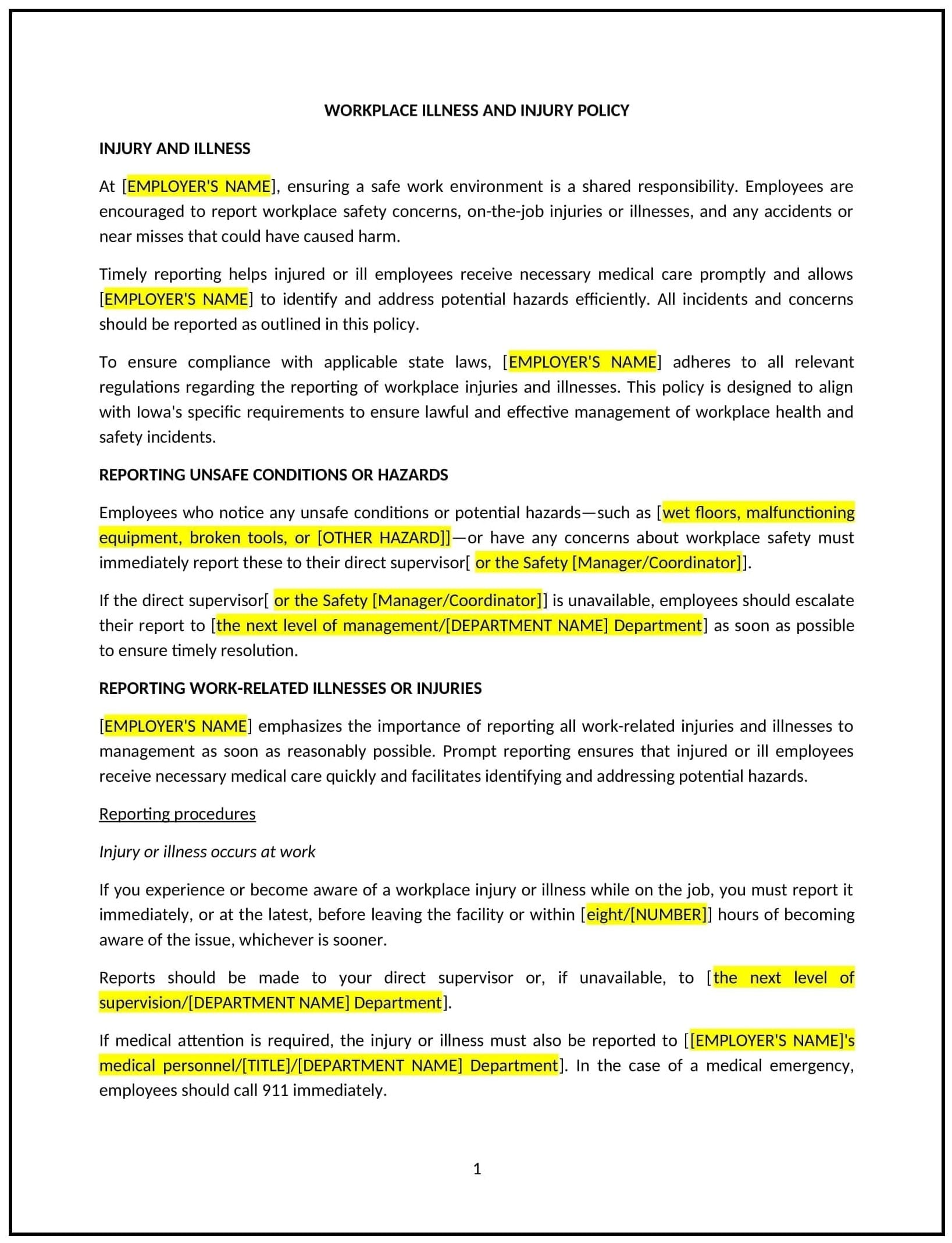
Workplace illness and injury policy (Iowa)
A workplace illness and injury policy helps Iowa businesses manage situations where employees experience illness or injury while at work. This policy outlines the steps employees should take to report illnesses or injuries, the process for receiving medical care, and how workers' compensation claims are handled. It also sets clear guidelines for returning to work after an illness or injury and outlines any accommodation or leave provisions available to employees.
By implementing this policy, businesses can ensure that employees receive appropriate care and support in the event of an illness or injury, maintain workplace safety, and minimize disruptions to business operations.
How to use this workplace illness and injury policy (Iowa)
- Define illness and injury: Clearly define what constitutes a workplace illness or injury, including physical injuries, work-related illnesses, and any conditions that are directly caused or aggravated by the employee’s job duties.
- Establish reporting procedures: Outline the process employees should follow to report illnesses or injuries, including who to notify, how to document the incident, and the timeline for reporting. Ensure that employees understand that they should report illnesses or injuries as soon as they occur.
- Provide medical care guidelines: Specify how employees should seek medical care for workplace illnesses or injuries, including whether employees are required to see specific medical providers or if they have the flexibility to choose their healthcare provider.
- Address workers' compensation: Include information on how employees can file workers' compensation claims, the steps involved, and the coverage provided. Outline the process for submitting claims and the timelines for approval or denial of claims.
- Set return-to-work procedures: Establish clear guidelines for when employees can return to work after an illness or injury, including any necessary documentation, such as a doctor's note or fitness-for-duty certification. Outline any accommodations or modified work options for employees with temporary limitations.
- Clarify leave policies: Define any leave options available for employees who need time off due to a workplace illness or injury, such as paid sick leave, unpaid leave, or leave under the Family and Medical Leave Act (FMLA), if applicable.
- Ensure safety measures: Emphasize the importance of maintaining a safe work environment and outline the company's commitment to preventing workplace injuries and illnesses through regular safety training, hazard assessments, and workplace modifications.
- Review and update regularly: Periodically review and update the policy to ensure it aligns with changes in state law, industry standards, or the company's safety practices.
Benefits of using this workplace illness and injury policy (Iowa)
This policy offers several key benefits for Iowa businesses:
- Promotes workplace safety: A well-communicated policy helps create a culture of safety, where employees are aware of the proper procedures to follow in the event of an illness or injury, reducing the risk of workplace accidents and minimizing disruptions.
- Ensures proper care for employees: The policy ensures that employees who are injured or become ill at work receive appropriate medical attention and are supported throughout their recovery process.
- Reduces legal risk: By clearly outlining the reporting and compensation processes, the policy helps businesses manage potential workers' compensation claims and reduce legal liability related to workplace illness and injury.
- Increases employee satisfaction: A clear policy shows employees that the company cares about their health and well-being, which can increase morale and improve retention.
- Improves compliance with regulations: This policy helps businesses comply with state and federal regulations related to workplace illness, injury reporting, and workers' compensation.
- Streamlines business operations: Having a clear and structured process for managing illness and injury claims allows businesses to handle incidents efficiently, minimize downtime, and keep operations running smoothly.
Tips for using this workplace illness and injury policy (Iowa)
- Communicate the policy clearly: Ensure that all employees are aware of the policy and understand the steps they need to take if they experience an illness or injury at work. Include the policy in the employee handbook and during safety orientations.
- Encourage prompt reporting: Employees should be encouraged to report illnesses or injuries as soon as possible to prevent further harm and to ensure that the company can respond effectively.
- Maintain detailed records: Keep accurate records of all reported illnesses and injuries, medical treatment, workers' compensation claims, and any accommodations made for affected employees. These records are important for compliance and future reference.
- Provide training on safety procedures: Regularly train employees on workplace safety and procedures for reporting injuries or illnesses, including how to handle specific risks or hazards in the workplace.
- Offer accommodations when necessary: Ensure that employees who are recovering from an illness or injury are provided with reasonable accommodations, such as modified work duties or flexible schedules, to help them return to work safely.
- Regularly evaluate safety protocols: Periodically assess the company’s safety measures and make necessary improvements to reduce the risk of workplace illness or injury, such as improving ergonomics, conducting hazard assessments, or implementing safety equipment.