Workplace illness and injury policy (Kansas): Free template
Got contracts to review? While you're here for policies, let Cobrief make contract review effortless—start your free review now.
Customize this template for free
Workplace illness and injury policy (Kansas)
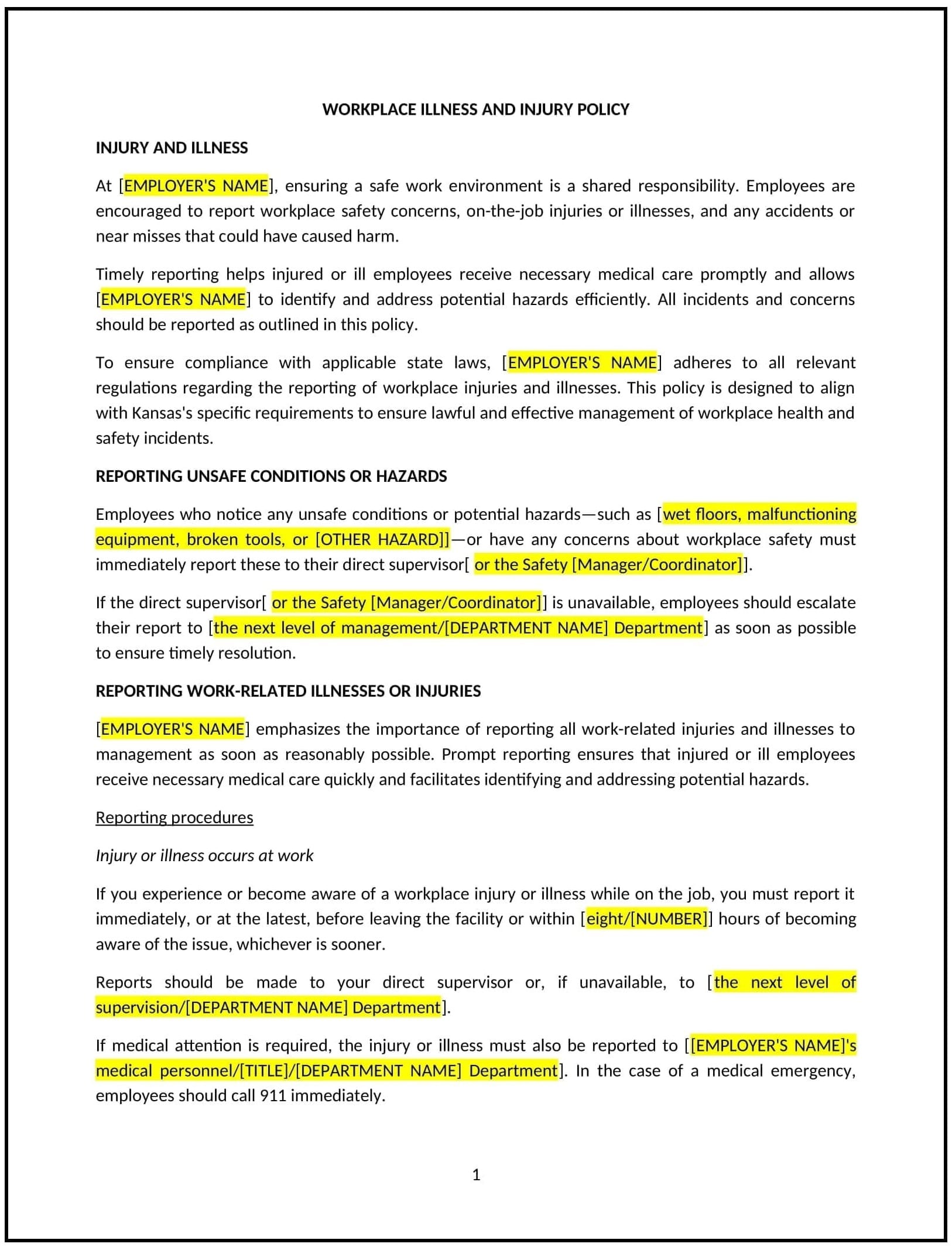
A workplace illness and injury policy helps Kansas businesses establish guidelines for handling employee illnesses or injuries that occur on the job. This policy provides clear instructions for reporting incidents, seeking medical care, and managing recovery, while ensuring that both the business and employees are protected. It also outlines responsibilities for maintaining a safe working environment and addressing situations involving workplace-related health issues.
By implementing this policy, businesses can support the health and safety of their employees, manage risks related to workplace illnesses and injuries, and promote a culture of safety and care within the company.
How to use this workplace illness and injury policy (Kansas)
- Define workplace illnesses and injuries: The policy should clearly define what constitutes a workplace illness or injury, including physical injuries, illnesses that are directly caused by work conditions, and those that occur during work-related activities.
- Establish reporting procedures: The policy should specify the process for employees to report illnesses or injuries, including the timelines for reporting incidents, the required documentation (e.g., medical reports), and whom to notify (e.g., HR, supervisor, safety officer).
- Provide medical care guidance: The policy should outline the steps employees should take to seek medical care for injuries or illnesses, including access to company-provided healthcare services or assistance in finding an appropriate healthcare provider.
- Address workers’ compensation: The policy should explain the workers' compensation process, including how employees can file claims, what benefits they are entitled to, and how medical bills will be managed.
- Set guidelines for return-to-work procedures: The policy should outline the process for employees to return to work after an illness or injury, including any requirements for medical clearance, modified duties, or accommodations to facilitate their recovery.
- Specify job protection: The policy should assure employees that they are entitled to job protection while they are away due to illness or injury, in accordance with applicable laws, and that they can return to their position or a similar one when they are able to work.
- Promote workplace safety: The policy should include preventative measures and best practices for reducing the risk of workplace injuries and illnesses, such as training, equipment usage, and proper ergonomic setups.
- Review and update regularly: The policy should be reviewed regularly to ensure it remains in line with changes in the law, company practices, and employee health concerns.
Benefits of using a workplace illness and injury policy (Kansas)
- Promotes employee health and safety: By having clear guidelines in place, businesses can reduce the likelihood of workplace injuries and illnesses, ensuring a safer environment for employees.
- Reduces legal and financial risks: A well-implemented policy helps businesses manage their workers' compensation and liability risks by ensuring that workplace injuries and illnesses are reported and handled properly.
- Supports employee well-being: The policy shows that the business cares about employees’ health, providing them with the necessary support for recovery, reducing stress related to health issues, and enhancing overall employee satisfaction.
- Ensures business continuity: By supporting the health of employees and providing clear return-to-work procedures, businesses can help ensure that operations are not unnecessarily disrupted by illness or injury.
- Fosters a culture of safety: A clear policy reinforces the company’s commitment to safety, encouraging employees to be proactive about their well-being and fostering a safety-conscious environment.
- Reduces workplace disruptions: By establishing clear procedures for handling illness and injury, businesses can minimize confusion and inefficiencies, ensuring that incidents are resolved promptly and without major disruption to daily operations.
Tips for using this workplace illness and injury policy (Kansas)
- Communicate the policy clearly: Ensure that all employees understand the process for reporting workplace illnesses and injuries, and the steps they need to take if they are affected by an illness or injury while at work.
- Provide training on safety and injury prevention: Regularly train employees on safety procedures, ergonomic practices, and how to prevent common workplace injuries and illnesses. This can help reduce incidents and increase awareness of health risks.
- Foster open communication: Encourage employees to report injuries or illnesses early to prevent them from worsening. Ensure that reporting is confidential and free from retaliation.
- Maintain proper documentation: Keep accurate records of all reported incidents, including medical records, workers’ compensation claims, and return-to-work documents, to ensure compliance and monitor trends in workplace injuries or illnesses.
- Implement a return-to-work program: Develop a clear and supportive process for employees returning to work after an illness or injury, including offering accommodations or temporary modified duties where necessary to facilitate their reintegration.
- Review and update the policy regularly: Review the policy annually or when there are changes in relevant laws, company practices, or employee health needs, ensuring it remains effective and up-to-date.