Workplace illness and injury policy (Maine): Free template
Got contracts to review? While you're here for policies, let Cobrief make contract review effortless—start your free review now.
Customize this template for free
Workplace illness and injury policy (Maine): Free template
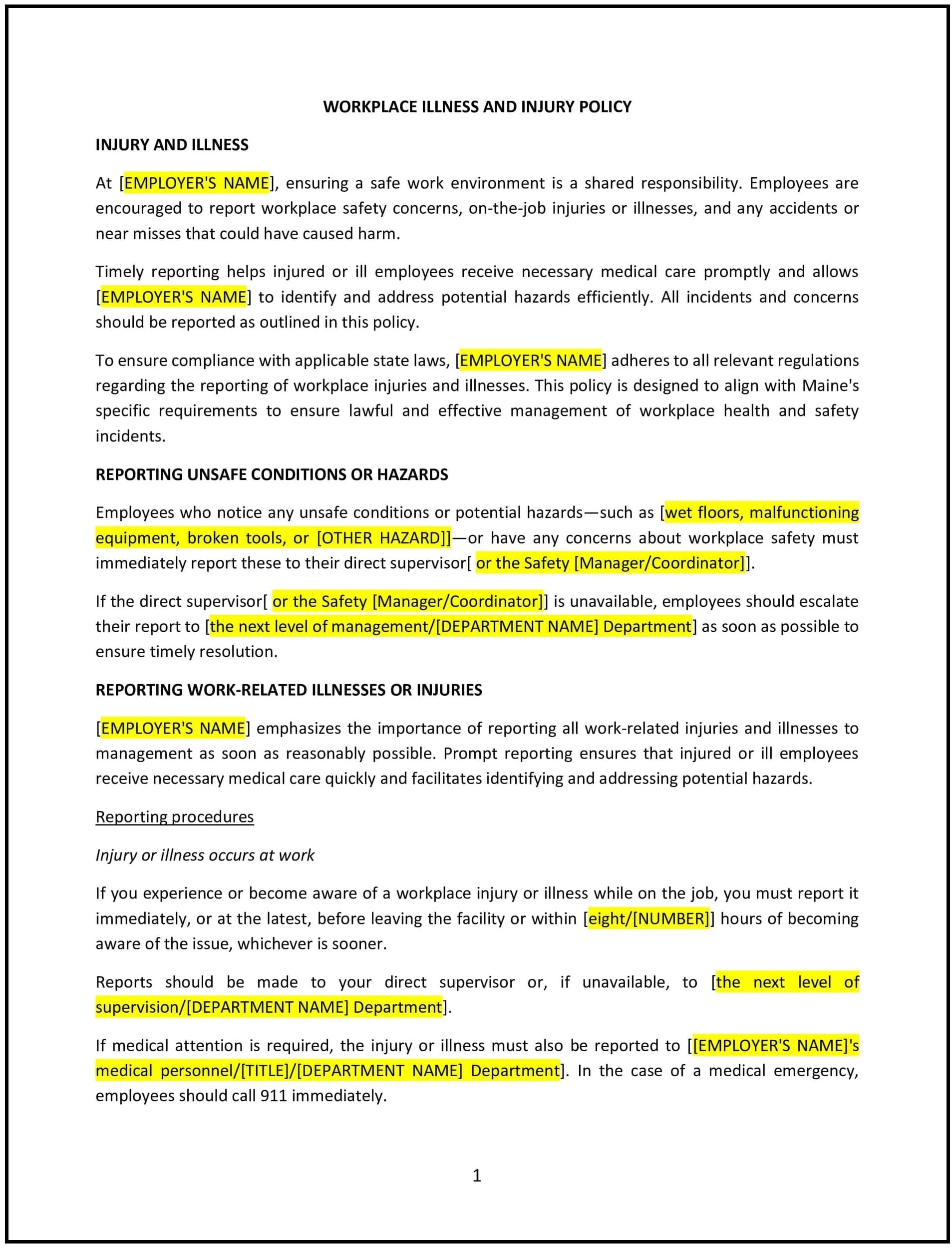
This workplace illness and injury policy is designed to help Maine businesses establish procedures for responding to workplace illnesses and injuries, ensuring the health and safety of employees while supporting compliance with state and federal laws. It outlines the steps for reporting, treating, and managing workplace-related health issues, and sets expectations for employees' conduct regarding illness and injury in the workplace.
By implementing this policy, Maine businesses can minimize the risk of workplace injuries, ensure the well-being of employees, and provide a clear process for managing workplace illnesses and injuries.
How to use this workplace illness and injury policy (Maine)
- Define illness and injury: Clearly define what constitutes workplace illness and injury, including both physical injuries (e.g., cuts, sprains) and illnesses (e.g., contagious diseases, heat stress, etc.) that occur while on the job or are related to work activities.
- Establish reporting procedures: Specify how employees should report illnesses or injuries, including the timeframe for reporting (e.g., immediately or within 24 hours), and to whom they should report (e.g., supervisor, HR, or safety officer).
- Provide access to medical care: Detail the company’s policy for providing medical care, including whether employees can seek immediate treatment from a healthcare provider or if a designated company physician should be consulted.
- Set leave entitlements: Outline whether leave related to illness or injury will be paid or unpaid, and whether employees can use other types of leave (e.g., sick days, vacation days) for time off due to illness or injury.
- Address return-to-work procedures: Define the process for returning to work after an illness or injury, including whether employees need a doctor's note or fitness-for-duty clearance to resume their duties.
- Promote workplace safety: Encourage employees to report unsafe conditions that could contribute to illness or injury, and set expectations for proactive safety measures in the workplace.
- Review regularly: Periodically review and update the policy to reflect changes in workplace health and safety regulations, business needs, or employee feedback.
Benefits of using this workplace illness and injury policy (Maine)
Implementing this policy provides several benefits for Maine businesses:
- Enhances employee safety: Ensures that workplace safety standards are in place to prevent injuries and illnesses, contributing to a healthier work environment.
- Reduces legal risks: Helps the business comply with workplace safety regulations and workers' compensation laws, reducing the risk of legal claims or penalties.
- Supports employee well-being: Demonstrates the company’s commitment to employee health by providing clear procedures for managing illness and injury.
- Minimizes disruptions: Establishes a clear process for managing employee absences due to illness or injury, ensuring that business operations continue smoothly.
- Improves morale and trust: By showing concern for employees’ health and safety, businesses can boost employee morale and increase trust in company policies.
Tips for using this workplace illness and injury policy (Maine)
- Communicate the policy: Ensure all employees are aware of the workplace illness and injury policy through the employee handbook, onboarding, and regular safety training sessions.
- Provide clear reporting channels: Make sure employees know who to contact in case of illness or injury and emphasize the importance of reporting all incidents promptly, regardless of severity.
- Foster a safety culture: Encourage employees to actively participate in safety programs, report hazards, and adhere to safety guidelines to prevent illness and injury.
- Maintain accurate records: Keep detailed records of workplace injuries and illnesses, including documentation of medical treatment, worker’s compensation claims, and any preventive measures taken.
- Offer support and accommodations: Provide necessary accommodations for employees recovering from illness or injury, such as modified duties or flexible work arrangements.
- Review and adjust: Regularly review the policy and make adjustments based on feedback, changes in regulations, or improvements in safety measures.