Workplace illness and injury policy (Minnesota): Free template
Got contracts to review? While you're here for policies, let Cobrief make contract review effortless—start your free review now.
Customize this template for free
Workplace illness and injury policy (Minnesota)
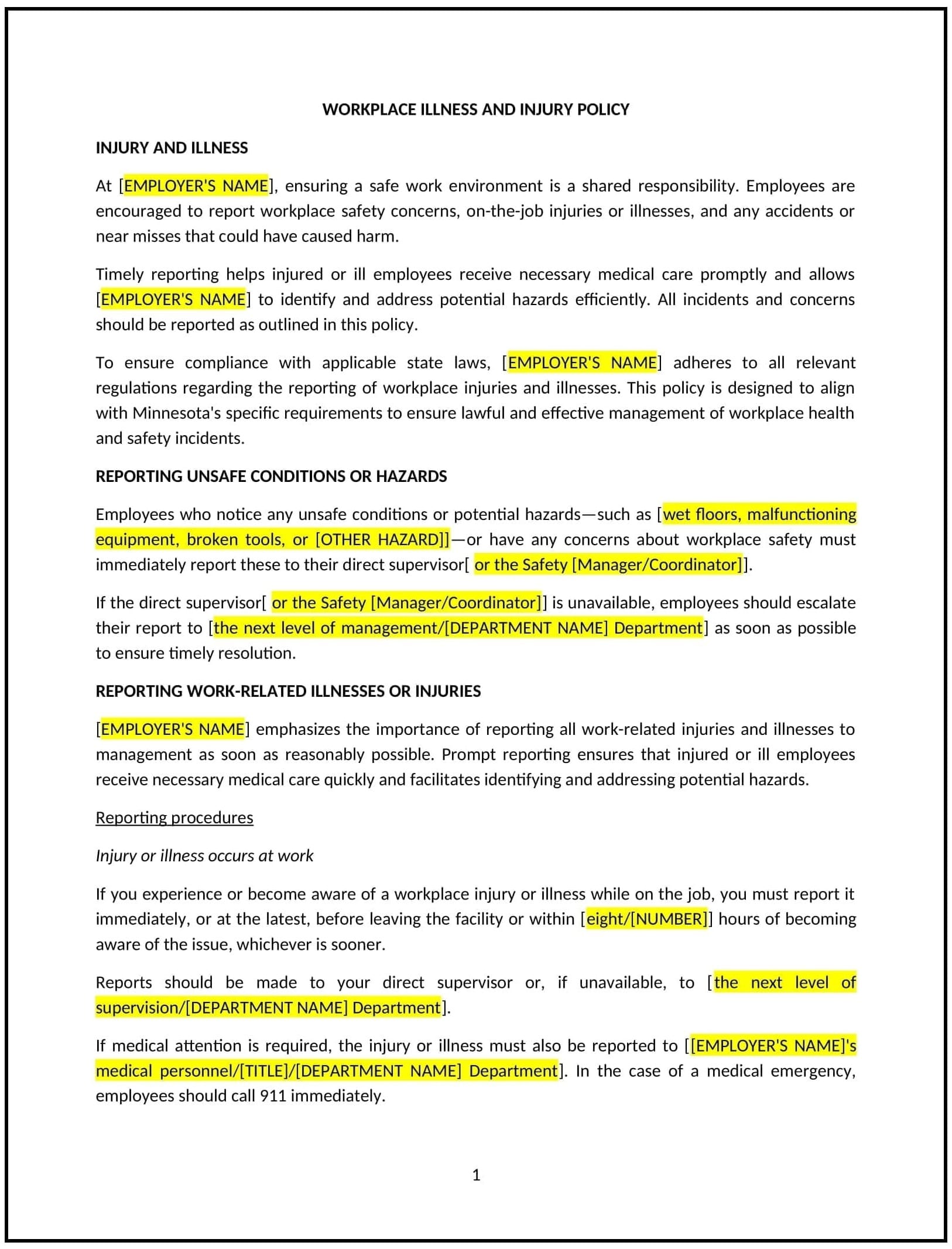
This workplace illness and injury policy is designed to help Minnesota businesses manage the health and safety of their employees by addressing workplace illnesses and injuries. The policy outlines the procedures for reporting, responding to, and preventing illnesses and injuries in the workplace, while ensuring that employees are supported during recovery.
By implementing this policy, businesses can create a safer work environment, reduce the risk of workplace incidents, and ensure that employees have clear guidance on how to address health concerns while at work.
How to use this workplace illness and injury policy (Minnesota)
- Define workplace illnesses and injuries: Clearly define what constitutes a workplace illness or injury, including physical injuries (e.g., falls, strains) and illnesses that may arise due to work conditions (e.g., exposure to chemicals or viruses).
- Set reporting procedures: Establish a clear process for reporting illnesses and injuries, including the timelines for reporting, the required documentation, and who employees should notify (e.g., supervisor, HR).
- Outline treatment and first aid procedures: Provide guidelines for immediate first aid, emergency medical treatment, or referrals to healthcare providers in case of illness or injury. This should include the responsibility of first responders, if applicable.
- Address paid and unpaid leave: Specify whether employees will receive paid leave for illness or injury, including how leave is tracked and any specific guidelines for medical documentation. If the illness or injury requires long-term leave, outline options for extended leave or disability accommodations.
- Implement return-to-work protocols: Establish clear procedures for employees to return to work after an illness or injury, including when medical clearance is required and any accommodations that may be necessary for the employee's reintegration.
- Prevent workplace injuries: Implement and communicate safety practices to reduce the risk of illness or injury, such as providing training, personal protective equipment (PPE), and ergonomic support. Encourage employees to report hazards that could lead to injuries or illnesses.
- Ensure confidentiality: Maintain confidentiality for employees who are ill or injured, particularly in regards to medical information, in line with state and federal privacy laws (e.g., HIPAA).
- Review and update regularly: Periodically review and update the policy to ensure it remains aligned with Minnesota state laws, workplace conditions, and best practices.
Benefits of using this workplace illness and injury policy (Minnesota)
Implementing this policy provides several advantages for Minnesota businesses:
- Promotes employee safety: A clear policy helps businesses prevent workplace injuries and illnesses by outlining safety protocols and proactive measures to protect employees.
- Reduces liability: Businesses that have clear procedures for handling illnesses and injuries can reduce the risk of legal claims and workers' compensation issues, as well as demonstrate a commitment to employee well-being.
- Supports employee health: Employees are more likely to take appropriate action if they understand the reporting process and the support available to them during recovery.
- Enhances morale and trust: A workplace that prioritizes the health and safety of its employees fosters a supportive and trusting environment, improving overall morale and employee satisfaction.
- Aligns with Minnesota-specific regulations: The policy can be tailored to comply with Minnesota’s specific workers’ compensation laws, safety regulations, and disability accommodations requirements, ensuring legal adherence and supporting employees’ rights.
Tips for using this workplace illness and injury policy (Minnesota)
- Communicate clearly: Ensure that all employees are aware of the illness and injury policy, including how to report incidents, the treatment options available, and the process for taking leave.
- Provide training: Regularly train employees and managers on workplace safety practices, emergency procedures, and how to report injuries or illnesses promptly.
- Monitor workplace conditions: Regularly assess the work environment for potential health hazards or safety risks that could lead to illness or injury. Take proactive measures to address any identified issues.
- Encourage early reporting: Encourage employees to report any illnesses or injuries immediately, even if the issue seems minor, to ensure prompt treatment and prevent complications.
- Offer support during recovery: Ensure that employees are supported during their recovery, including offering flexible work options, accommodations, or access to medical care as necessary.