Got contracts to review? While you're here for policies, let Cobrief make contract review effortless—start your free review now.
Customize this template for free
Workplace romance policy (Hawaiʻi)
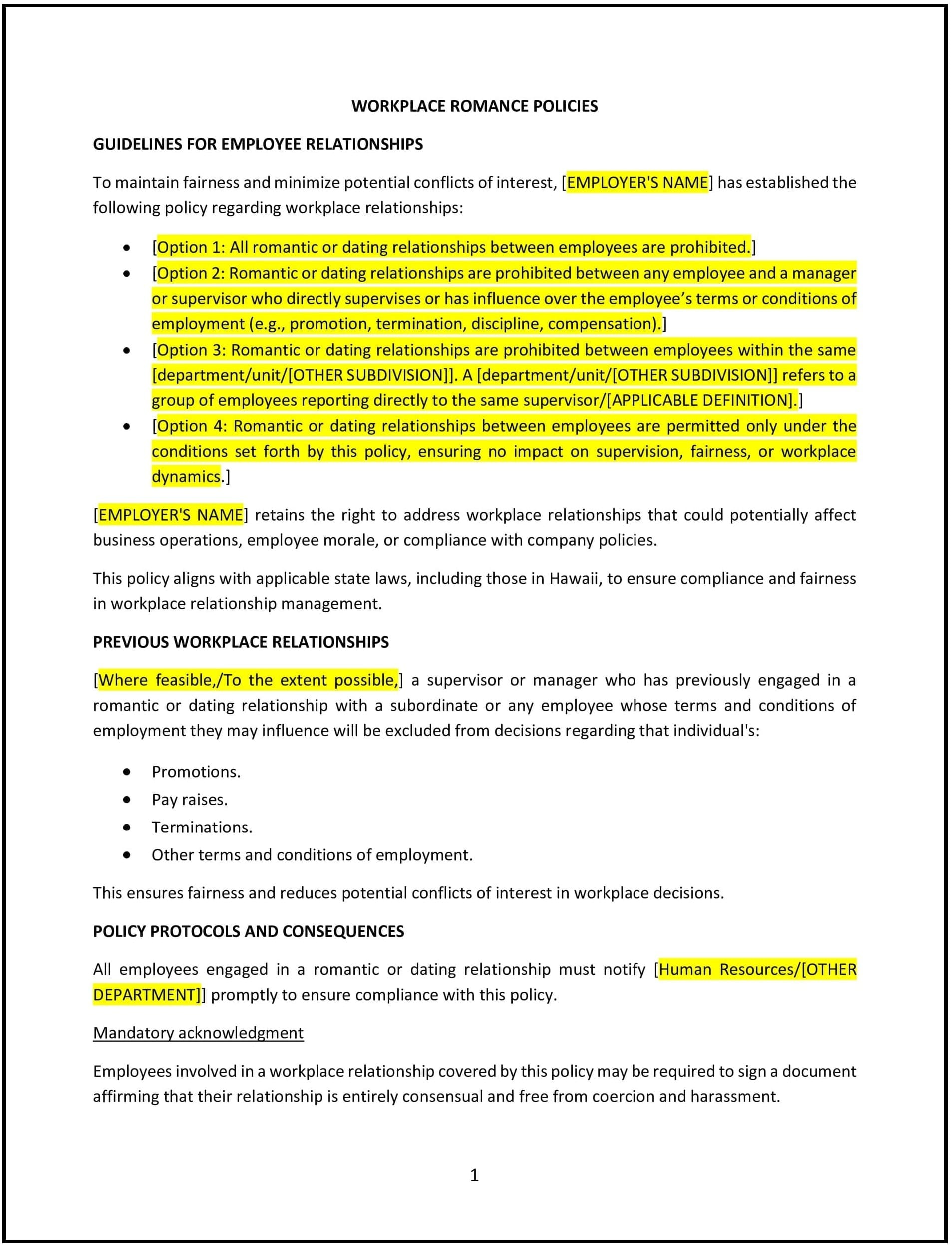
A workplace romance policy helps Hawaiʻi businesses establish clear guidelines for managing personal relationships between employees while maintaining professionalism and minimizing potential conflicts. This policy outlines expectations for disclosure, behavior, and decision-making in the workplace, while considering Hawaiʻi’s cultural values of respect and community. It is designed to promote a positive work environment, protect employee privacy, and ensure fairness in workplace dynamics.
By implementing this policy, businesses in Hawaiʻi can reduce the risk of favoritism, conflicts of interest, and disruptions to workplace harmony.
How to use this workplace romance policy (Hawaiʻi)
- Define workplace romance: Clearly explain what constitutes a workplace romance, such as relationships between employees, supervisors, or subordinates.
- Encourage disclosure: Outline the process for employees to disclose romantic relationships to HR or management, ensuring transparency and accountability.
- Address conflicts of interest: Provide guidelines for managing situations where a romantic relationship could create a conflict of interest, such as reassigning roles or responsibilities.
- Set behavioral expectations: Specify that employees in romantic relationships must maintain professionalism and avoid behavior that could disrupt the workplace.
- Prohibit favoritism: Emphasize that romantic relationships should not influence decisions related to promotions, assignments, or performance evaluations.
- Communicate the policy: Share the policy with employees during onboarding and through internal communications to ensure awareness and understanding.
- Train managers: Educate managers on how to handle disclosures, address conflicts of interest, and enforce the policy fairly.
- Monitor and update the policy: Regularly review the policy’s effectiveness and make adjustments as needed to reflect changes in workplace dynamics or business needs.
Benefits of using this workplace romance policy (Hawaiʻi)
This policy offers several advantages for Hawaiʻi businesses:
- Promotes professionalism: Clear guidelines help employees maintain professionalism and avoid behavior that could disrupt the workplace.
- Reduces conflicts: Addressing potential conflicts of interest minimizes misunderstandings and disputes among employees.
- Protects privacy: The policy ensures that personal relationships are handled with discretion and respect for employee privacy.
- Enhances fairness: Prohibiting favoritism ensures that decisions related to promotions, assignments, and evaluations are based on merit.
- Builds trust: Transparent procedures for disclosure and conflict management demonstrate the business’s commitment to fairness and accountability.
- Aligns with cultural values: The policy reflects Hawaiʻi’s emphasis on respect, community, and maintaining harmonious relationships.
- Improves workplace culture: A policy that prioritizes professionalism and fairness contributes to a positive and inclusive work environment.
Tips for using this workplace romance policy (Hawaiʻi)
- Communicate the policy effectively: Share the policy with employees during onboarding and through regular reminders, such as emails or training sessions.
- Handle disclosures discreetly: Ensure that disclosures of romantic relationships are handled with sensitivity and confidentiality.
- Address conflicts promptly: Take immediate action to address conflicts of interest or disruptions caused by workplace romances.
- Train managers: Educate managers on how to enforce the policy fairly and handle disclosures with professionalism.
- Be consistent: Apply the policy consistently to all employees to ensure fairness and transparency.
- Review the policy periodically: Update the policy as needed to reflect changes in workplace dynamics, employee feedback, or business needs.