Got contracts to review? While you're here for policies, let Cobrief make contract review effortless—start your free review now.
Customize this template for free
Workplace romance policy (Maine): Free template
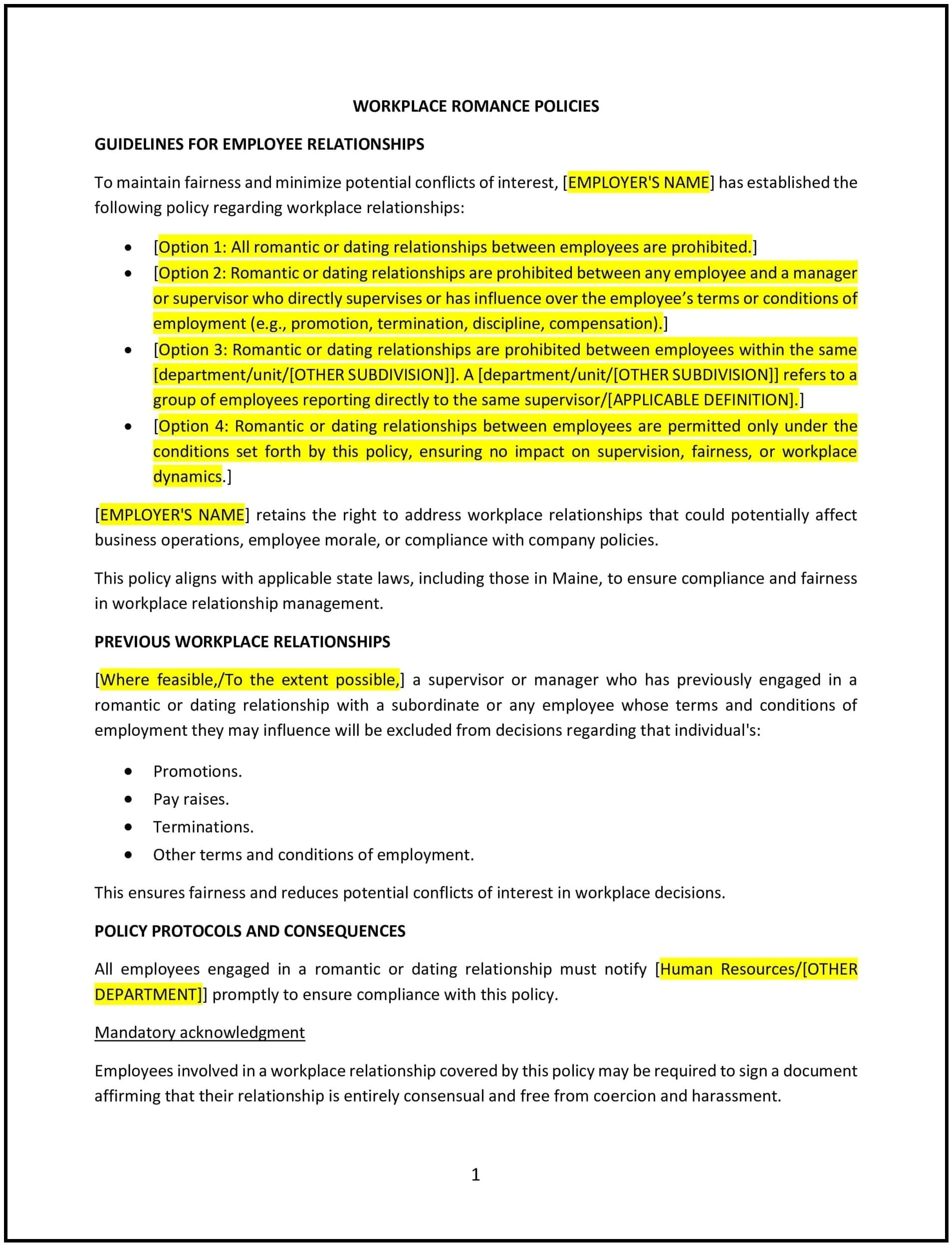
This workplace romance policy is designed to help Maine businesses address relationships between employees, ensuring that these relationships do not interfere with workplace productivity, create conflicts of interest, or lead to harassment claims. The policy outlines expectations for behavior, establishes guidelines for managing romantic relationships in the workplace, and provides a framework for addressing potential issues that may arise.
By implementing this policy, Maine businesses can maintain a professional and respectful work environment while handling workplace romances fairly and transparently.
How to use this workplace romance policy (Maine)
- Define workplace romance: Clearly define what constitutes a workplace romance, including relationships between employees, between managers and subordinates, or between employees and clients/vendors.
- Establish disclosure requirements: Specify when and how employees should disclose romantic relationships to HR or management, particularly if the relationship involves supervisors or colleagues in the same department.
- Set boundaries and expectations: Outline the expectations for behavior in the workplace, ensuring that romantic relationships do not interfere with job performance, create conflicts of interest, or lead to favoritism or discrimination.
- Address conflicts of interest: Define procedures for managing conflicts of interest that may arise from workplace romances, such as reassignment or changes in reporting lines to mitigate the potential impact on work performance.
- Prevent harassment: Emphasize that all romantic relationships must be consensual and that harassment, coercion, or any form of inappropriate behavior is not tolerated under any circumstances.
- Ensure confidentiality: Address how information regarding personal relationships will be handled confidentially and only disclosed on a need-to-know basis.
- Review regularly: Periodically review and update the policy to reflect changes in company culture, legal considerations, or employee needs.
Benefits of using this workplace romance policy (Maine)
Implementing this policy provides several benefits for Maine businesses:
- Reduces the risk of conflicts of interest: Establishing clear guidelines helps prevent romantic relationships from creating biased decision-making or conflicts of interest in the workplace.
- Promotes fairness and transparency: A consistent policy ensures that all employees are treated fairly and that romantic relationships are disclosed and managed properly to avoid negative consequences.
- Minimizes potential harassment: By setting boundaries and expectations for behavior, businesses can help prevent harassment or situations of unequal power dynamics that may arise in workplace romances.
- Supports a respectful work environment: Ensures that personal relationships do not interfere with work performance, fostering a culture of professionalism and respect.
- Enhances legal protection: The policy helps businesses manage potential legal risks related to discrimination, harassment, and retaliation in the context of workplace relationships.
Tips for using this workplace romance policy (Maine)
- Communicate the policy: Ensure that all employees are aware of the workplace romance policy by including it in the employee handbook, during onboarding, and through regular communication.
- Foster an open dialogue: Encourage employees to disclose romantic relationships when appropriate and create an environment where employees feel comfortable discussing any concerns related to workplace relationships.
- Train managers: Provide training for managers on how to handle workplace romances, including recognizing potential conflicts of interest and addressing any issues fairly and professionally.
- Monitor and address potential issues: Stay alert to any signs that a workplace romance may be affecting workplace dynamics, performance, or creating conflicts of interest, and take action as necessary.
- Review and update: Regularly assess the effectiveness of the policy and make adjustments based on employee feedback, changes in company culture, or legal considerations.