Workplace safety policy (Connecticut): Free template
Got contracts to review? While you're here for policies, let Cobrief make contract review effortless—start your free review now.
Customize this template for free
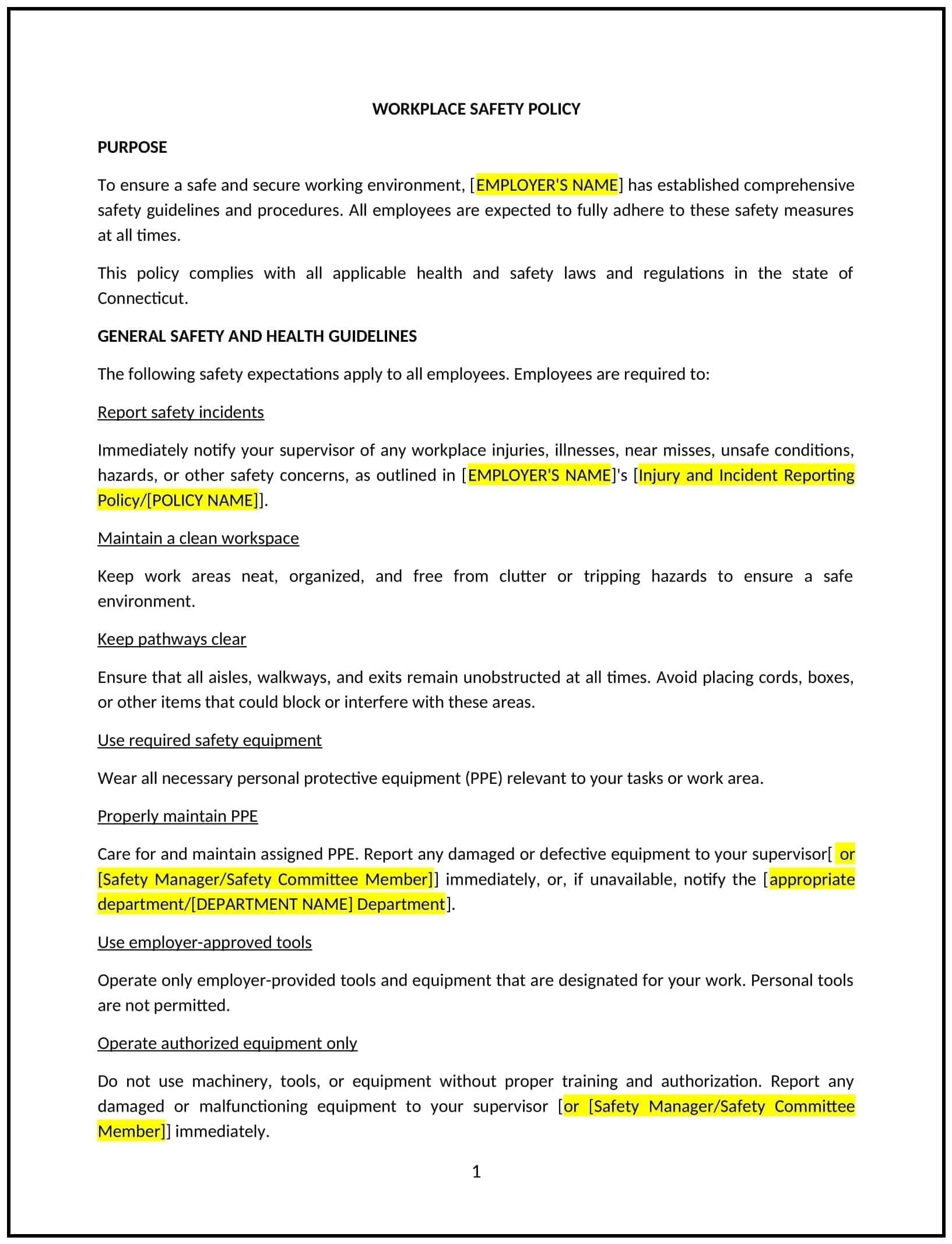
Workplace safety policy (Connecticut)
A workplace safety policy helps Connecticut businesses provide a safe and healthy environment for all employees, contractors, and visitors. This policy outlines the company’s commitment to preventing accidents, injuries, and illnesses by establishing safety protocols, promoting awareness, and ensuring compliance with state and federal safety regulations, including OSHA standards.
By implementing this policy, businesses can minimize workplace hazards, protect employees, and reduce the risk of costly accidents, while fostering a culture of safety and well-being.
How to use this workplace safety policy (Connecticut)
- Define safety expectations: Clearly outline the company’s commitment to safety and the expectations for all employees to adhere to workplace safety procedures.
- Establish reporting procedures: Specify how employees should report unsafe conditions, accidents, or injuries, including who to contact, the format of the report, and the timeline for reporting.
- Provide safety training: Implement regular safety training programs for employees, covering topics such as workplace hazards, emergency procedures, and safe work practices.
- Conduct safety audits: Regularly inspect the workplace for potential hazards and assess whether safety protocols are being followed. Establish a process for correcting identified issues promptly.
- Outline personal protective equipment (PPE) requirements: Define when and where PPE is required, such as hard hats, gloves, or eye protection, and ensure that employees have access to the necessary equipment.
- Address emergency procedures: Develop clear procedures for responding to workplace emergencies, such as fires, medical emergencies, or natural disasters, including evacuation routes and emergency contacts.
- Promote employee involvement: Encourage employees to participate in safety programs, report hazards, and suggest improvements to safety procedures.
- Comply with state and federal regulations: Ensure that the policy complies with Connecticut state laws and federal safety regulations, including OSHA, to maintain legal compliance and avoid potential penalties.
Benefits of using this workplace safety policy (Connecticut)
This policy offers several benefits for Connecticut businesses:
- Reduces the risk of accidents and injuries: By implementing safety protocols and procedures, the policy helps reduce the likelihood of accidents and injuries in the workplace, protecting employees and the company.
- Promotes employee well-being: A safe work environment contributes to employee health, satisfaction, and morale, leading to greater productivity and engagement.
- Ensures legal compliance: The policy helps businesses comply with Connecticut state and federal safety regulations, including OSHA, reducing the risk of legal penalties or lawsuits.
- Reduces costs: By preventing accidents and injuries, the policy helps lower workers' compensation claims, medical costs, and lost productivity due to workplace accidents.
- Builds a positive company culture: A strong safety policy demonstrates the company’s commitment to employee well-being, fostering trust and loyalty among employees.
Tips for using this workplace safety policy (Connecticut)
- Communicate the policy clearly: Ensure all employees are aware of the safety protocols, reporting procedures, and their responsibilities for maintaining a safe work environment.
- Offer ongoing training: Provide regular training to reinforce safety practices and ensure that employees stay up to date on the latest safety regulations and procedures.
- Conduct regular safety audits: Regularly inspect the workplace for hazards and ensure that all safety measures are being followed. Take corrective actions promptly when issues arise.
- Encourage reporting: Foster an open environment where employees feel comfortable reporting unsafe conditions or behaviors without fear of retaliation.
- Review and update the policy: Regularly review and update the safety policy to reflect changes in regulations, business practices, or workplace conditions to ensure it remains effective and relevant.