Got contracts to review? While you're here for policies, let Cobrief make contract review effortless—start your free review now.
Customize this template for free
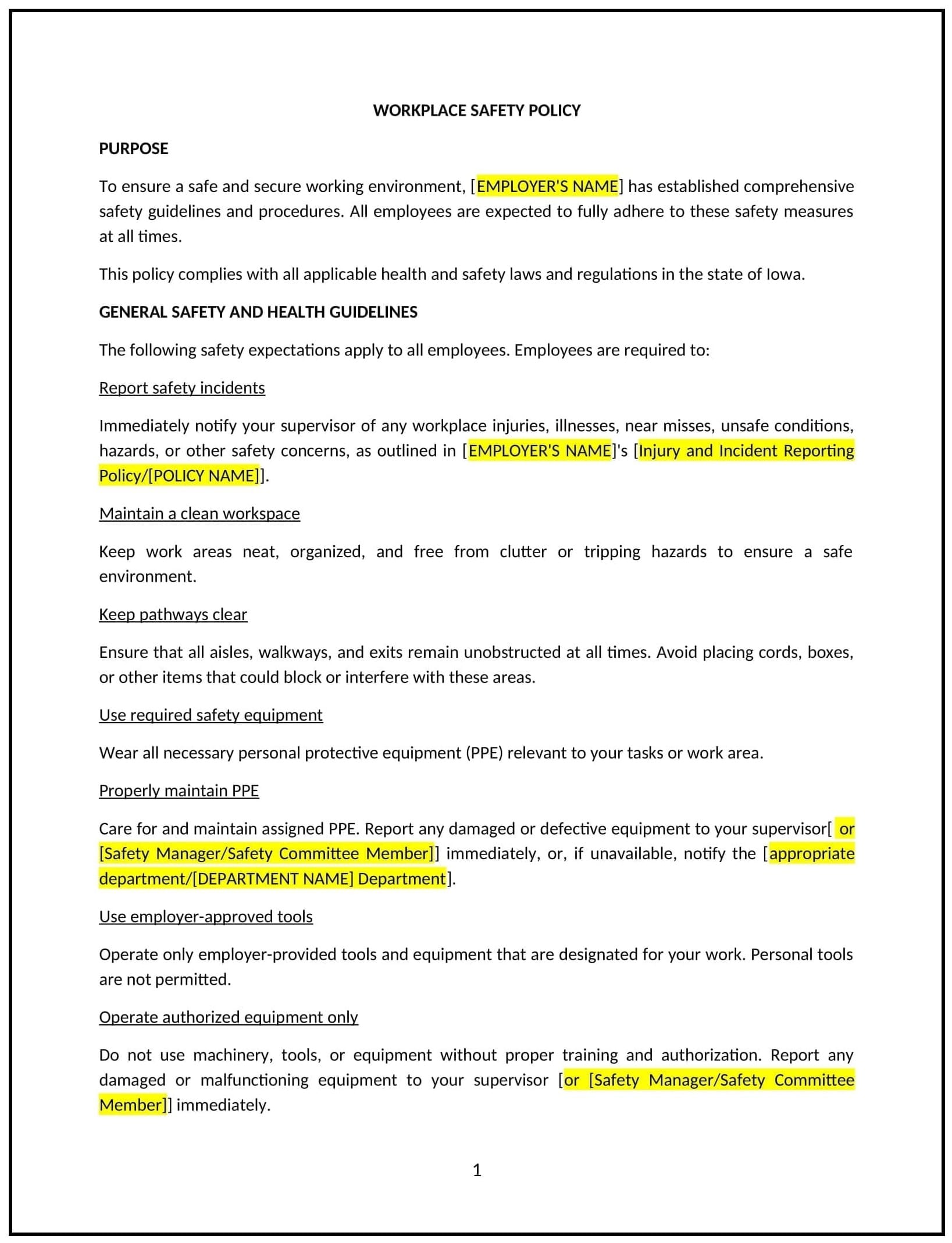
Workplace safety policy (Iowa)
A workplace safety policy helps Iowa businesses ensure that the work environment is free from hazards that could cause injury or illness to employees. This policy outlines the company's commitment to maintaining a safe workplace, provides guidelines for identifying and mitigating potential safety risks, and establishes procedures for reporting and addressing unsafe conditions. It also includes provisions for employee training, safety equipment, and emergency response protocols.
By implementing this policy, businesses can reduce the risk of workplace accidents, promote employee well-being, and ensure that safety practices are consistently followed throughout the organization.
How to use this workplace safety policy (Iowa)
- Define safety standards: Clearly outline the safety standards and procedures that employees must follow to ensure a safe work environment. This may include guidelines for handling hazardous materials, operating machinery, or using personal protective equipment (PPE).
- Set reporting procedures: Establish a clear process for employees to report safety hazards, accidents, or unsafe conditions. Encourage employees to report issues immediately to prevent accidents and ensure timely intervention.
- Provide safety training: Offer regular safety training for all employees to ensure they understand safety protocols, use of equipment, emergency procedures, and how to identify potential hazards in the workplace.
- Conduct risk assessments: Perform regular safety audits and risk assessments to identify potential hazards or unsafe work practices. Take proactive steps to mitigate risks and make necessary adjustments to the work environment.
- Outline emergency procedures: Define the steps employees should take in the event of an emergency, such as a fire, chemical spill, or medical emergency. This should include evacuation routes, first aid protocols, and the roles of designated emergency response personnel.
- Provide safety equipment: Ensure that employees have access to the necessary safety equipment, such as helmets, gloves, goggles, or masks, based on their job duties. Outline when and how to use the equipment.
- Monitor compliance: Regularly monitor safety practices in the workplace to ensure that employees are following safety protocols and using required equipment. Address any non-compliance promptly and effectively.
- Review and update regularly: Periodically review and update the policy to ensure it reflects changes in safety regulations, industry standards, and the company’s operational needs.
Benefits of using this workplace safety policy (Iowa)
This policy offers several key benefits for Iowa businesses:
- Protects employee health and safety: The primary benefit is reducing the risk of workplace accidents and illnesses, ensuring that employees are safe and healthy while at work.
- Reduces financial costs: By preventing accidents and injuries, businesses can minimize the financial costs associated with workers' compensation claims, medical expenses, and legal liabilities.
- Improves employee morale: Employees are more likely to feel valued and secure in a workplace that prioritizes their health and safety, leading to higher morale and job satisfaction.
- Increases productivity: A safe work environment minimizes disruptions caused by accidents or injuries, allowing employees to focus on their work and increasing overall productivity.
- Supports legal compliance: A workplace safety policy helps businesses comply with state and federal safety regulations, reducing the risk of penalties or legal action.
- Enhances reputation: Companies that prioritize workplace safety are viewed as responsible and ethical employers, which can improve their reputation and attract top talent.
Tips for using this workplace safety policy (Iowa)
- Communicate the policy clearly: Ensure that all employees understand the workplace safety policy and know how to report safety concerns, use safety equipment, and follow emergency procedures. Include the policy in the employee handbook and during onboarding.
- Provide regular training: Conduct ongoing safety training and refreshers to keep employees informed of the latest safety practices, procedures, and regulations. Tailor training to the specific hazards and needs of each department or role.
- Promote a safety culture: Encourage employees to actively participate in workplace safety efforts by identifying and reporting hazards, following safety protocols, and supporting a culture of safety.
- Inspect the workplace regularly: Schedule regular safety audits and inspections to ensure that the workplace remains free of hazards and that safety practices are being followed. Address any safety concerns promptly.
- Encourage employee involvement: Create a safety committee or designate safety representatives who can provide input on improving workplace safety and communicate any concerns or suggestions.
- Ensure proper equipment and maintenance: Regularly inspect and maintain safety equipment to ensure that it is functional and available for use when needed. Make sure employees have access to the necessary tools to stay safe on the job.
- Address violations promptly: Take immediate action when safety violations occur, including retraining employees, providing corrective actions, and enforcing penalties if necessary.