Got contracts to review? While you're here for policies, let Cobrief make contract review effortless—start your free review now.
Customize this template for free
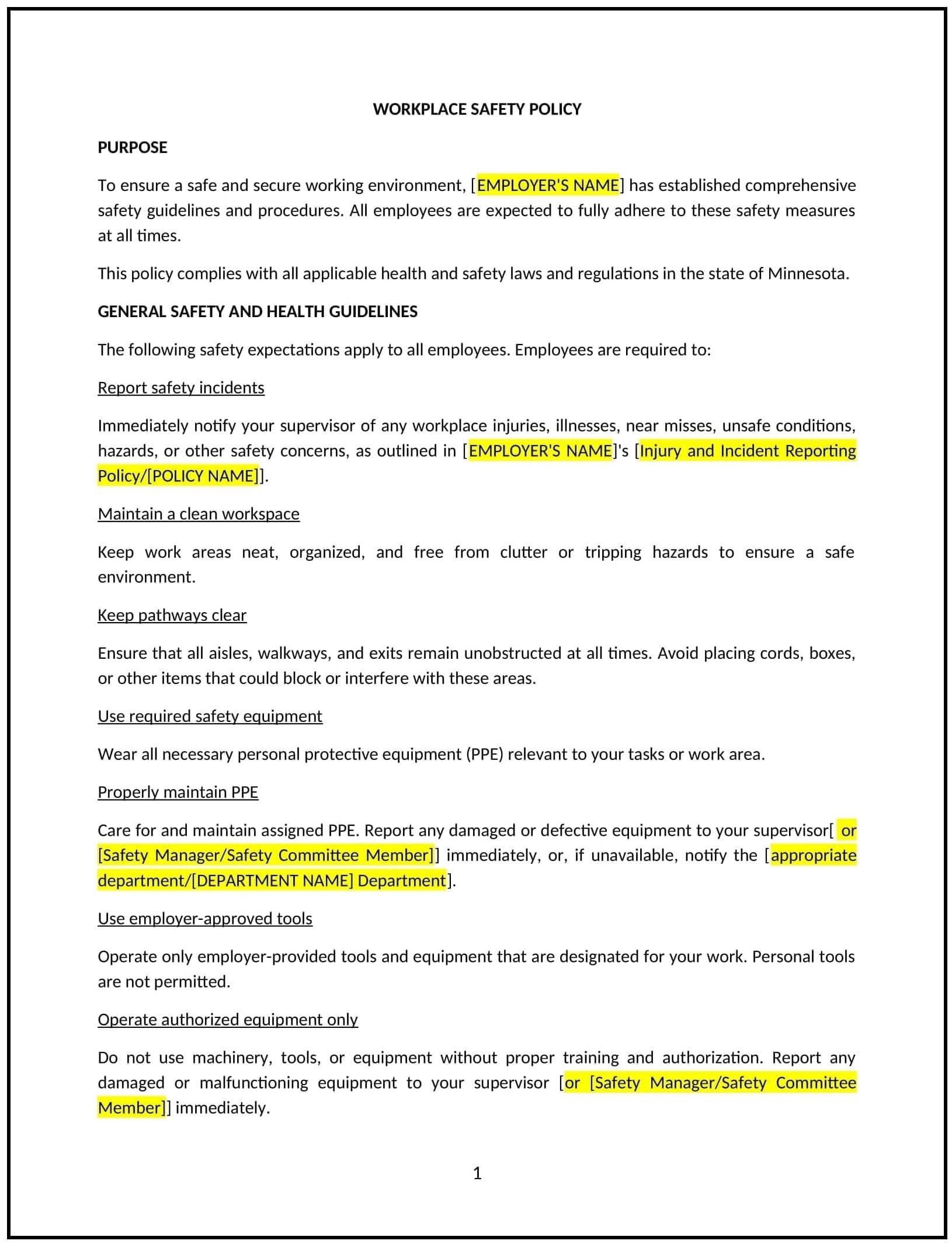
Workplace safety policy (Minnesota)
This workplace safety policy is designed to help Minnesota businesses create a safe and healthy work environment for employees. The policy outlines the responsibilities of the company and employees in preventing accidents, managing hazards, and responding to workplace emergencies. It is designed to promote safety awareness, reduce the risk of injuries, and ensure compliance with safety regulations.
By implementing this policy, businesses can foster a safer workplace, minimize accidents, and improve employee well-being while meeting legal and industry safety standards.
How to use this workplace safety policy (Minnesota)
- Define workplace safety: Clearly outline what constitutes workplace safety, including physical safety, mental well-being, and the overall health of employees. Specify the types of hazards that the policy covers, such as slips, falls, machine operation, and ergonomics.
- Identify employee responsibilities: Employees should be informed of their role in maintaining workplace safety, such as reporting unsafe conditions, using safety equipment, and following safety protocols.
- Establish safety training: Provide mandatory safety training for all employees, including new hires, to ensure they understand safety procedures, how to use equipment safely, and how to respond in emergencies.
- Implement hazard identification and risk assessment: Establish procedures for identifying and assessing workplace hazards. Encourage employees to report hazards and concerns promptly. Use regular risk assessments to minimize potential safety risks.
- Set emergency response procedures: Develop and communicate clear emergency procedures, including evacuation plans, first aid protocols, and the location of safety equipment. Ensure that employees are trained on how to respond during an emergency.
- Provide safety equipment and resources: Specify the types of safety equipment (e.g., gloves, goggles, helmets) required for various tasks and ensure that employees have access to this equipment. Provide ergonomic support for employees working with computers or machinery.
- Monitor and review safety practices: Regularly monitor safety practices through inspections and audits to ensure that the policy is being followed. Review and update the policy as necessary based on changes in workplace conditions, employee feedback, or legal requirements.
- Ensure confidentiality and non-retaliation: Establish a non-retaliation policy to ensure that employees feel comfortable reporting safety concerns or incidents without fear of retribution.
Benefits of using this workplace safety policy (Minnesota)
Implementing this policy provides several advantages for Minnesota businesses:
- Improves employee well-being: A focus on workplace safety promotes the physical and mental well-being of employees, reducing the risk of injuries, stress, and illnesses.
- Reduces financial risks: A safe workplace helps businesses avoid the costs associated with workplace injuries, such as workers' compensation claims, insurance premiums, and legal fees.
- Promotes a positive workplace culture: By prioritizing safety, businesses foster a culture of care, responsibility, and mutual respect among employees.
- Ensures compliance with Minnesota regulations: The policy ensures that businesses meet state and federal safety regulations, reducing the risk of legal violations and penalties.
- Enhances productivity: A safe work environment reduces disruptions caused by accidents and injuries, allowing employees to focus on their tasks and be more productive.
Tips for using this workplace safety policy (Minnesota)
- Communicate clearly: Ensure that all employees are aware of the workplace safety policy and understand their roles in maintaining safety. Make the policy easily accessible and regularly discuss it during team meetings.
- Regularly review safety practices: Conduct regular safety audits and inspections to identify any hazards and ensure compliance with the policy. Involve employees in identifying safety concerns and suggesting improvements.
- Foster open communication: Encourage employees to report safety concerns or unsafe conditions without fear of retaliation. Ensure there are clear reporting channels in place, and address any reported issues promptly.
- Provide ongoing safety training: Offer continuous safety training, refresher courses, and updates on any new safety regulations or practices. Ensure that safety training is part of the onboarding process for new employees.
- Update safety equipment: Regularly check and maintain safety equipment to ensure that it is in good condition. Replace damaged or expired safety gear promptly and provide employees with the tools they need to stay safe.