Workplace safety policy (North Carolina): Free template
Got contracts to review? While you're here for policies, let Cobrief make contract review effortless—start your free review now.
Customize this template for free
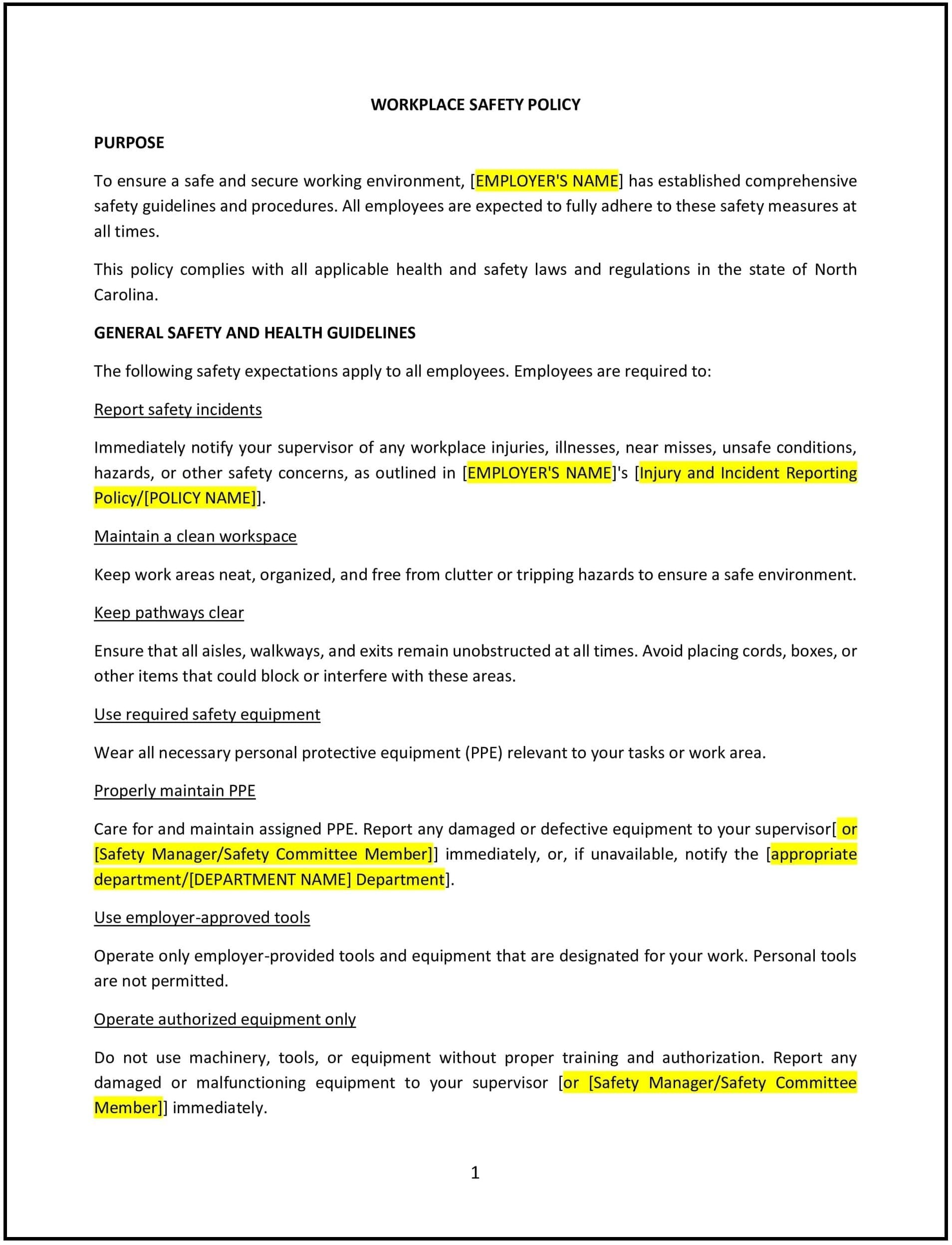
Workplace safety policy (North Carolina)
This workplace safety policy is designed to help North Carolina businesses create a safe and healthy work environment by addressing potential hazards and promoting best practices for employee safety. It outlines procedures for identifying risks, responding to incidents, and ensuring alignment with North Carolina’s workplace safety regulations.
By adopting this policy, businesses can reduce the risk of accidents, enhance employee well-being, and foster a culture of safety.
How to use this workplace safety policy (North Carolina)
- Identify hazards: Conduct regular workplace inspections to identify potential safety risks, such as unsafe equipment or hazardous materials.
- Establish safety protocols: Develop procedures for handling emergencies, such as fires, chemical spills, or medical incidents.
- Provide training: Educate employees on safety practices, including proper use of equipment and emergency response procedures.
- Encourage reporting: Create a system for employees to report safety concerns or incidents without fear of retaliation.
- Monitor compliance: Regularly review safety practices to ensure adherence to the policy and North Carolina’s safety regulations.
- Review and update: Assess the policy annually to strengthen alignment with current safety standards and workplace needs.
Benefits of using this workplace safety policy (North Carolina)
This policy offers several advantages for North Carolina businesses:
- Reduces accidents: Helps prevent workplace injuries and illnesses by addressing potential hazards.
- Enhances compliance: Strengthens alignment with North Carolina’s Occupational Safety and Health Administration (OSHA) regulations and promotes best practices.
- Improves morale: Demonstrates a commitment to employee safety and well-being, boosting job satisfaction.
- Mitigates risks: Reduces the likelihood of legal disputes or fines related to workplace safety violations.
- Builds trust: Shows employees that their safety is a top priority for the business.
Tips for using this workplace safety policy (North Carolina)
- Communicate clearly: Ensure all employees understand the policy and their roles in maintaining a safe workplace.
- Provide ongoing training: Regularly train employees on safety protocols and hazard recognition.
- Encourage participation: Involve employees in safety initiatives, such as safety committees or hazard reporting programs.
- Monitor trends: Track safety incidents to identify patterns and address underlying issues.
- Update regularly: Review the policy annually to strengthen alignment with current safety standards and workplace needs.