Workplace searches policy (California): Free template
Got contracts to review? While you're here for policies, let Cobrief make contract review effortless—start your free review now.
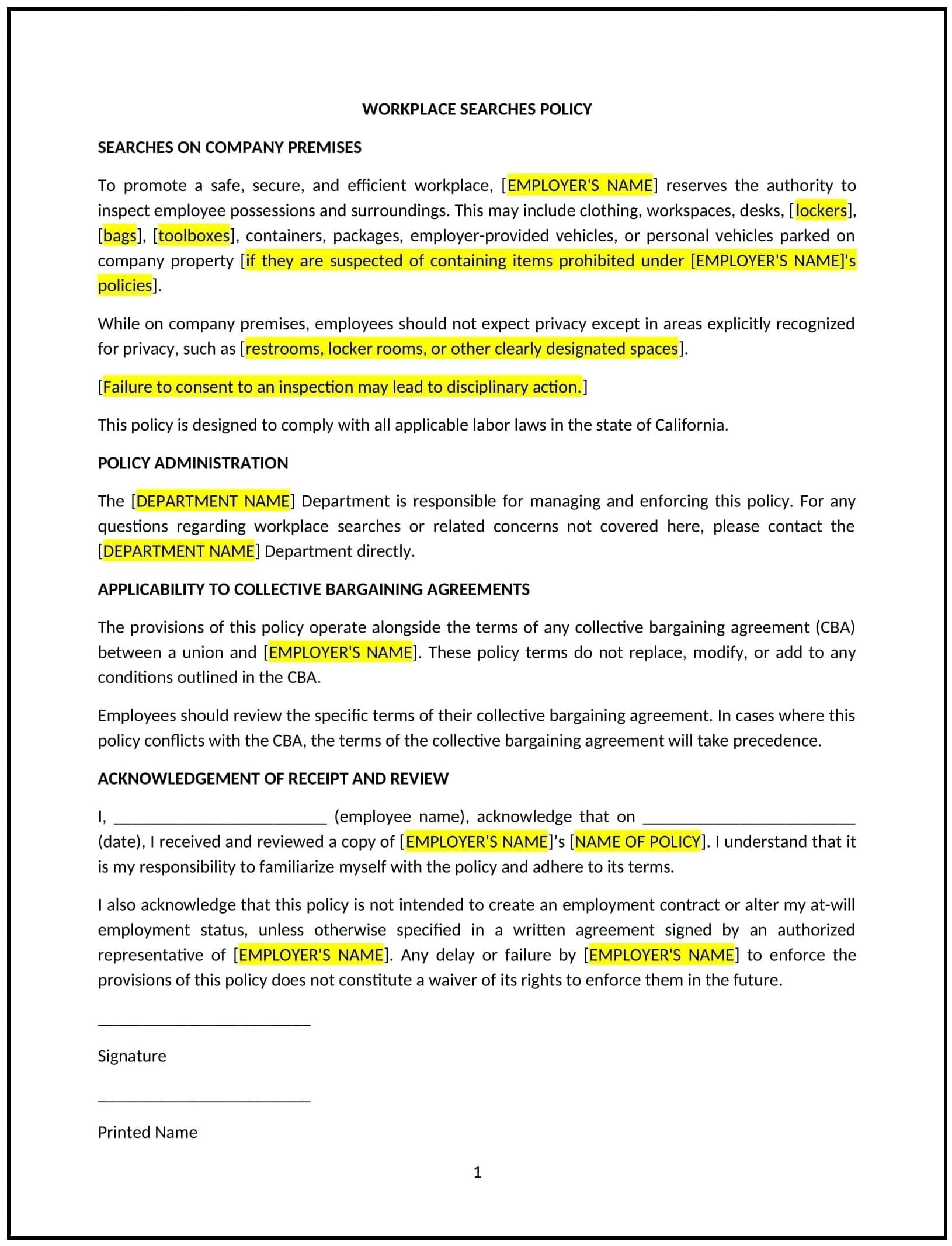
Customize this template for free
Workplace searches policy (California)
In California, a workplace searches policy provides businesses with guidelines for conducting searches of employees’ personal belongings or workspaces to ensure workplace safety, security, and compliance with company policies. This policy must balance the business’s interests in maintaining security with employees' privacy rights, in accordance with California privacy laws, including the California Constitution and Labor Code Section 1198.5.
By implementing this policy, California businesses can mitigate security risks, maintain a safe work environment, and address potential policy violations while respecting employees' legal rights.
How to use this workplace searches policy (California)
- Define scope: Clearly state what areas or belongings may be subject to search, such as lockers, desks, personal bags, or vehicles on company property.
- Communicate procedures: Provide guidelines for how searches will be conducted, including whether employees are required to be present during the search.
- Address employee consent: Explain whether employees are required to consent to searches, and outline the circumstances under which searches will occur.
- Outline confidentiality: Ensure the confidentiality of the search process and any findings, limiting the disclosure of information to those who need to know.
- Establish consequences: Clearly state the consequences of refusing to comply with a search or engaging in activities that violate the company’s policies.
Benefits of using this workplace searches policy (California)
This policy offers several advantages for California businesses:
- Supports compliance: Reflects California's privacy laws while ensuring the business can maintain security and operational integrity.
- Enhances security: Helps prevent theft, drug use, or other misconduct by allowing for the monitoring of personal belongings and workspaces.
- Promotes fairness: Provides clear and consistent guidelines for employees regarding searches, ensuring equal treatment and transparency.
- Reduces risks: Mitigates potential legal risks associated with unlawful searches or violations of employee privacy.
- Protects the work environment: Maintains a safe and productive work environment by addressing potential threats to workplace safety.
Tips for using this workplace searches policy (California)
- Reflect California-specific laws: Ensure the policy complies with state laws governing privacy rights and search procedures, including consent and notification requirements.
- Communicate the policy clearly: Ensure employees are aware of the policy during onboarding and periodic training, and understand the circumstances under which searches may be conducted.
- Train managers: Provide guidance on how to conduct searches legally and respectfully while protecting employees’ privacy.
- Use consistent procedures: Implement a uniform process for conducting searches to avoid discrimination or unfair treatment.
- Review regularly: Update the policy to reflect changes in California laws or workplace conditions.