Got contracts to review? While you're here for policies, let Cobrief make contract review effortless—start your free review now.
Customize this template for free
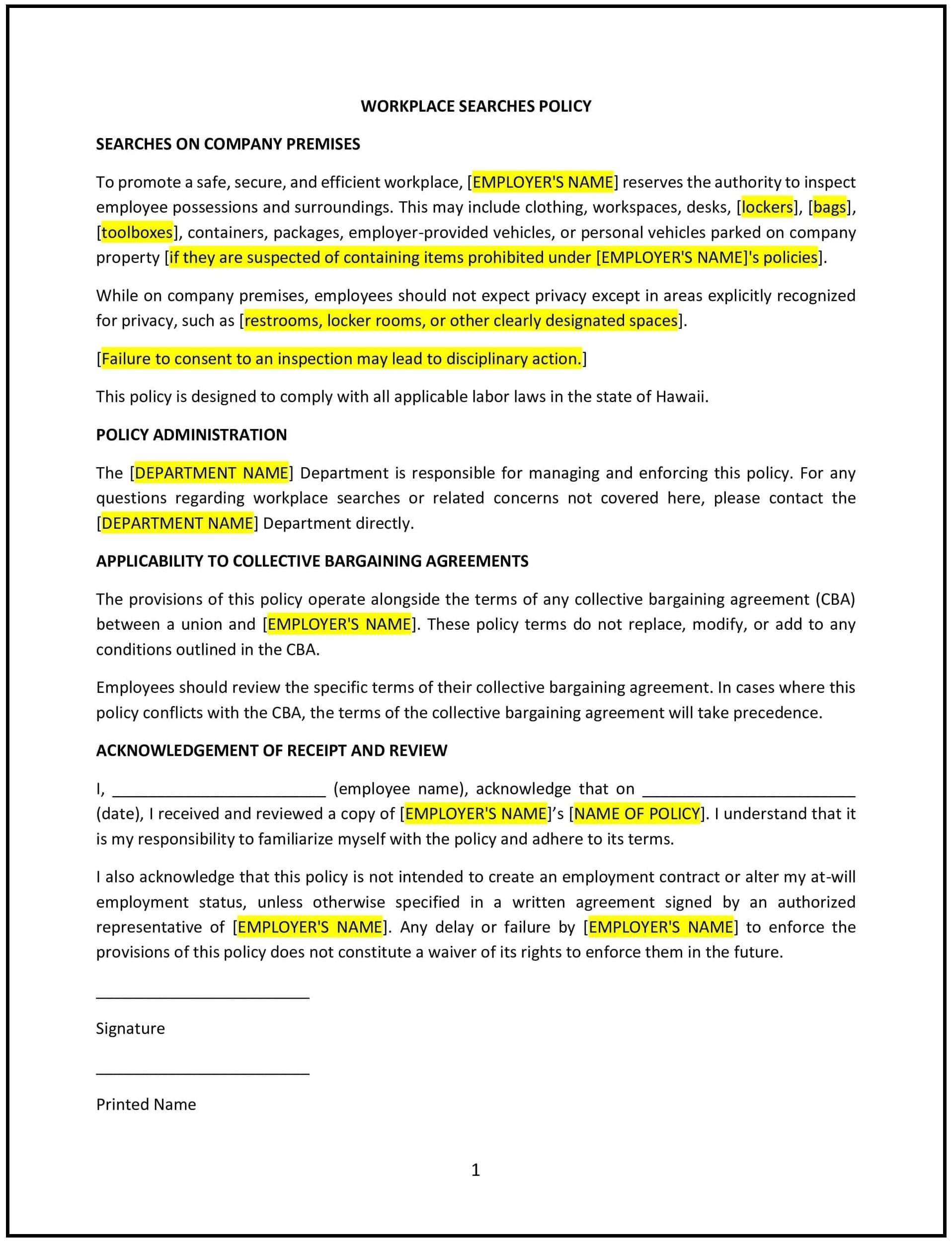
Workplace searches policy (Hawaiʻi)
A workplace searches policy helps Hawaiʻi businesses establish clear guidelines for conducting searches of employees, their belongings, or workspaces to maintain security and prevent theft, misconduct, or safety risks. This policy outlines procedures for conducting searches in a respectful and lawful manner, while considering Hawaiʻi’s cultural values of trust and community. It is designed to balance the need for security with respect for employee privacy and dignity.
By implementing this policy, businesses in Hawaiʻi can protect their assets, maintain a safe work environment, and demonstrate a commitment to fairness and transparency.
How to use this workplace searches policy (Hawaiʻi)
- Define the scope: Clearly explain what may be subject to searches, such as workspaces, lockers, vehicles, or personal belongings brought onto business premises.
- Establish reasons for searches: Specify the circumstances under which searches may be conducted, such as suspected theft, safety concerns, or violations of company policies.
- Outline procedures: Describe the process for conducting searches, including who is authorized to perform them, how employees will be notified, and how searches will be documented.
- Respect privacy: Emphasize that searches will be conducted in a respectful and non-invasive manner, with consideration for employee privacy and dignity.
- Communicate the policy: Share the policy with employees during onboarding and through internal communications to ensure awareness and understanding.
- Train managers: Educate managers on the policy’s guidelines, including how to conduct searches fairly and handle sensitive situations with discretion.
- Monitor and enforce the policy: Regularly review search practices and address any concerns or violations promptly and fairly.
- Review and update the policy: Periodically assess the policy’s effectiveness and make adjustments as needed to reflect changes in workplace dynamics or business needs.
Benefits of using this workplace searches policy (Hawaiʻi)
This policy offers several advantages for Hawaiʻi businesses:
- Enhances security: Clear guidelines help prevent theft, misconduct, or safety risks by allowing businesses to conduct searches when necessary.
- Protects assets: The policy helps safeguard business property, equipment, and sensitive information.
- Maintains trust: Transparent procedures and respectful conduct during searches demonstrate the business’s commitment to fairness and employee dignity.
- Reduces conflicts: Structured guidelines minimize misunderstandings and disputes related to workplace searches.
- Aligns with cultural values: The policy reflects Hawaiʻi’s emphasis on trust, respect, and community while addressing security needs.
- Improves preparedness: Training and clear procedures ensure that searches are conducted effectively and lawfully.
- Supports accountability: The policy ensures that searches are conducted consistently and documented appropriately.
Tips for using this workplace searches policy (Hawaiʻi)
- Communicate the policy effectively: Share the policy with employees during onboarding and through regular reminders, such as emails or training sessions.
- Be transparent: Clearly explain the reasons for searches and the procedures that will be followed to maintain trust and fairness.
- Respect privacy: Conduct searches in a respectful and non-invasive manner, avoiding unnecessary intrusion into employees’ personal belongings.
- Train managers: Educate managers on how to conduct searches fairly, handle sensitive situations, and document searches appropriately.
- Be consistent: Apply the policy consistently to all employees to ensure fairness and transparency.
- Review the policy periodically: Update the policy as needed to reflect changes in workplace dynamics, security needs, or legal requirements.