Got contracts to review? While you're here for policies, let Cobrief make contract review effortless—start your free review now.
Customize this template for free
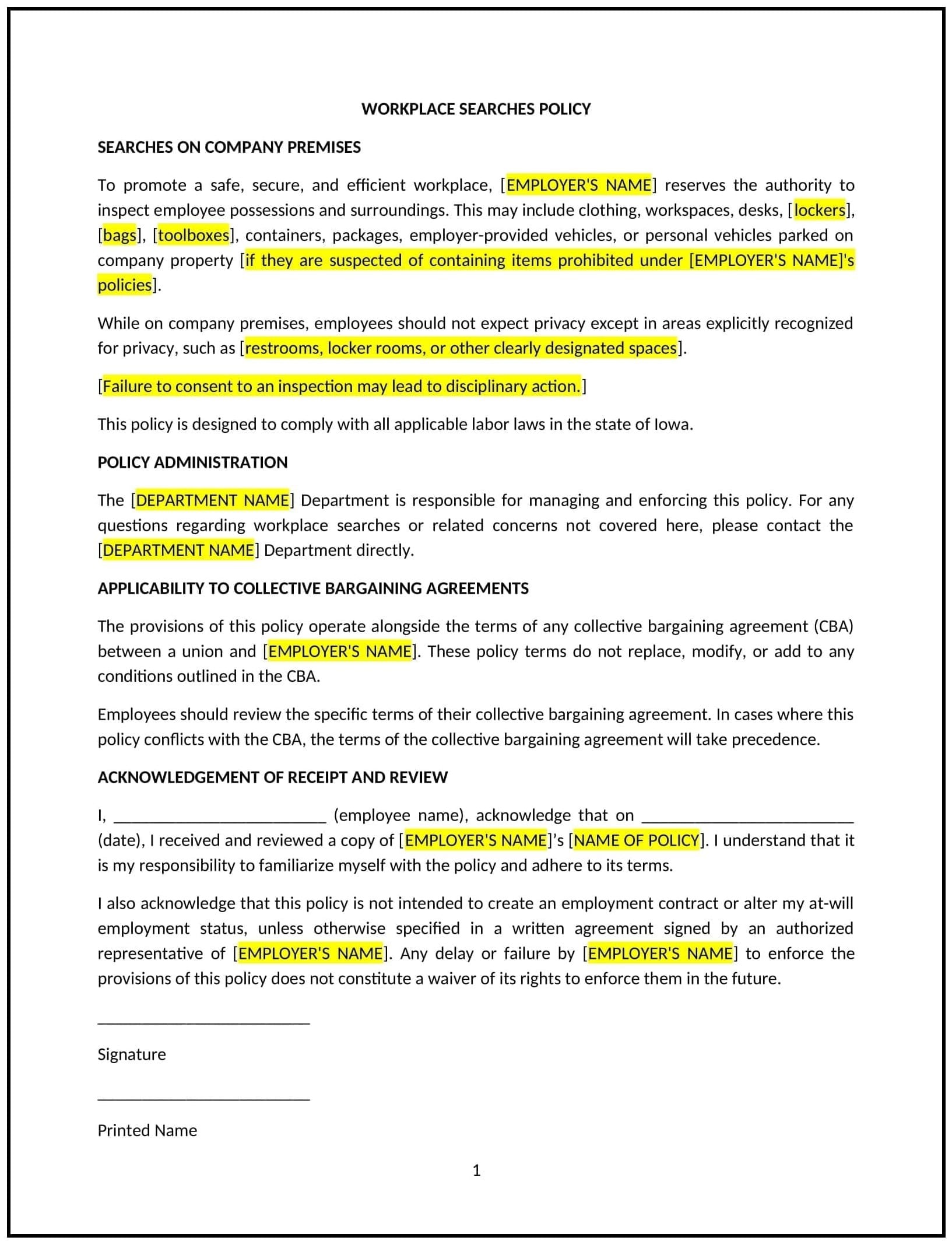
Workplace searches policy (Iowa)
A workplace searches policy helps Iowa businesses manage the circumstances under which they may search employees’ personal belongings, workspaces, and company property. This policy outlines the procedures for conducting searches, the situations in which searches may be appropriate, and the rights of employees regarding privacy and consent. It provides clear guidelines for both employees and employers, ensuring that searches are conducted fairly, consistently, and legally.
By implementing this policy, businesses can protect their assets, maintain a safe work environment, and address concerns such as theft, drugs, or safety violations while balancing employees' privacy rights.
How to use this workplace searches policy (Iowa)
- Define the purpose of workplace searches: Clearly outline the reasons for which searches may be conducted, such as ensuring workplace safety, preventing theft, ensuring compliance with company policies, or addressing suspected violations of laws or regulations.
- Specify the scope of searches: Detail which areas or items may be subject to search, such as personal bags, desks, lockers, company vehicles, or electronic devices. Clearly state what types of searches may be performed (e.g., physical search of personal items or electronic surveillance).
- Address consent and privacy: Clearly explain whether employee consent is required for searches and under what circumstances. Specify the right to privacy and the limitations on searches to respect personal boundaries while maintaining a safe and secure workplace.
- Set reporting procedures: Define how employees should report concerns about workplace searches or any discomfort they may have. Outline who is responsible for approving and carrying out searches (e.g., HR, security personnel, or management).
- Outline search procedures: Establish clear, respectful procedures for conducting searches, including the need for at least one witness, ensuring searches are done in a private setting, and avoiding unnecessary intrusions on personal items. Define what happens during the search and the proper documentation process.
- Define consequences for refusal: Specify the potential consequences if an employee refuses to comply with a search, which could include disciplinary action, suspension, or termination, depending on the severity of the situation.
- Review and update regularly: Periodically review and update the policy to ensure it is in compliance with state laws and company needs, and to reflect any changes in workplace practices or employee feedback.
Benefits of using this workplace searches policy (Iowa)
This policy offers several key benefits for Iowa businesses:
- Protects company property and assets: Workplace searches help prevent theft, unauthorized access to confidential information, or misuse of company resources.
- Maintains a safe work environment: By allowing searches to address concerns such as drugs, weapons, or other safety risks, businesses can prevent workplace hazards and promote the well-being of employees.
- Reduces legal risks: A clear and legally compliant policy helps businesses mitigate the risk of legal action related to privacy violations or unlawful searches.
- Enhances workplace trust: By implementing a fair and transparent policy, businesses demonstrate a commitment to security while respecting employees’ rights, which can increase trust between management and staff.
- Provides consistency: A standardized process for conducting searches ensures that all employees are treated fairly and consistently, reducing potential conflicts or misunderstandings about personal privacy.
- Fosters accountability: With a clear policy, employees are aware of the rules and the consequences of non-compliance, encouraging responsible behavior and adherence to company guidelines.
Tips for using this workplace searches policy (Iowa)
- Communicate the policy clearly: Ensure that all employees are aware of the workplace searches policy, understand the circumstances under which searches may occur, and know how to report concerns about searches.
- Respect privacy: Be transparent about the purpose of the policy and ensure that searches are conducted respectfully and in a manner that minimizes personal intrusion.
- Provide training: Train managers and HR staff on how to carry out searches appropriately and in line with the policy, ensuring that searches are conducted professionally and respectfully.
- Implement clear procedures: Clearly define the steps that should be followed before, during, and after a search, including the involvement of witnesses, documentation requirements, and follow-up actions.
- Address concerns proactively: If employees express concerns about the policy, address those concerns promptly and fairly, making adjustments to the policy if necessary to maintain trust and ensure its effectiveness.
- Monitor compliance: Regularly evaluate the effectiveness of the policy to ensure it is being followed consistently and remains relevant to the company’s needs and goals.