Customize it in Cobrief and get sign-off from employees, contractors, or partners in one place.
Customize this template for free
TL;DR
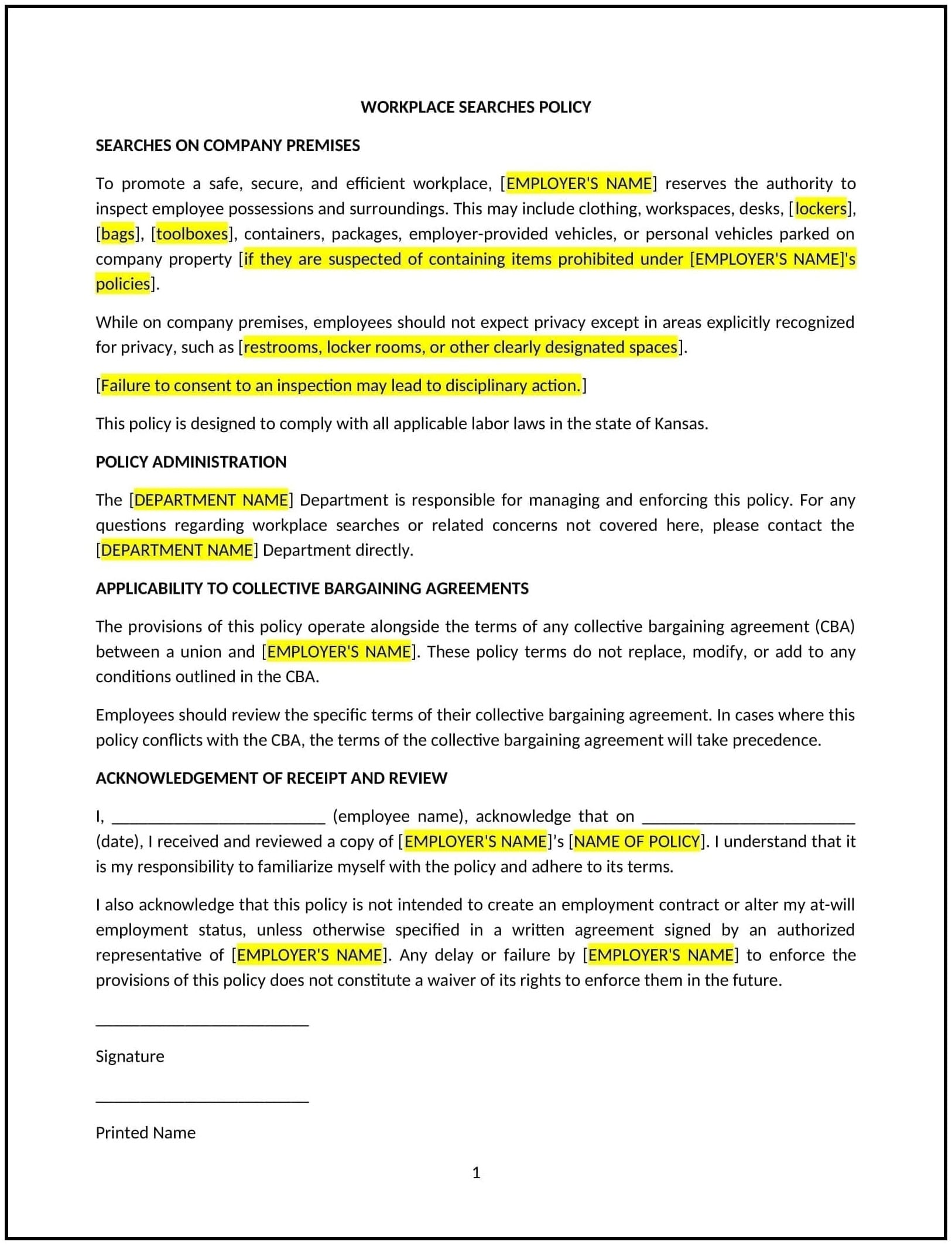
A workplace searches policy template for Kansas businesses that establishes guidelines for conducting searches of employees and their belongings. It details the circumstances for searches, procedures to follow, and employee rights regarding privacy and consent, aiming to balance security needs with respect for privacy. Typically used by HR departments and management to ensure compliance and promote a fair workplace.
Workplace searches policy (Kansas)
A workplace searches policy helps Kansas businesses establish guidelines for conducting searches of employees, their personal belongings, and workplace areas. This policy outlines the circumstances under which searches may occur, the procedures for conducting them, and the rights of employees regarding privacy and consent. It aims to balance the company’s need to protect its assets and maintain a safe workplace with respect for employees' privacy.
By implementing this policy, businesses can address security concerns, prevent theft or misconduct, and promote a transparent and respectful workplace environment.
How to use this workplace searches policy (Kansas)
- Define the scope of searches: The policy should clearly specify which areas or items may be subject to search, such as desks, lockers, personal bags, company vehicles, or electronic devices. It should also clarify the types of searches that may be conducted, such as personal searches or surveillance of work activities.
- Establish search protocols: The policy should outline the procedures for conducting searches, including who is authorized to perform them, how employees will be informed of the search, and any necessary precautions to protect the dignity and privacy of employees.
- Clarify employee consent: The policy should specify whether employee consent is required for searches. It should also explain situations where searches may occur without consent, such as if there is a legitimate business need or concern (e.g., suspicion of theft or workplace safety).
- Address confidentiality: The policy should ensure that any search results, findings, or employee information obtained during a search are kept confidential and only shared with authorized personnel as necessary.
- Set reporting procedures: The policy should outline how employees can report concerns about workplace searches, including any complaints about inappropriate searches or violations of privacy rights.
- Specify consequences for refusal: The policy should explain the potential consequences for employees who refuse to comply with a search request, which may range from disciplinary action to termination, depending on the severity of the situation.
- Review and update regularly: The policy should be reviewed periodically to ensure it remains relevant to changing laws, security concerns, and best practices, and to reflect any changes in the company’s operations.
Benefits of using a workplace searches policy (Kansas)
- Enhances security: A clear workplace searches policy helps businesses detect and prevent theft, fraud, or the presence of prohibited items, enhancing workplace safety and security.
- Promotes fairness and transparency: By setting clear expectations and guidelines for when and how searches will be conducted, the policy promotes fairness, consistency, and transparency in how employees are treated.
- Protects employees' privacy: The policy ensures that searches are conducted in a manner that respects employees’ privacy rights while addressing business needs, helping maintain trust between employees and the company.
- Reduces legal risks: A well-implemented workplace searches policy reduces the risk of legal disputes related to employee privacy or unlawful searches by ensuring that all actions taken are justified, transparent, and legally compliant.
- Minimizes workplace disruption: The policy helps streamline the process of conducting searches, ensuring they are handled professionally and efficiently, without causing unnecessary disruption to the workplace or to employees.
- Fosters a positive work environment: By demonstrating respect for privacy while ensuring workplace safety and security, the policy can help maintain a professional, respectful, and supportive work environment for all employees.
Tips for using this workplace searches policy (Kansas)
- Communicate the policy clearly: Make sure all employees are informed about the workplace searches policy, the reasons for conducting searches, and the procedures in place to protect their rights. This can be done through training, employee handbooks, or regular meetings.
- Ensure consistency: Ensure that searches are conducted consistently across all employees and departments, with no exceptions unless specifically outlined in the policy. This helps avoid claims of favoritism or unfair treatment.
- Use searches responsibly: Searches should be conducted only when necessary and under reasonable circumstances. Unnecessary or overly intrusive searches may lead to negative perceptions among employees.
- Maintain confidentiality: Keep any information obtained during a search confidential and ensure that it is only shared with relevant parties within the company, in line with the company’s privacy policies.
- Handle refusals appropriately: The policy should set clear guidelines for how to handle situations where employees refuse to comply with a search. Ensure that employees understand the potential consequences and how refusals will be handled fairly.
- Regularly evaluate the policy: The policy should be reviewed periodically to ensure it aligns with current best practices, employee concerns, and legal developments, and that it continues to meet the company’s needs.
Frequently asked questions (FAQs)
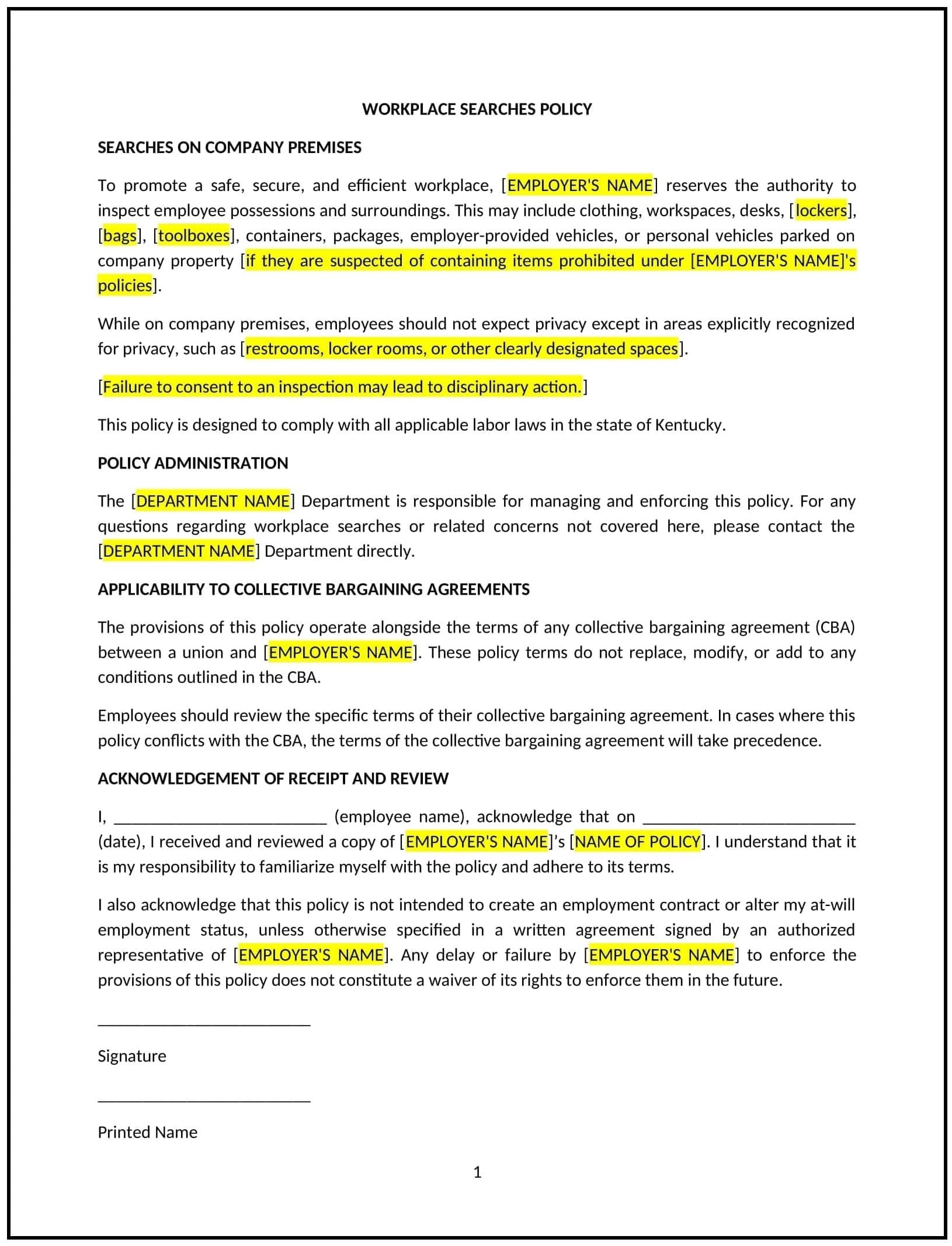
Defines permissible search procedures for employee workspaces and belongings, balancing security with privacy under Kentucky law.
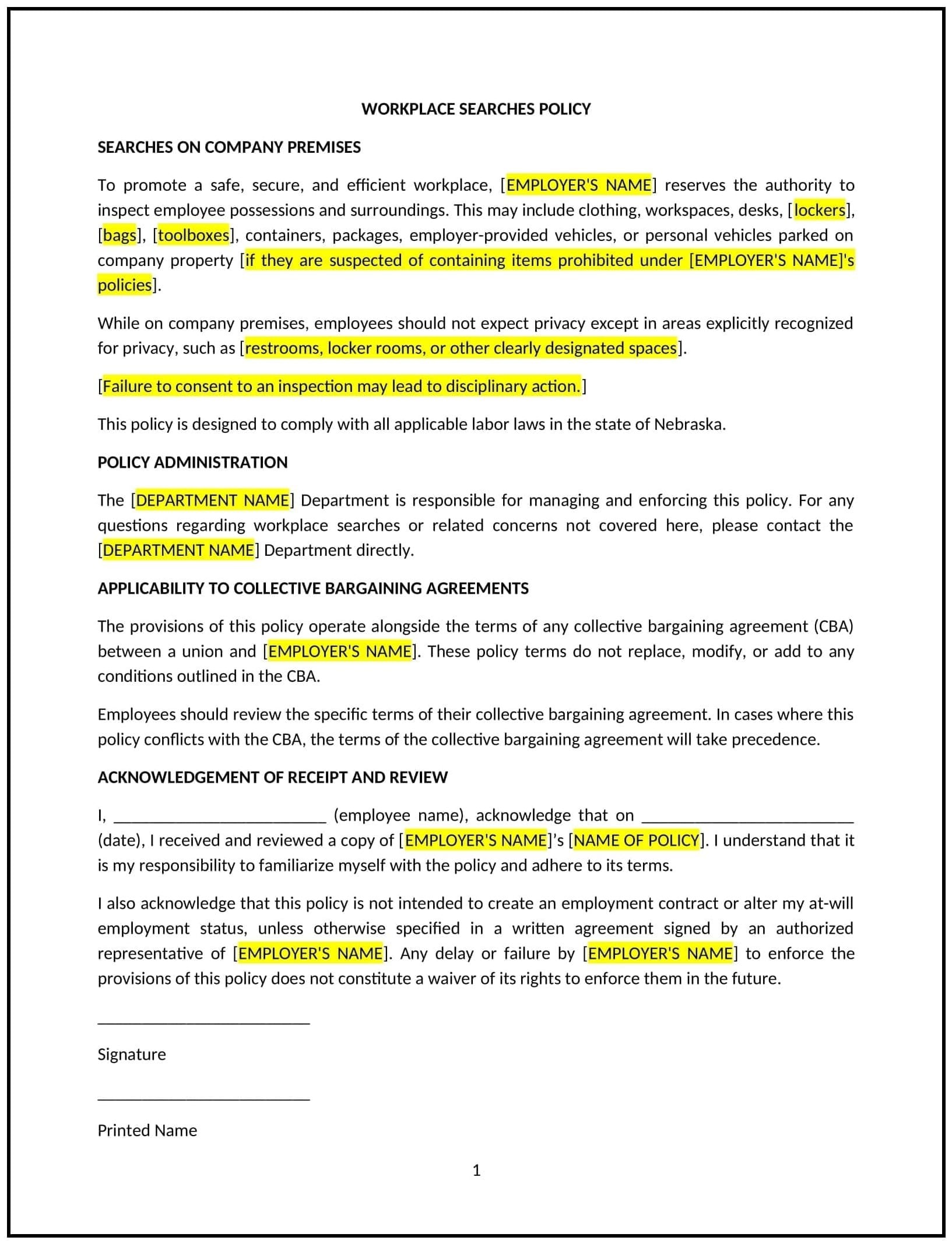
Explains conditions under which employer may search employee property to ensure safety and policy compliance.
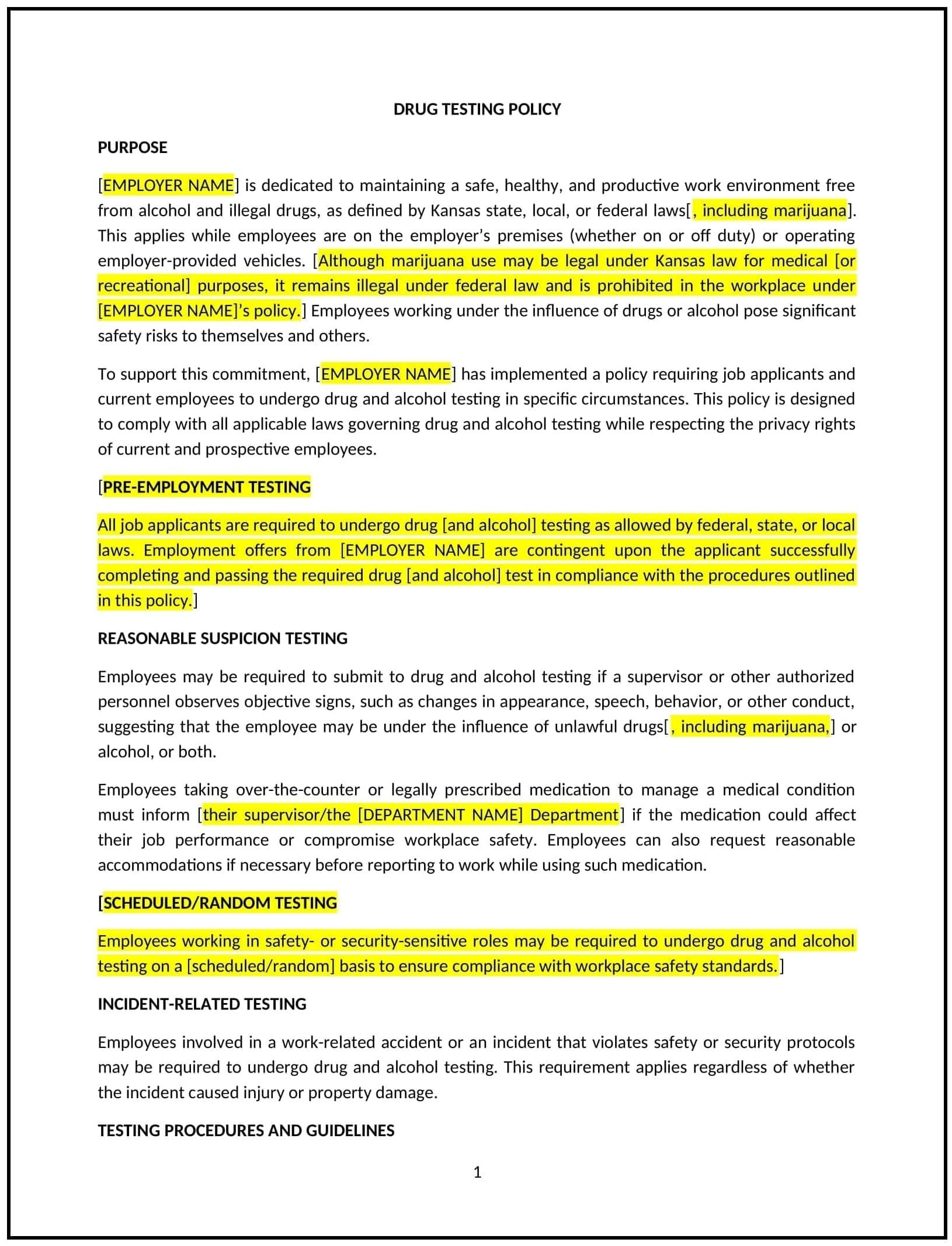
Outlines permissible testing circumstances, consent, and confidentiality to ensure safe workplaces under Kansas regulations.
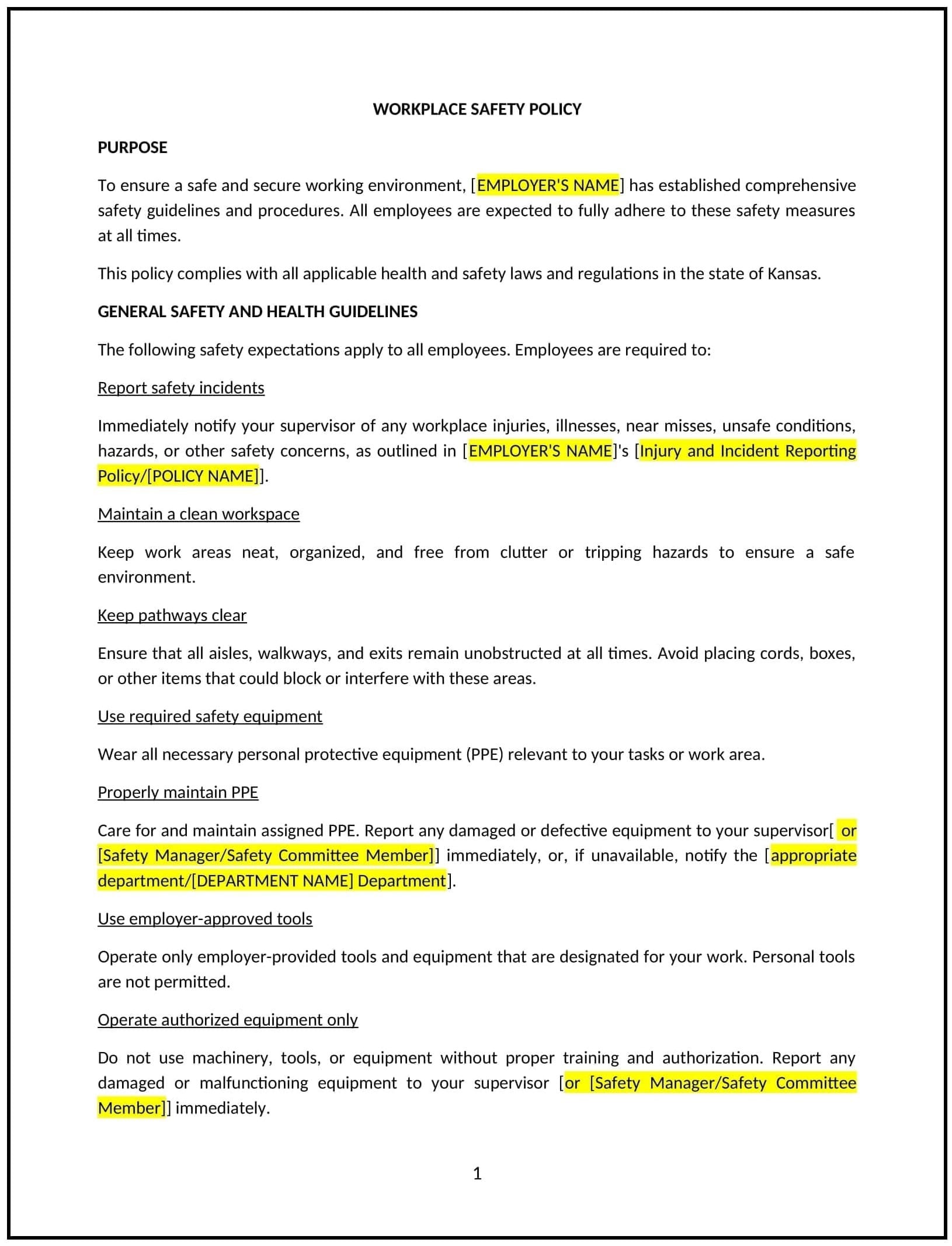
Outlines safety responsibilities, training, and hazard controls to comply with Kansas occupational safety standards.
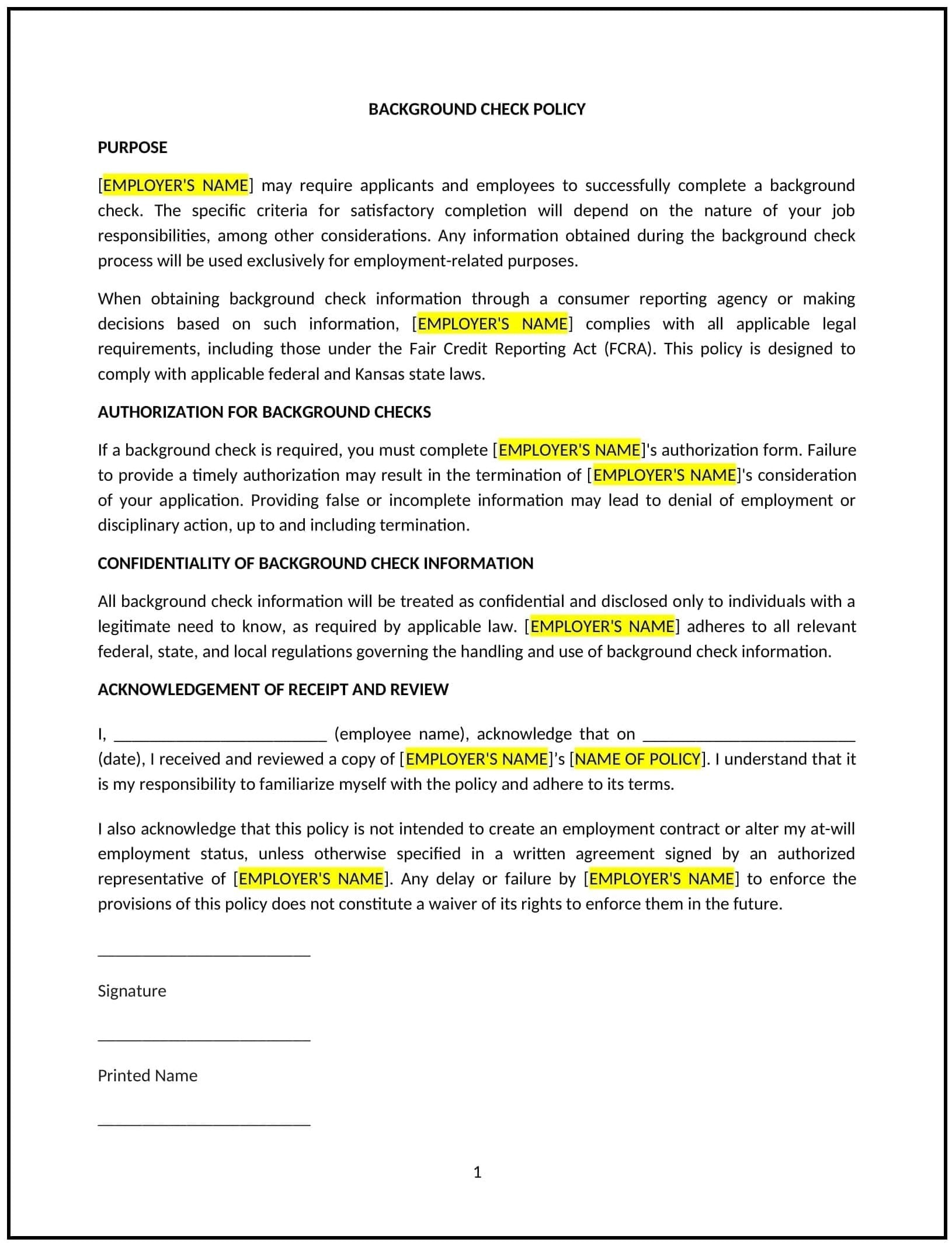
Explains permissible background screening, notification, and result handling to support fair hiring in Kansas.