Got contracts to review? While you're here for policies, let Cobrief make contract review effortless—start your free review now.
Customize this template for free
Workplace searches policy (Maine): Free template
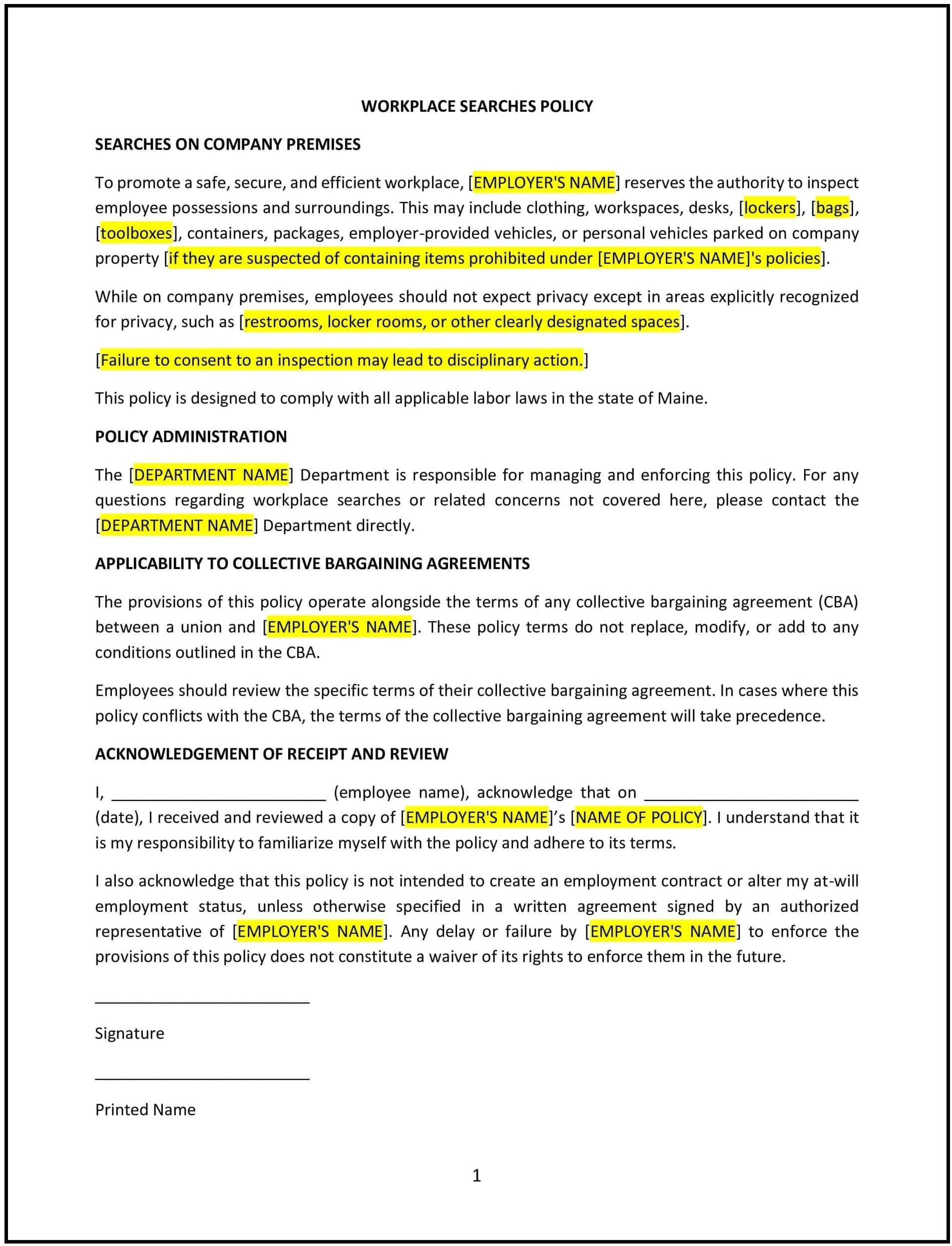
This workplace searches policy is designed to help Maine businesses establish guidelines for conducting searches of employees' personal belongings or company property, such as desks, lockers, and workspaces. The policy outlines the circumstances under which searches may occur, the process for conducting them, and employees' rights related to workplace searches.
By implementing this policy, Maine businesses can ensure that workplace searches are conducted in a manner that respects employees' privacy while maintaining a safe and secure work environment.
How to use this workplace searches policy (Maine)
- Define scope of searches: Clearly specify the areas and items that may be subject to search, such as desks, lockers, company vehicles, or personal belongings brought into the workplace.
- Establish circumstances for searches: Specify when searches may be conducted, such as when there is reasonable suspicion of policy violations (e.g., theft, drug use) or potential safety concerns.
- Provide notification procedures: Outline how employees will be notified if a search is to take place, including whether consent will be obtained or if searches can be conducted without prior notice under certain circumstances.
- Address employee consent: Define how employee consent will be obtained, whether through written agreements, notices in the employee handbook, or verbal consent at the time of the search.
- Ensure respect for privacy: Establish guidelines for ensuring that searches are conducted professionally and with respect for employees' privacy, including limiting searches to what is necessary to address the concern.
- Specify prohibited items: List the types of items that are prohibited from the workplace, such as illegal drugs, weapons, or stolen property, and make clear that employees may be subject to disciplinary action if found with prohibited items.
- Set up search procedures: Specify the process for conducting searches, including who will carry out the search (e.g., HR, security) and how searches will be documented.
- Review regularly: Periodically review and update the policy to ensure it aligns with changes in workplace practices, legal requirements, or business needs.
Benefits of using this workplace searches policy (Maine)
Implementing this policy provides several benefits for Maine businesses:
- Promotes workplace security: Ensures that potential security risks, such as theft, contraband, or hazardous materials, are addressed in a controlled and lawful manner.
- Reduces legal risks: Helps businesses comply with privacy laws and workplace regulations while conducting searches, minimizing the risk of legal challenges or liability.
- Enhances employee trust: Establishes a clear and transparent process for workplace searches, promoting a sense of fairness and reducing potential misunderstandings between employees and management.
- Encourages compliance: By defining the types of prohibited items and setting clear procedures for searches, the policy reinforces the company's commitment to a safe and secure work environment.
- Protects business assets: Helps businesses safeguard property and assets by ensuring that workplace searches are carried out when there is reasonable suspicion of misuse or theft.
Tips for using this workplace searches policy (Maine)
- Communicate the policy clearly: Ensure that all employees are informed about the workplace searches policy, including the circumstances under which searches may occur and how they will be conducted. Include the policy in the employee handbook and discuss it during onboarding.
- Provide training for managers: Train managers and HR staff on how to carry out searches professionally and in compliance with legal guidelines, ensuring that searches are conducted respectfully and appropriately.
- Be transparent: Maintain transparency with employees about the company’s reasons for conducting searches and the procedures involved, which helps minimize resistance or concerns.
- Ensure consistency: Apply the policy consistently across all employees to avoid perceptions of bias or favoritism when conducting searches.
- Document searches: Keep records of any searches that are conducted, including the reasons for the search, the items searched, and the outcome, to protect the company from legal challenges.
- Stay informed on legal updates: Regularly review changes in Maine state laws or federal regulations that may impact how workplace searches should be conducted to ensure the policy remains compliant.