Got contracts to review? While you're here for proposals, let Cobrief make contract review effortless—start your free review now.
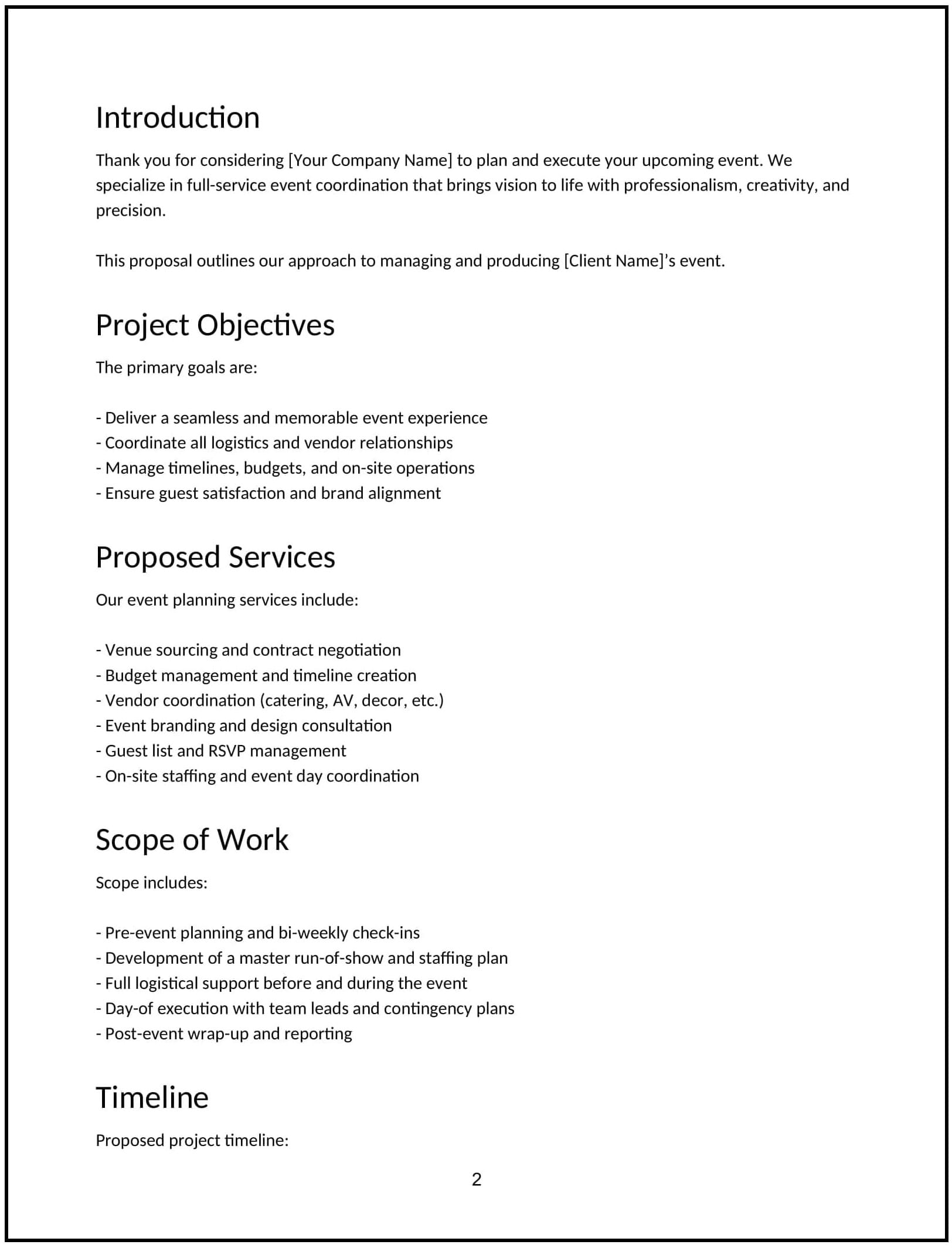
Customize this template for free
Customize this free event planning proposal with Cobrief
Open this free event planning proposal in Cobrief and start editing it instantly using AI. You can adjust the tone, structure, and content based on your services, the client’s event type, and their budget or timeline. You can also use AI to review your draft — identify missing details, improve clarity, and make your offer more persuasive.
Once you're done, send, download, or save the proposal in one click — no formatting or setup required.
This template is fully customizable and built for real-world use — ideal for pitching corporate events, private parties, or nonprofit functions. Whether you manage full-scale productions or smaller engagements, this proposal gives you a structured starting point that saves time and builds client confidence.
What is an event planning proposal?
An event planning proposal is a formal document that outlines how you’ll organize, manage, and execute an event on behalf of a client. It’s usually shared after an initial inquiry or consultation, and it includes the scope of planning, vendor coordination, logistics, and pricing.
Event planning proposals are commonly used by agencies, freelancers, and event production teams across industries — from corporate events and product launches to weddings and fundraisers.
Unlike generic service quotes, this type of proposal shows you understand the client’s vision and provides a tailored plan for bringing it to life. It’s often the step that leads to a signed contract or deposit payment.
Why use Cobrief to edit your proposal
- Edit the full proposal instantly: No uploads or formatting required — just click and start.
- Use AI to tailor your proposal: Rewrite, simplify, or change tone based on the event type or client profile.
- Run an AI-powered review: Check for missing info, unclear sections, or opportunities to improve.
- Accept all changes in one click: Apply edits manually or automatically.
- Save, send, or download: Export a clean version of your proposal in seconds.
When to use this proposal
- When following up after a consultation to formalize your offer
- When pitching event planning services for a corporate retreat, gala, or launch event
- When responding to a new inquiry about pricing and planning support
- When proposing full-service planning or day-of coordination for weddings or private functions
- When offering event logistics as part of a larger marketing or production package
What to include in an event planning proposal
- Project overview: Summarize the type of event, the client’s goal, and your role in bringing it together. Tailor this to reflect the tone or theme of the event, such as formal, fun, professional, or creative.
- Scope of work: List everything you’ll handle — venue sourcing, vendor coordination, timelines, decor, guest experience, on-site management, etc. Be specific about what’s included and what’s not.
- Timeline: Provide a planning schedule from onboarding through event day. Highlight key milestones such as booking confirmations, walkthroughs, and final approvals.
- Vendor and logistics support: Outline how you’ll manage third-party vendors, rentals, permits, and setup/teardown. Clarify whether you’re handling payments or making introductions.
- Pricing: Offer a clear breakdown of your fees — fixed, hourly, or percentage-based. Note whether vendor costs are included or billed separately, and include payment schedule terms.
- Call to action / next steps: Close with a clear prompt — approve the proposal, schedule a walkthrough, or submit a deposit. Use confident language to keep the momentum going.
How to write an effective event planning proposal
- Reflect the client’s vision: Use language that mirrors the style, tone, and goals of the event they described.
- Show attention to detail: Clients want to feel you’ve thought through logistics, vendors, and contingencies.
- Clarify responsibilities: Be crystal clear about what you will and won’t handle — ambiguity leads to stress later.
- Emphasize experience: Highlight similar events you’ve planned to build trust and show relevance.
- Keep it visual and easy to skim: Use clean formatting, short paragraphs, and bulleted lists to aid readability.
- End with next steps: Make it obvious how to move forward and what happens after approval.