Retirement planning advisory proposal: Free template
Got contracts to review? While you're here for proposals, let Cobrief make contract review effortless—start your free review now.
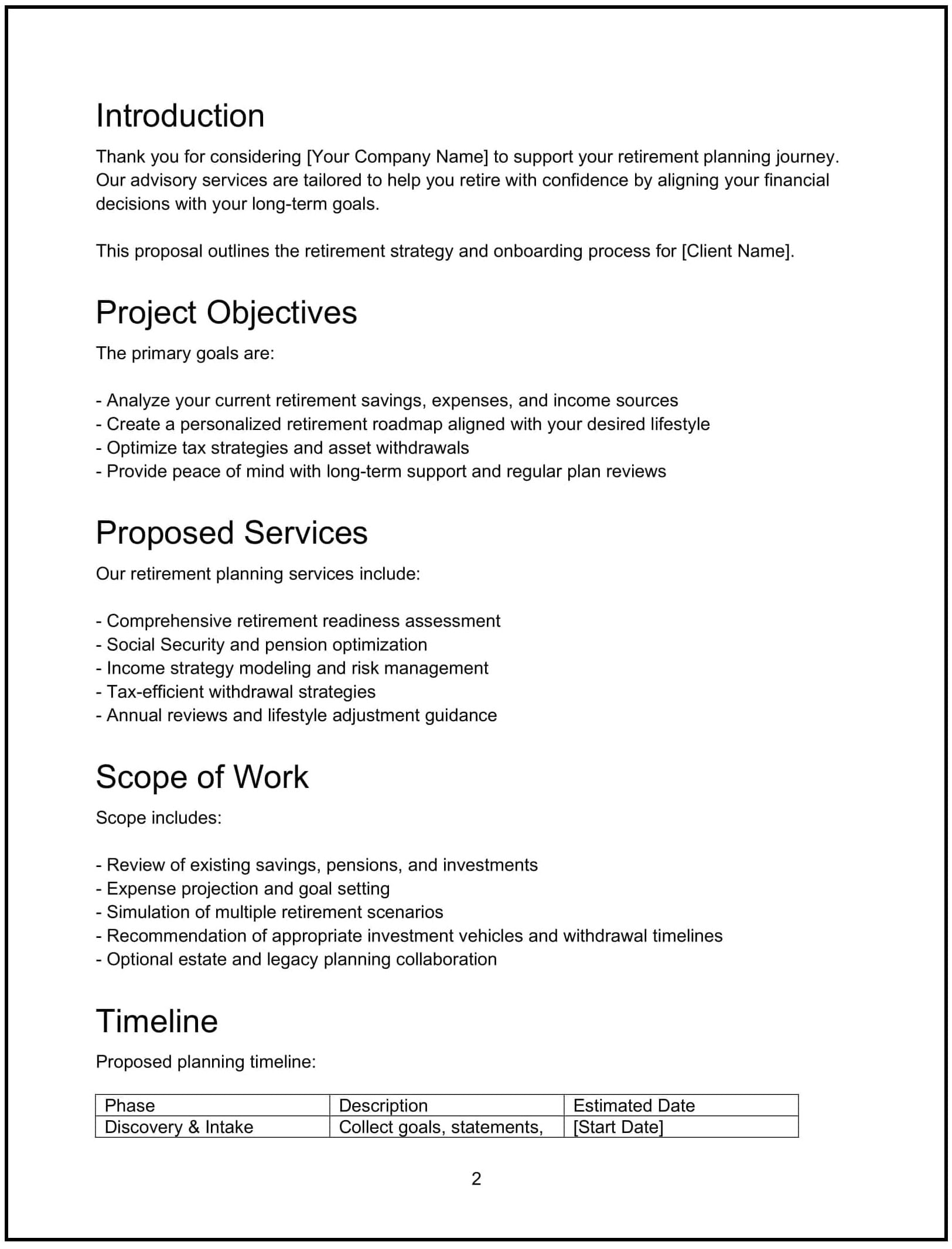
Customize this template for free
Customize this free retirement planning advisory proposal with Cobrief
Open this free retirement planning advisory proposal in Cobrief and start editing it instantly using AI. You can adjust the tone, structure, and content based on your client’s age, financial situation, and retirement goals. You can also use AI to review your draft — spot gaps, tighten language, and improve clarity before sending.
Once you're done, send, download, or save the proposal in one click — no formatting or setup required.
This template is fully customizable and built for real-world use — ideal for pitching retirement planning services, formalizing a client engagement, or outlining multi-year advisory plans. Whether you’re working with pre-retirees, recent retirees, or long-term clients shifting into decumulation, this version gives you a structured head start and removes the guesswork.
What is a retirement planning advisory proposal?
A retirement planning advisory proposal is a document that outlines how you’ll help a client plan, optimize, and manage their finances for retirement. It defines the scope of services, outlines a timeline, and sets expectations — from building a retirement income strategy to coordinating Social Security, taxes, and withdrawals.
This proposal is usually shared after an initial discovery call or intake session. It shows how your services will support the client’s specific goals — whether that’s retiring at a certain age, maintaining lifestyle income, or leaving assets to heirs.
A good retirement planning proposal helps you:
- Translate abstract retirement goals into concrete steps
- Explain how your advice will improve clarity, security, or outcomes
- Set clear expectations around deliverables, fees, and timelines
- Build trust during a high-stakes, emotionally charged decision process
Use this proposal to turn interest into engagement — with clarity, structure, and confidence.
Why use Cobrief to edit your proposal
Cobrief makes it faster and easier to create personalized, professional proposals — with built-in AI to help you write clearly and confidently.
- Edit the proposal directly in your browser: No uploading or formatting required.
- Rewrite sections with AI: Shorten, clarify, or adjust tone with just a few clicks.
- Run a one-click AI review: Spot unclear language, incomplete steps, or weak phrasing.
- Apply AI suggestions instantly: Review and apply edits manually or all at once.
- Share or export instantly: Download a polished PDF or DOCX, or send the proposal directly from Cobrief.
Less time formatting. More time advising.
When to use this proposal
This retirement planning proposal works well in scenarios like:
- After an initial consultation with a pre-retirement client: Summarize your understanding and outline the planning process.
- When pitching a one-time or ongoing retirement planning engagement: Clarify what’s included and how you’ll support the client over time.
- Responding to inbound interest from individuals aged 50+: Use the proposal to show expertise and create structure.
- Advising business owners or executives near retirement: Tailor your offer to more complex financial pictures.
- Offering a standalone retirement planning project: Use this to quote fixed-scope services even outside a long-term relationship.
Use this proposal when clarity and confidence are critical to helping the client make a high-trust decision.
What to include in a retirement planning advisory proposal
Each section in this template is designed to walk the client through your services, process, and expectations — clearly and professionally:
- Executive summary: Start by acknowledging the client’s goals (e.g., retiring at 60, covering healthcare, legacy planning) and explain how your services will help them make informed, confident decisions.
- Scope of services: Detail what’s included — e.g., retirement income projections, Social Security analysis, 401(k)/IRA withdrawal strategies, tax optimization, budgeting, inflation modeling, and survivor planning.
- Planning timeline: Break the work into key steps — e.g., data gathering, plan modeling, recommendations, review — and explain when each will happen.
- Fees: Outline your pricing structure (flat fee, hourly, or project-based). Be clear about what’s included and if ongoing check-ins or revisions are part of the engagement.
- Terms and expectations: Clarify what documents you’ll need, how many meetings are included, and how advice will be delivered (e.g., in-person, report, Zoom).
- Next steps: Finish with a single action — “Reply to confirm,” “Schedule your plan delivery meeting,” or “Sign to get started.”
How to write an effective retirement planning proposal
Retirement planning isn’t just financial — it’s deeply personal. Here’s how to make your proposal more effective:
- Speak to life goals, not just numbers: Position your advice around outcomes like freedom, flexibility, and peace of mind.
- Translate complexity into clarity: Help clients understand your process without financial jargon.
- Be clear about trade-offs: Show how your recommendations help balance risk, income, and longevity.
- Keep the tone warm but professional: Trust matters — especially with clients nearing major life transitions.
- Use structure and spacing: Break down dense topics so they feel manageable and easy to read.
- End with a confident next step: Remove friction — make it obvious how to move forward.
Frequently asked questions (FAQs)
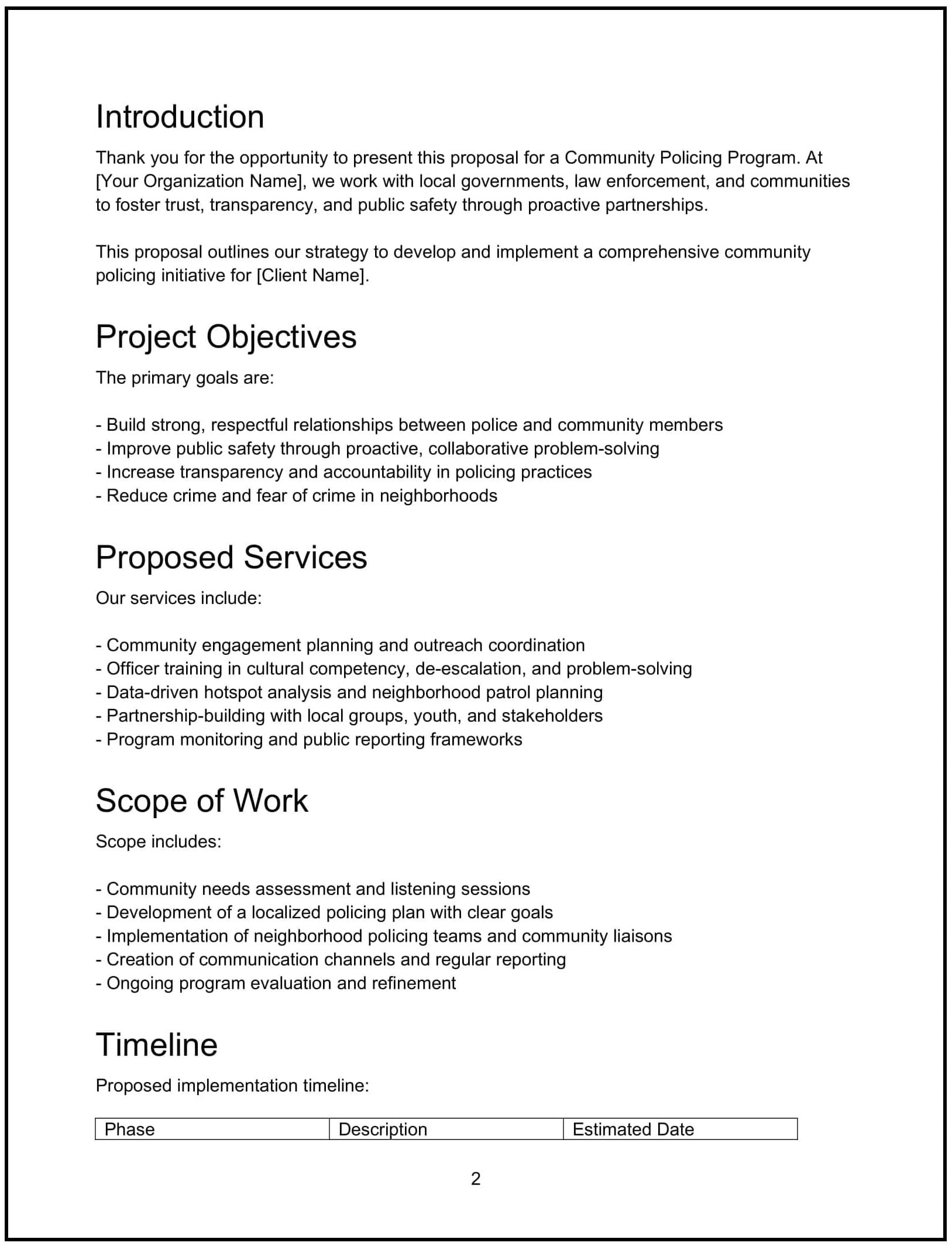
Proposes a community policing program, outlining engagement strategies, officer training, partnership initiatives, and performance metrics to strengthen public trust and enhance local safety.
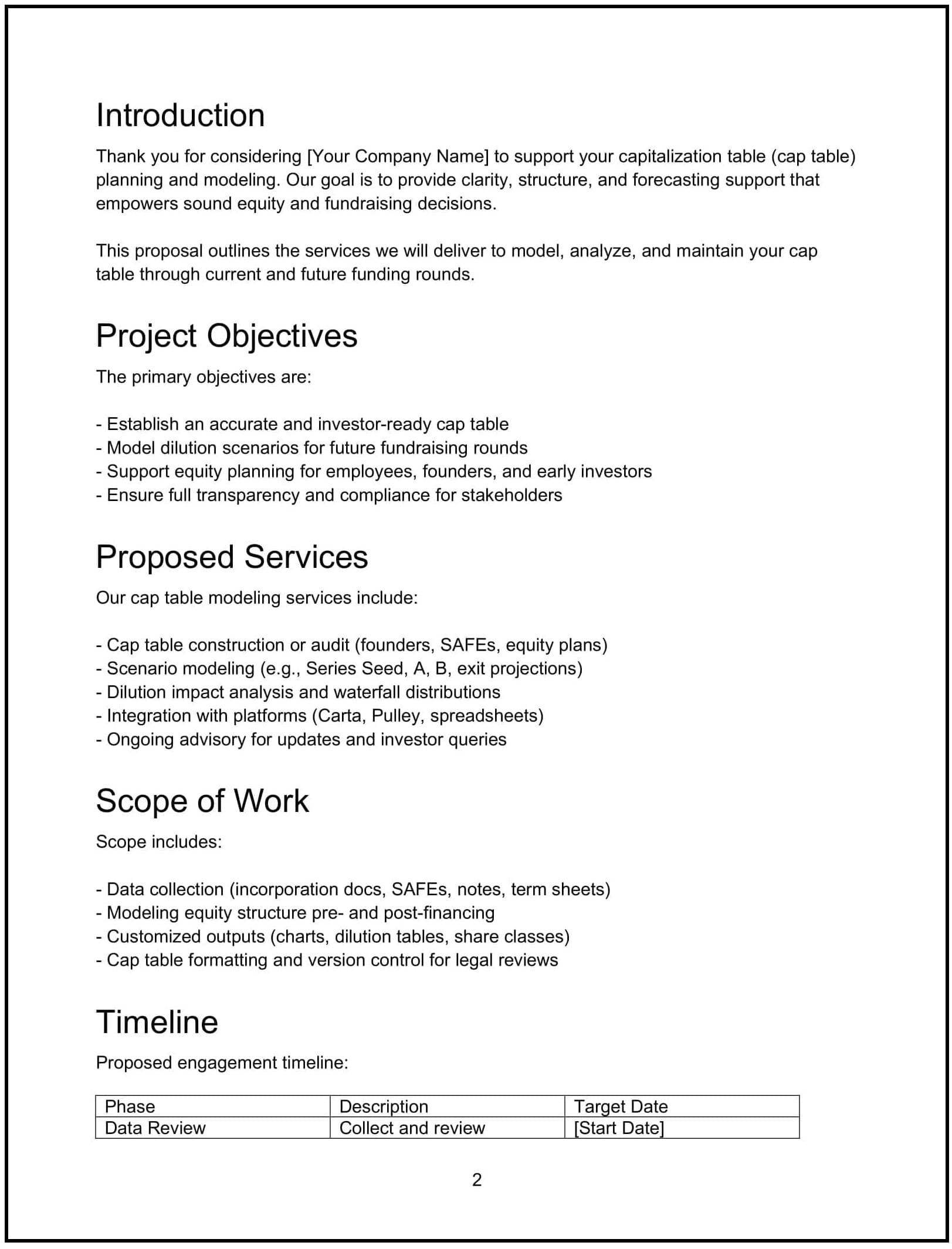
Proposes a cap table modeling service, detailing ownership breakdowns, dilution scenarios, fundraising impacts, and equity planning tools to support informed startup decision-making.
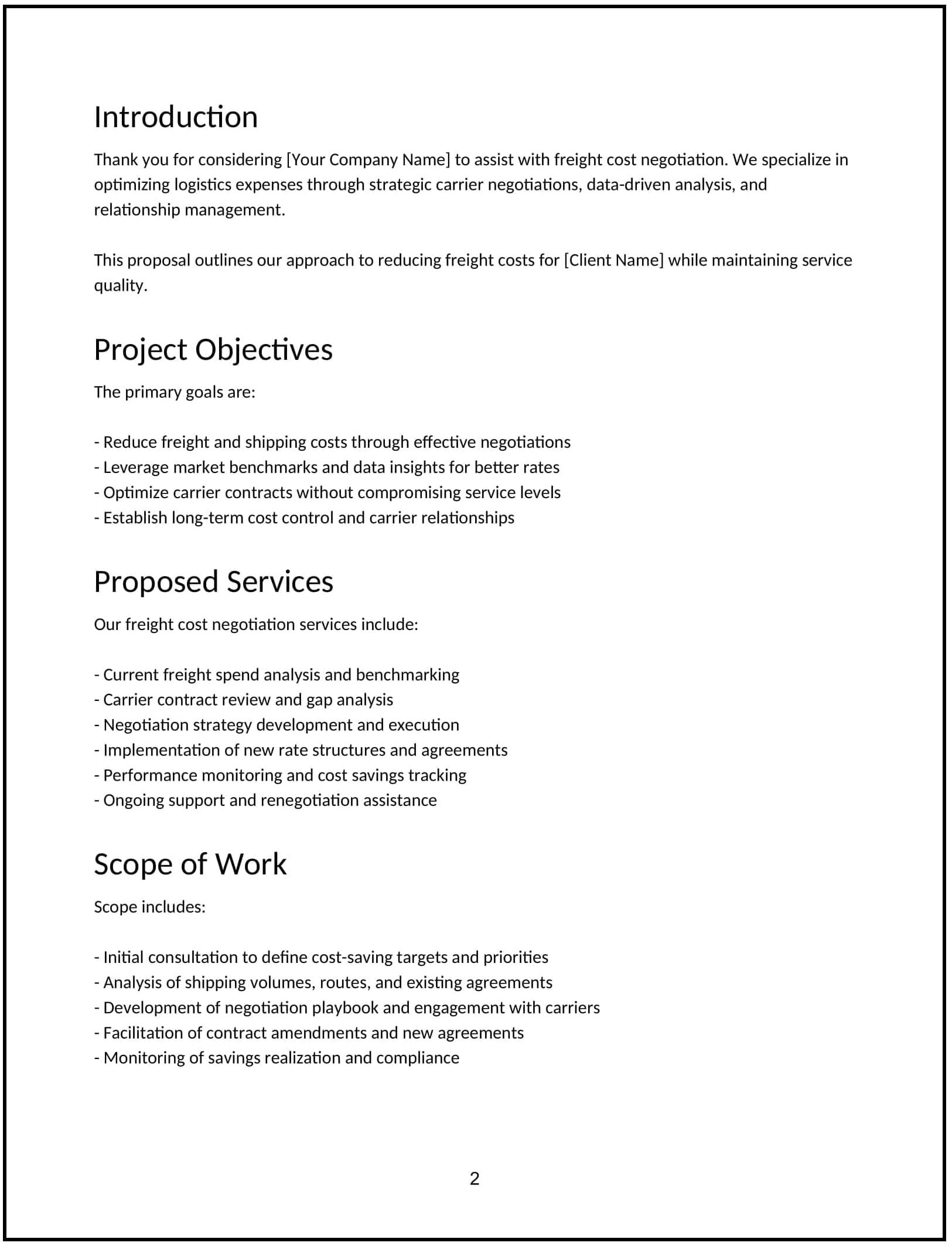
Presents a structured plan to negotiate lower freight rates, with current shipping data, cost-saving tactics, and engagement terms.