Drafting an executive employment agreement: Free checklist
Start a new document with this content. Open the editor to build from scratch — paste in what you need and keep writing.
Drafting an executive employment agreement checklist
In today's competitive business environment, having a well-structured executive employment agreement is essential for both the employer and the executive. This checklist serves as a practical guide for employers to navigate the key components of drafting effective executive employment agreements. It outlines important considerations and best practices to ensure that the agreements meet legal requirements while aligning with company goals.
By using this checklist, employers can create clear, comprehensive agreements that protect their interests and establish a positive working relationship with executives.
How to use this drafting an executive employment agreement checklist
This checklist is a practical tool for drafting executive employment agreements. Here’s how to use it effectively:
- Review each section: Start by examining all sections of the checklist to understand the key components required for a robust executive employment agreement.
- Follow the steps systematically: Work through each item in the checklist in order, ensuring that you address all relevant aspects before finalizing the agreement.
- Document your process: Keep records of your findings and the steps taken while using the checklist. This documentation will be useful for reference and may be important for legal compliance.
- Use it as a drafting guide: Apply the checklist as a reference while drafting the executive employment agreement, helping you stay organized and thorough in your approach.
- Incorporate feedback: Utilize insights gained from the checklist to inform discussions with legal counsel or other stakeholders, ensuring the agreement aligns with best practices.
- Regularly revisit and update: Make it a habit to periodically review and update the checklist to reflect changes in laws, regulations, or company policies, keeping your drafting approach current and effective.
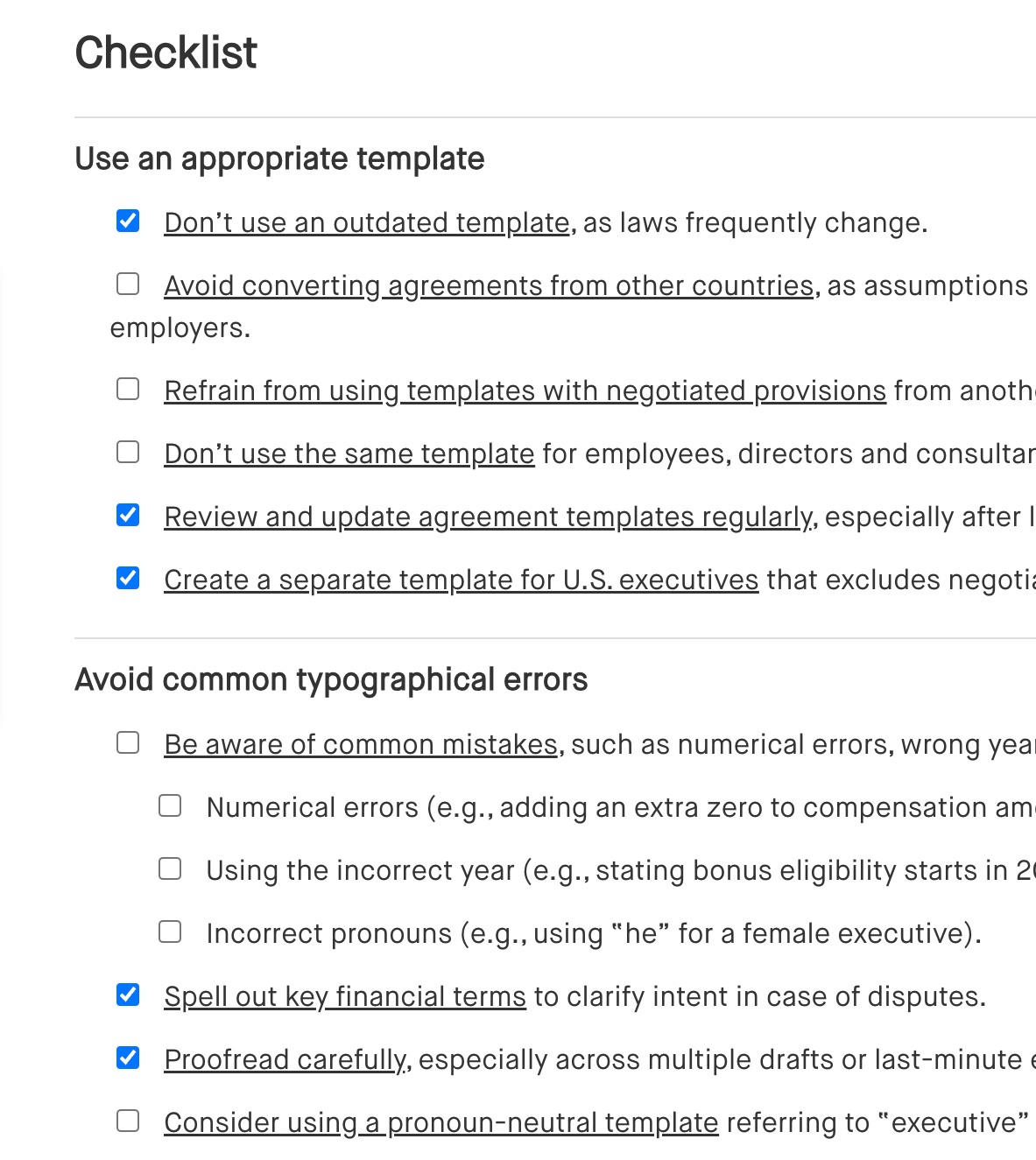
Checklist
Use an appropriate template
[ ] Don’t use an outdated template, as laws frequently change.
[ ] Avoid converting agreements from other countries, as assumptions under foreign laws may not apply to U.S. employers.
[ ] Refrain from using templates with negotiated provisions from another executive’s agreement.
[ ] Don’t use the same template for employees, directors and consultants.
[ ] Review and update agreement templates regularly, especially after legal changes.
[ ] Create a separate template for U.S. executives that excludes negotiated terms.
Avoid common typographical errors
[ ] Be aware of common mistakes, such as numerical errors, wrong years or incorrect pronouns.
[ ] Numerical errors (e.g., adding an extra zero to compensation amounts).
[ ] Using the incorrect year (e.g., stating bonus eligibility starts in 2024 instead of 2025).
[ ] Incorrect pronouns (e.g., using “he” for a female executive).
[ ] Spell out key financial terms to clarify intent in case of disputes.
[ ] Proofread carefully, especially across multiple drafts or last-minute edits.
[ ] Consider using a pronoun-neutral template referring to “executive” instead of gendered terms.
Ensure that compensation and benefits are authorized and consistent
[ ] Review if compensation and benefits align with other policies, such as equity plans or clawback policies.
[ ] Check related agreements to ensure consistency.
[ ] Avoid conflicting or unauthorized compensation and benefits.
[ ] Ensure the agreement does not include impermissible health plan coverage post-termination.
[ ] Continued participation in an insured health plan beyond COBRA coverage.
[ ] Post-termination health plan coverage not allowed under plan rules.
[ ] Verify equity grants are appropriate and compliant.
[ ] Don’t exceed equity plan share reserves.
[ ] Ensure grants are contingent on proper approvals.
[ ] Comply with equity grant policies.
[ ] Avoid ambiguous drafting and clearly define key terms.
Be aware of other commonly overlooked provisions
[ ] Define position and duties broadly to preserve flexibility.
[ ] Clarify bonus entitlement and conditions for payment.
[ ] Include severance formula examples to prevent ambiguity.
[ ] Reference the company’s clawback policy in the agreement.
[ ] Ensure consistency in governing law and forum selection clauses.
[ ] Specify board resignation requirements post-termination.
[ ] Address expiration of term and continued employment implications.
[ ] Include an integration clause to limit outside evidence in disputes.
[ ] Allow assignment to successors through an assignment clause.
[ ] Pair indemnification provisions with executive representations about past obligations.
Comply with Section 409A
[ ] Familiarize yourself with Section 409A rules and their implications.
[ ] Ensure good reason termination definitions meet 409A standards.
[ ] Review timing of taxable reimbursements for compliance.
[ ] Confirm severance payments comply with 409A requirements to avoid penalties.
Ensure good reason termination conditions align with involuntary termination
[ ] Confirm good reason termination equates to involuntary termination under 409A.
[ ] Consider using the 409A safe harbor good reason definition, requiring separation within two years of the event.
[ ] Alternatively, use the general 409A good reason definition.
[ ] Employer actions must result in a material negative change for the executive.
[ ] Ensure facts and circumstances support involuntary termination equivalency.
Ensure taxable reimbursements comply with Section 409A timing rules
[ ] Confirm that all taxable reimbursements comply with Section 409A’s payment timing rules.
[ ] Meet the following requirements for compliance:
[ ] There must be a clear and objective definition of eligible expenses, written into the plan or agreement.
[ ] Eligible expenses must be incurred within a specified documented time period.
[ ] The amount eligible in one taxable year must not affect reimbursement in other years.
[ ] Reimbursement must occur by the end of the taxable year following the expense year.
[ ] The right to reimbursement cannot be exchanged for another benefit or liquidated.
Structure severance payments to comply with or be exempt from Section 409A
[ ] If severance payments are subject to Section 409A:
[ ] Specify the time and form of payment and ensure payments follow the schedule.
[ ] Public companies must avoid payments to specified employees for six months after separation (unless death occurs).
[ ] To avoid surprises at termination:
[ ] Ensure all parties understand 409A timing rules when entering the agreement.
[ ] Specify potential six-month delay for specified employees.
[ ] Consider alternatives to avoid delay by using applicable exceptions.
[ ] Clarify how installment payments are handled during the delay period.
[ ] To avoid Section 409A application:
[ ] Use the short-term deferral exception for payments made shortly after vesting.
[ ] Apply the separation pay exception for qualifying severance payments.
[ ] Consider “stacking” both exceptions to maximize exemption from Section 409A.
[ ] Include an election to treat installments as separate payments.
[ ] Ensure different payment forms post-change in control comply with 409A’s toggle rule.
Consider other severance issues
[ ] Avoid ambiguous terms like “notice period” or “garden leave period” unless intended.
[ ] Don’t require a general release without key elements included.
[ ] Attach a template release agreement with standard terms and reference it in the agreement.
[ ] Ensure the release agreement complies with Section 409A.
Regarding restrictive covenants
[ ] Include express restrictive covenants in the agreement or as a stand-alone document.
[ ] Condition severance on compliance with restrictive covenants.
[ ] Ensure obligations apply regardless of termination reason (subject to state law).
[ ] Define the restricted period to match or exceed severance period.
[ ] Ensure confidentiality clauses don’t restrict whistleblower rights.
[ ] Ensure restrictive covenants comply with state laws.
[ ] Be aware of forum and choice of law restrictions in states like CA and MA.
Eligibility for severance
[ ] Address executive eligibility for severance under company plans, in addition to the agreement.
Ensure compliance with applicable state law
[ ] Identify state-specific requirements affecting contract terms.
[ ] Comply with state PTO payout rules. Refer to the Vacation Pay State Laws Chart.
[ ] Review your state’s wage definition to assess clawbacks and bonus payment obligations.
[ ] Evaluate enforceability of restrictive covenants.
[ ] Tailor scope, duration, and geography to protect business interests.
[ ] Include a severability clause.
[ ] Specify prohibited conduct, including social media use.
[ ] Provide sufficient consideration for the covenant.
[ ] Ensure covenants bind successors and assigns.
[ ] Avoid overly narrow employer definitions.
[ ] Review governing law provisions carefully.
[ ] Update restrictions as business needs change.
[ ] Consider arbitration enforceability under state law.
Evaluate shareholder and proxy advisory firm perspectives
[ ] Assess shareholder and proxy advisor perspectives on employment agreement terms.
[ ] Analyze peer executive compensation data to ensure competitiveness.
[ ] Consider proxy voting guidelines when setting compensation terms.
[ ] Avoid problematic pay practices, including:
[ ] Excessive severance or guaranteed pay.
[ ] Service-based vesting equity awards.
[ ] Disfavored or non-transparent compensation disclosures.
[ ] Provide clear justification for disfavored terms to maintain transparency.
Benefits of using a drafting an executive employment agreement checklist
Using a drafting an executive employment agreement checklist provides several important benefits. Here’s how it helps:
- Ensures thoroughness: The checklist prompts you to cover all critical components, reducing the risk of overlooking important terms or provisions in the agreement.
- Promotes compliance: By following a structured approach, you can ensure the agreement adheres to applicable laws and regulations, minimizing legal risks.
- Facilitates clarity: The checklist helps clarify complex legal language, ensuring that both parties understand the terms and conditions of the agreement.
- Streamlines the drafting process: With clear steps outlined, the checklist simplifies the drafting process, making it more efficient and less time-consuming.
- Improves enforceability: Regularly using the checklist helps you keep the agreement current and enforceable, reflecting changes in laws and best practices over time.
Frequently asked questions (FAQs)
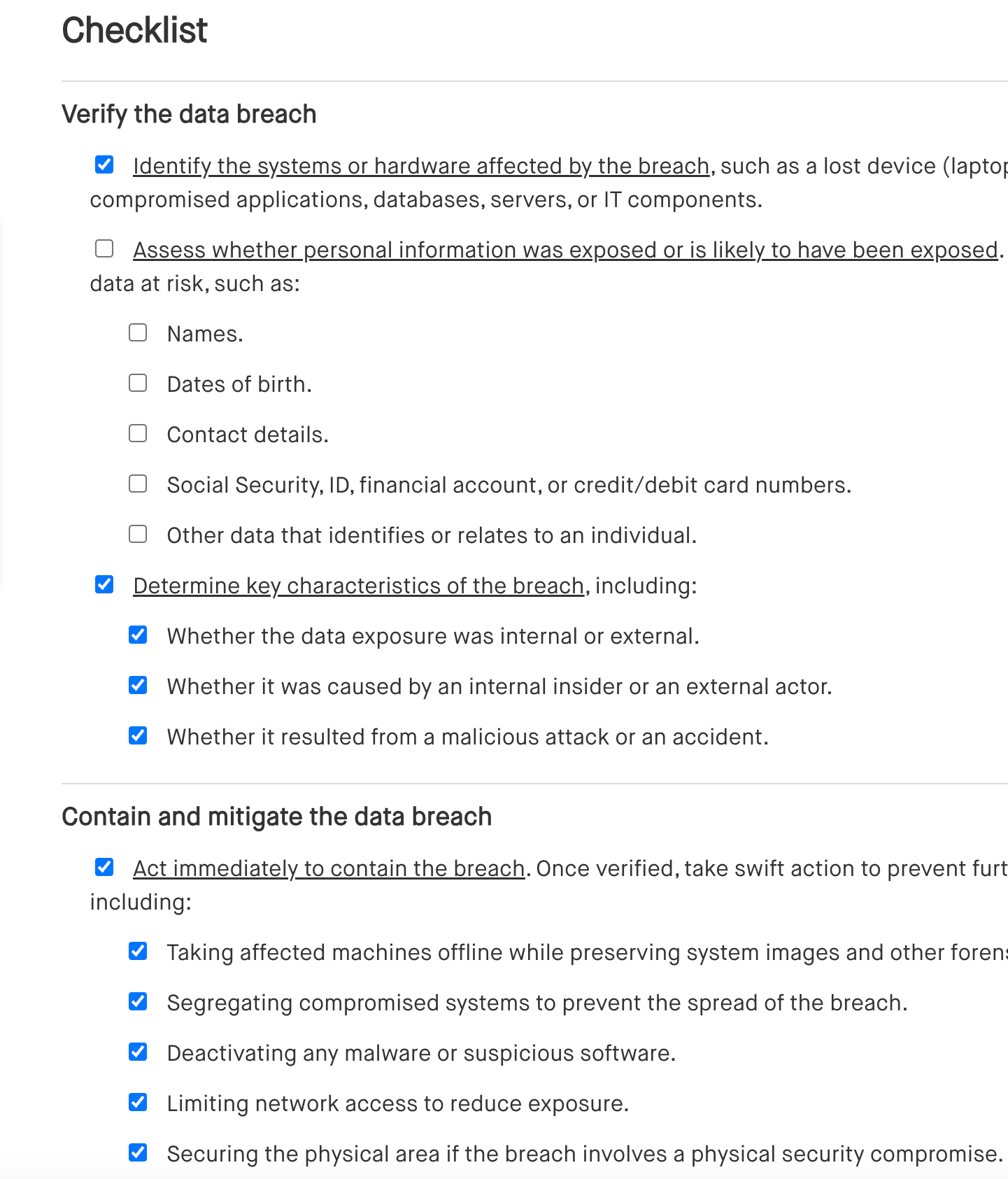
Details the critical steps to take in response to a data breach, including notification, investigation, containment, and implementing corrective actions.

Outlines the key factors to consider when selecting a new vendor, ensuring a thorough evaluation of their capabilities, reliability, and alignment with your business needs.
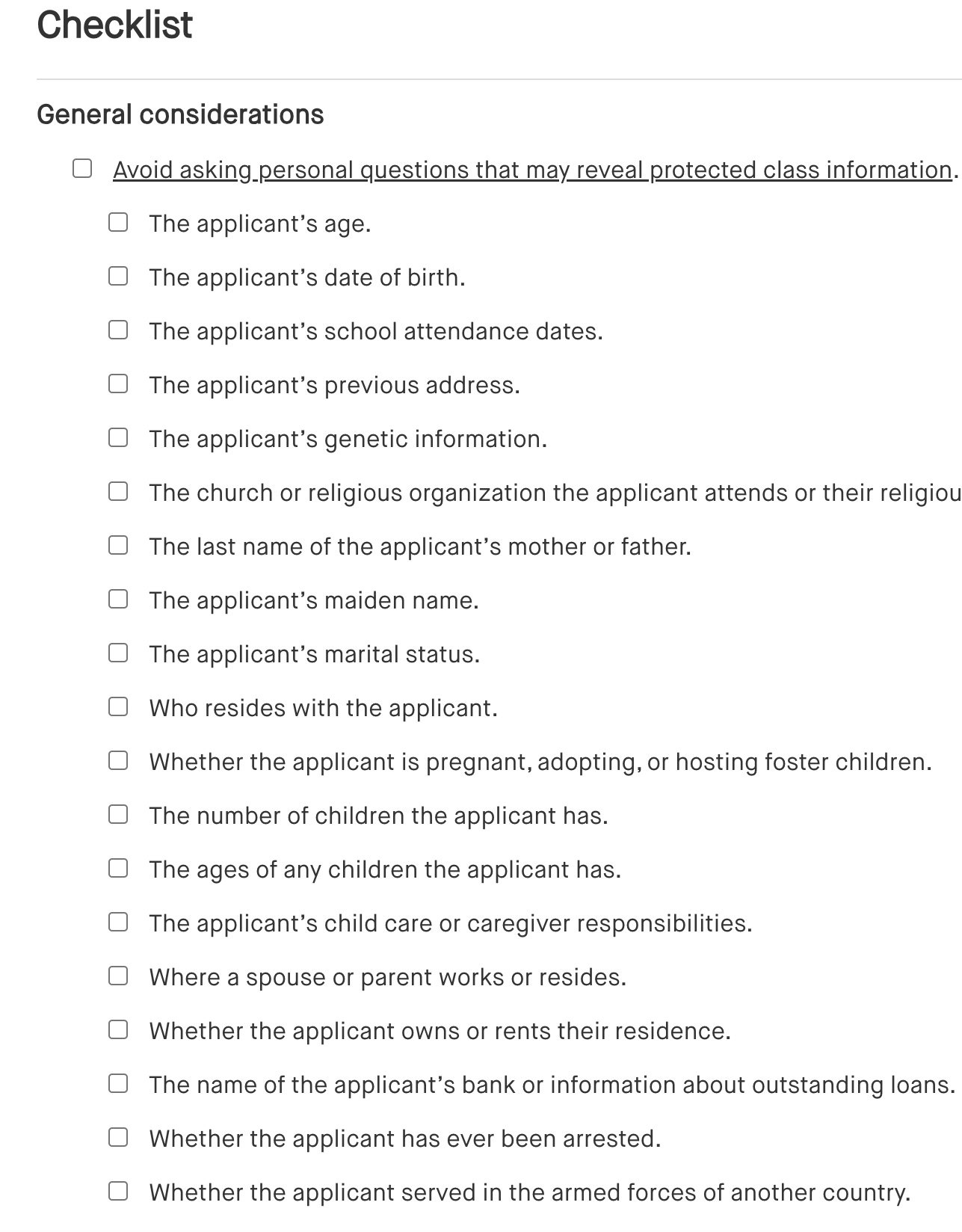
Lists common interview questions to avoid, focusing on those that may unintentionally discriminate based on race, gender, age, or other protected characteristics.