Start a new document with this content. Open the editor to build from scratch — paste in what you need and keep writing.
Responding to a business crisis checklist
When a crisis hits, businesses must act swiftly and decisively to minimize damage and maintain operations. This checklist is designed to guide you through the essential steps of crisis management, from securing the safety of your employees and customers to protecting your physical assets and addressing legal obligations. It helps you take control by stabilizing operations, coordinating with key teams, and communicating effectively with stakeholders, both internal and external.
By following these steps, your business can limit the immediate impact of the crisis, reduce long-term risks, and position itself for a quicker recovery. Whether you're dealing with a natural disaster, cybersecurity breach, or financial crisis, this business crisis checklist ensures that nothing is overlooked, keeping your business resilient in the face of uncertainty.
Use this tool to protect your company’s reputation, preserve customer trust, and safeguard your operational continuity.
How to use this responding to a business crisis checklist
Here’s how to get the most value from this checklist during a crisis:
- Follow the steps in order: Begin by addressing immediate threats to health, safety, and your business infrastructure. As you work through the checklist, keep an eye on long-term recovery steps, from financial management to supply chain stabilization.
- Customize for your business: Every crisis impacts businesses differently. Tailor the checklist based on the type of crisis, your business structure, and the severity of the disruption. Focus on areas that are most critical to your ongoing operations and customer relationships.
- Involve all necessary teams: Ensure your crisis management team, operations, communications, legal, and financial departments work together. Each team plays a key role in responding to the crisis and helping your business stay on track.
- Update the checklist regularly: Crises can evolve quickly. Use this checklist as a working document—adapt it as conditions change and after the crisis to strengthen your business continuity plans.
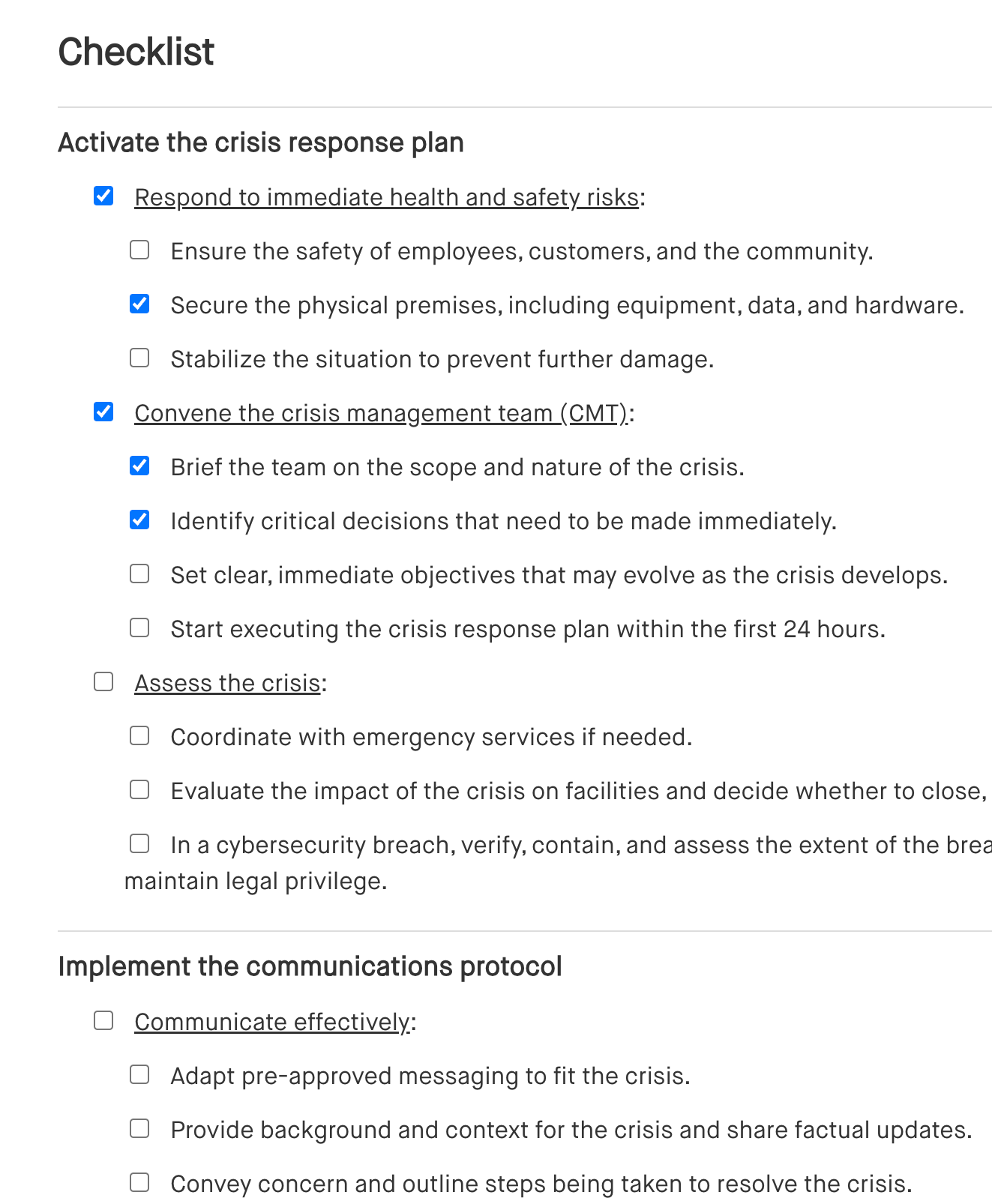
Checklist
Activate the crisis response plan
[ ] Respond to immediate health and safety risks:
[ ] Ensure the safety of employees, customers, and the community.
[ ] Secure the physical premises, including equipment, data, and hardware.
[ ] Stabilize the situation to prevent further damage.
[ ] Convene the crisis management team (CMT):
[ ] Brief the team on the scope and nature of the crisis.
[ ] Identify critical decisions that need to be made immediately.
[ ] Set clear, immediate objectives that may evolve as the crisis develops.
[ ] Start executing the crisis response plan within the first 24 hours.
[ ] Assess the crisis:
[ ] Coordinate with emergency services if needed.
[ ] Evaluate the impact of the crisis on facilities and decide whether to close, evacuate, or continue operations.
[ ] In a cybersecurity breach, verify, contain, and assess the extent of the breach. Preserve critical data and maintain legal privilege.
Implement the communications protocol
[ ] Communicate effectively:
[ ] Adapt pre-approved messaging to fit the crisis.
[ ] Provide background and context for the crisis and share factual updates.
[ ] Convey concern and outline steps being taken to resolve the crisis.
[ ] Respond to inquiries promptly and issue regular updates to stakeholders and the media.
[ ] Issue a preliminary statement:
[ ] Release a statement within the first hour, outlining what the company knows and its commitment to finding out more.
[ ] Ensure consistency across all internal and external communications, including media, emails, website, and social media.
[ ] Follow applicable regulations if you are a public company and the information is material.
[ ] Reach key stakeholders:
[ ] Communicate with survivors, employees, senior management, investors, customers, suppliers, local authorities, and the media.
Continue executing the plan
[ ] If the cause of a failure isn’t clear, consider shutting down similar sites until you have more information.
[ ] Manage cash flow wisely:
[ ] Check your working capital and liquidity needs right away.
[ ] Create weekly cash flow projections for best and worst-case scenarios to see where the critical points might be.
[ ] Start cash-saving actions quickly.
[ ] Reassess capital expenditures and discretionary spending.
[ ] Look into available credit or funding to keep the business steady.
[ ] Reach out to lenders to negotiate flexible terms, like extending payment deadlines or securing more credit.
[ ] Adjust plans as needed:
[ ] Find alternative suppliers if needed.
[ ] Build up safety stock of critical supplies where possible.
[ ] Use expedited shipping for high-priority items.
[ ] Keep customers informed about delays or shortages, especially long-term clients.
[ ] Move production to other facilities if needed.
[ ] Consider retooling to meet new demands, like producing protective gear during a pandemic.
[ ] Inform your insurers:
[ ] Quickly notify your insurance company of any crises that may be covered.
[ ] Follow any required steps for coverage, like mitigation efforts.
[ ] Use approved legal counsel if your insurance covers legal fees.
[ ] Document everything:
[ ] Keep records of your actions, decisions, and outcomes as the crisis unfolds.
[ ] Good documentation helps manage the crisis, defend decisions, and deal with potential legal issues later.
Recovering after the crisis
[ ] Assess the situation:
[ ] Evaluate the current state of your business functions.
[ ] Identify which functions were impacted (e.g., IT outages) and estimate the time needed to restore them.
[ ] For unaffected areas, check if there are any risks that could still disrupt them.
[ ] Fix the root causes:
[ ] Address personnel issues like leadership gaps or cultural problems.
[ ] Improve processes, such as risk controls or outdated tools (e.g., old IT systems).
[ ] Consider long-term changes like hiring new senior management, promoting transparency, and strengthening compliance.
[ ] Review and adjust policies or risk management processes as needed.
[ ] If necessary, restructure the company to better handle future crises.
[ ] Reinforce positive messaging:
[ ] Respond to media attention by explaining how the crisis was managed.
[ ] Share public health or safety messages while the issue is still relevant.
[ ] Educate the public through campaigns or website updates to show proactive steps.
[ ] Restore and maintain competitiveness:
[ ] Reassess your value proposition and look for new strategic opportunities.
[ ] Start recovery efforts right after stabilizing the crisis situation.
[ ] Consider major steps that can strengthen future recovery.
[ ] Ensure the right resources and talent are in place to drive future growth and success.
Evaluate and update the plan
[ ] Manage long-term effects:
[ ] Address any lingering issues from the crisis (e.g., environmental cleanup or damage control).
[ ] Implement a remedial plan if necessary to deal with ongoing impacts.
[ ] Evaluate performance during the crisis:
[ ] Identify what the CMT and the company did well.
[ ] Highlight any mistakes or areas for improvement.
[ ] Capture key lessons learned to improve the response for future crises.
[ ] Review what changes are needed in the company’s structure, procedures, or support systems.
[ ] Assess the company’s preparedness:
[ ] Review how well the company was equipped to handle the crisis.
[ ] Consider whether resources were allocated appropriately.
[ ] Evaluate how effective communication was during the crisis.
[ ] Document lessons learned:
[ ] Create a report on the lessons learned to guide future crisis response efforts.
[ ] Make sure these lessons are shared across teams to improve overall readiness.
[ ] Update the business continuity plan:
[ ] Revise the plan to include lessons learned and close any gaps discovered during the crisis.
[ ] Update the list of key stakeholders to reflect staff changes.
[ ] Incorporate new technologies or tools that were introduced.
[ ] Adjust the plan based on any internal or external changes to the company.
Benefits of using a responding to a business crisis checklist
Using a checklist during a business crisis ensures you're prepared and organized when quick decisions are needed. Here’s how it helps:
- Stay organized under pressure: A crisis can feel chaotic, and it’s easy to miss important steps. This checklist helps you stay focused, ensuring you take all the necessary actions—like managing communications, activating your crisis team, and assessing immediate risks—so nothing gets overlooked.
- Minimize damage: By following the checklist, you can respond more quickly and effectively, reducing the potential impact on your business. Whether it's ensuring employee safety, preserving assets, or addressing financial concerns, the checklist helps guide you through critical decisions.
- Learn and improve for next time: Every crisis offers lessons. The checklist encourages post-crisis evaluation, so you can document what worked, what didn’t, and use those insights to improve future crisis response plans.
Frequently asked questions (FAQs)
Outlines the steps for forming a joint venture, including defining objectives, selecting partners, drafting agreements, and establishing governance and operational structures.

Outlines the steps for hiring an independent contractor, including defining the scope of work, agreeing on payment terms, and achieving compliance with tax and legal requirements.

Outlines the key factors to consider when selecting a new vendor, ensuring a thorough evaluation of their capabilities, reliability, and alignment with your business needs.