Customize it in Cobrief, send it for signature, and move straight to payment once it's approved.
Customize this template for free
TL;DR
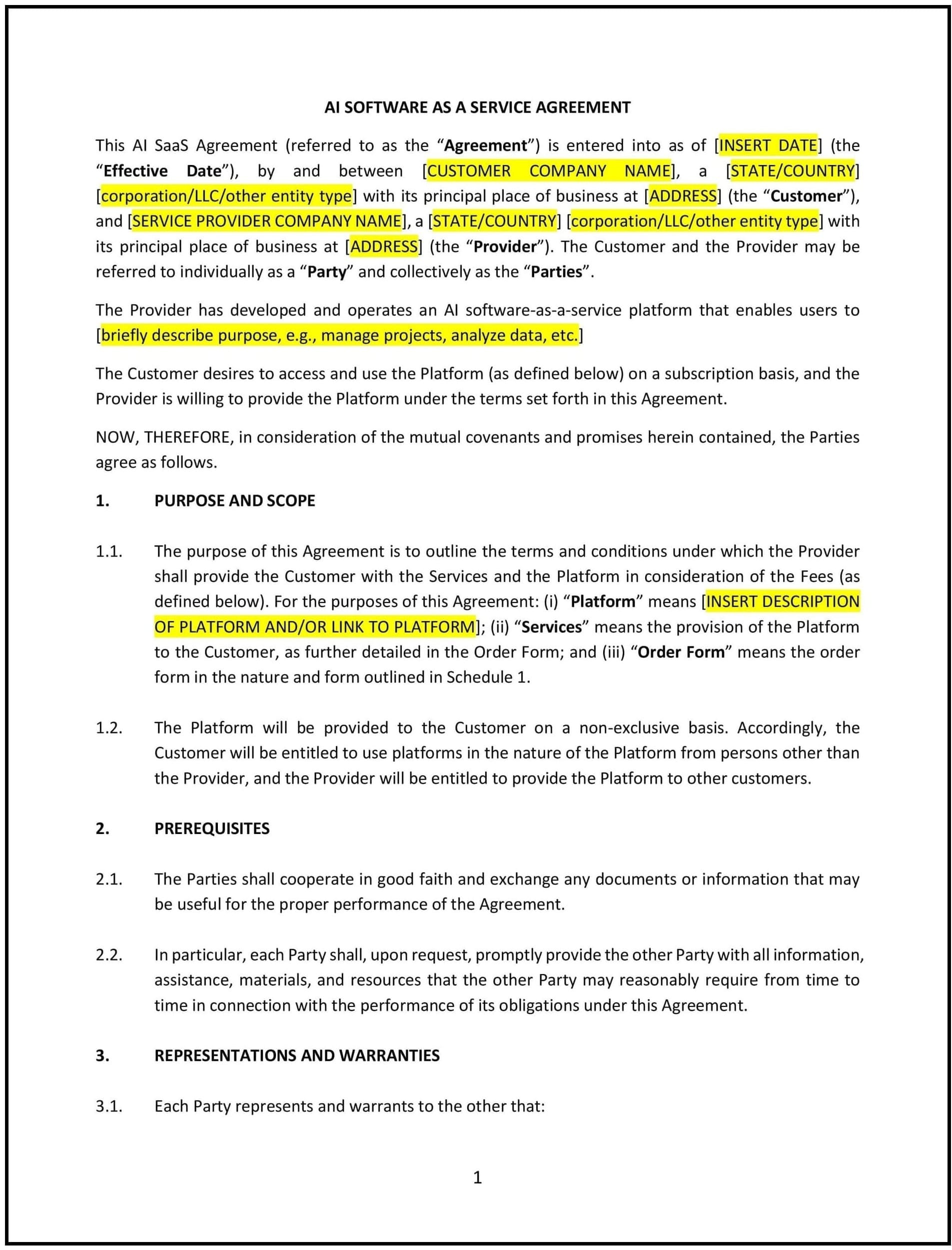
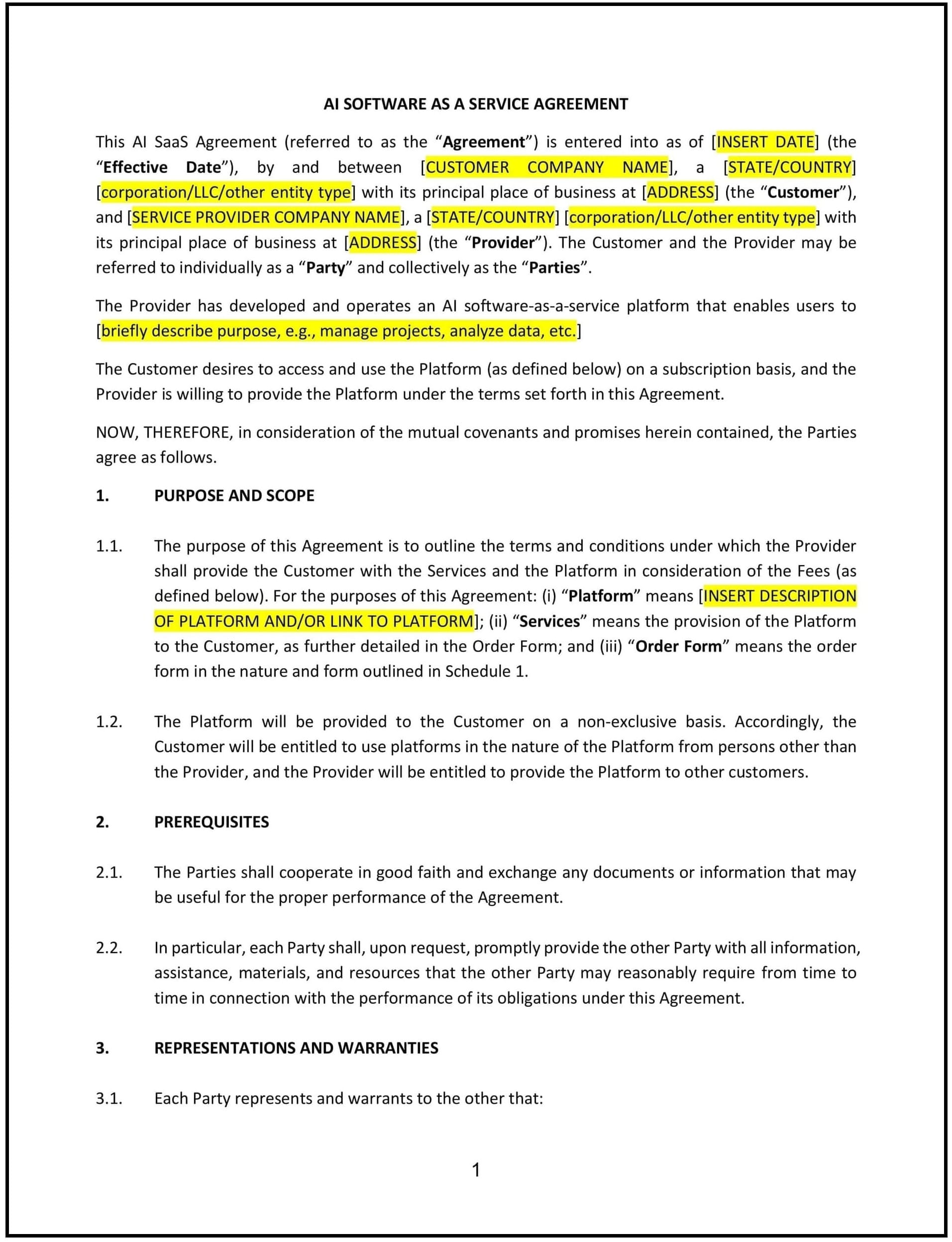
An AI SaaS Agreement tailored for Alabama that establishes the terms between a software provider and a client for using an AI-powered SaaS platform. It addresses key aspects such as service scope, subscription terms, data privacy, performance metrics, and compliance with Alabama laws, making it suitable for industries like healthcare and manufacturing. Commonly used by businesses implementing AI solutions, it ensures clarity and legal enforceability.
AI SaaS Agreement (Alabama)
An AI SaaS Agreement is a contract between a software provider and a client that outlines the terms and conditions for accessing and using an AI-powered software-as-a-service (SaaS) platform. In Alabama, these agreements are commonly used in industries like healthcare, manufacturing, and agriculture, where AI-driven tools can optimize operations, improve decision-making, and enhance efficiency.
Alabama’s legal framework, including the Alabama Uniform Commercial Code (UCC) and consumer protection laws, ensures that AI SaaS Agreements are enforceable when properly drafted. For example, a Birmingham-based healthcare provider might use an AI SaaS Agreement to implement a predictive analytics platform, ensuring compliance with state-specific regulations and industry standards.
Tips for drafting and maintaining an AI SaaS Agreement in Alabama
- Define the scope of services: Clearly outline the AI SaaS platform’s features, functionalities, and limitations. Specify whether the platform includes machine learning, natural language processing, or other AI capabilities.
- Example: “The Provider grants the Client access to an AI-powered SaaS platform that includes predictive analytics, data visualization, and automated reporting tools.”
- Include subscription terms: Specify the subscription model, whether monthly, annual, or usage-based, and include pricing, invoicing, and payment deadlines. Alabama law requires clarity in payment terms to avoid disputes.
- Example: “The Client agrees to pay a monthly subscription fee of $1,000, with invoices due within 15 days of receipt. Late payments will incur a 1.5% monthly interest fee.”
- Address data privacy and security: Ensure the agreement complies with Alabama’s data protection laws and includes provisions for safeguarding sensitive information. If the platform processes personal data, include compliance with federal regulations like HIPAA or GDPR (if applicable).
- Example: “The Provider agrees to implement industry-standard security measures, including encryption and access controls, to protect the Client’s data from unauthorized access.”
- Set performance metrics: Define measurable goals, such as uptime guarantees, response times, or accuracy rates for AI predictions, to ensure the Provider meets the Client’s expectations. Include penalties or remedies for failing to meet these metrics.
- Example: “The Provider guarantees 99.9% system uptime and a maximum response time of two hours for critical issues. Failure to meet these standards may result in a 10% discount on the monthly subscription fee.”
- Include termination clauses: Specify the conditions under which either party can terminate the agreement, such as breach of contract or failure to meet performance standards. Alabama law allows for termination with reasonable notice unless otherwise specified.
- Example: “Either party may terminate this agreement with 30 days’ written notice if the other party fails to fulfill its obligations. In the event of termination, the Provider will assist in transitioning data to the Client or a new provider.”
- Align with Alabama laws: Ensure the agreement adheres to Alabama’s UCC and other relevant regulations, particularly for contracts involving the sale of goods or services.
- Example: “This agreement shall be governed by and construed in accordance with the laws of the State of Alabama. Any disputes arising from this agreement shall be resolved in the courts of Jefferson County.”
- Include intellectual property (IP) clauses: Specify who owns the AI algorithms, data, and other intellectual property. Alabama law defaults to the creator owning IP unless otherwise agreed.
- Example: “All intellectual property, including AI algorithms and software, remains the exclusive property of the Provider. The Client retains ownership of its data uploaded to the platform.”
- Add a force majeure clause: Alabama businesses may face disruptions due to extreme weather or other unforeseen events, so include a clause addressing such scenarios.
- Example: “Neither party shall be liable for delays or failures in performance due to events beyond their reasonable control, including but not limited to natural disasters, acts of terrorism, or government restrictions.”
Frequently asked questions (FAQs)
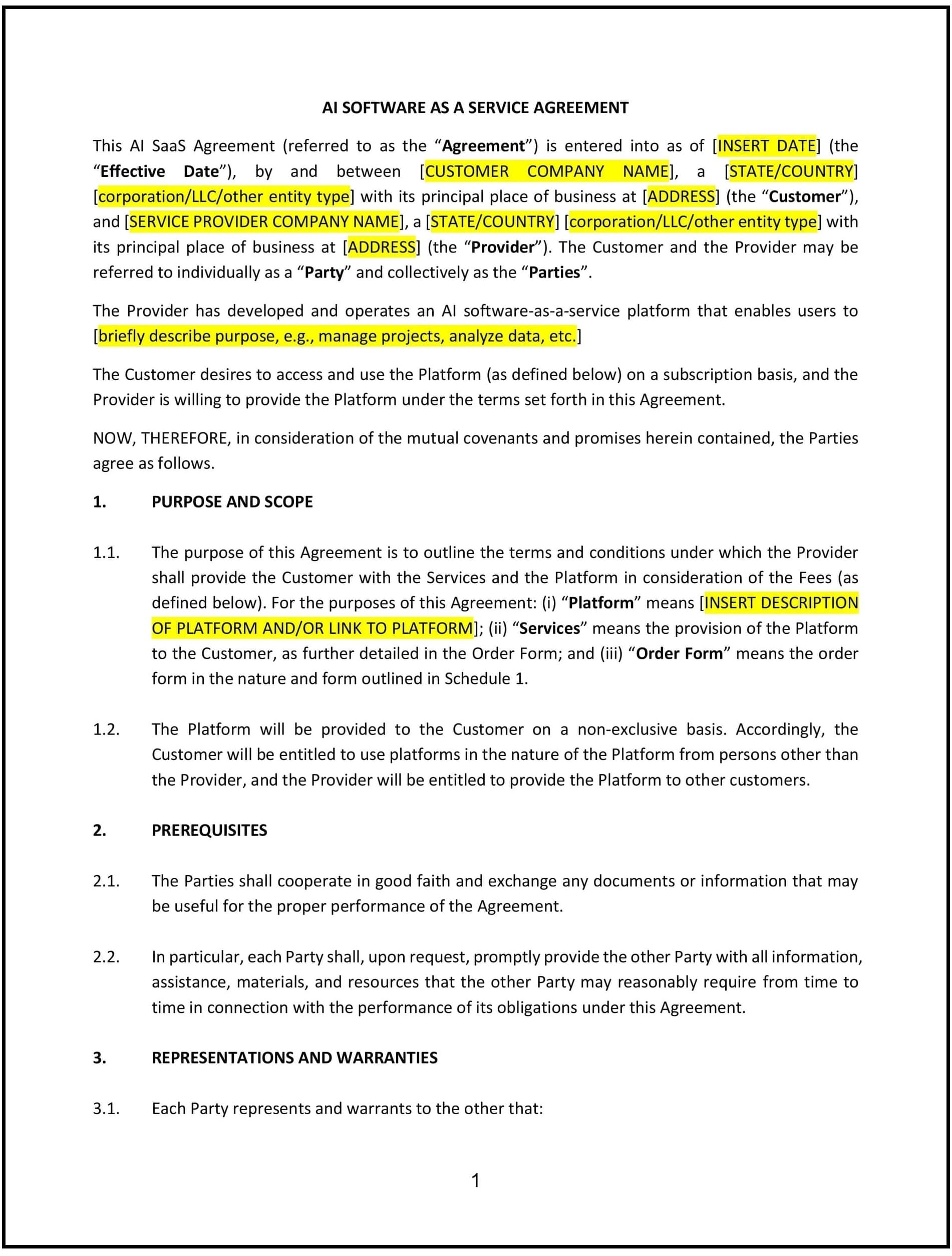
Defines terms for AI SaaS use in Louisiana, covering services, subscription, data security, performance, termination, IP, and legal compliance.
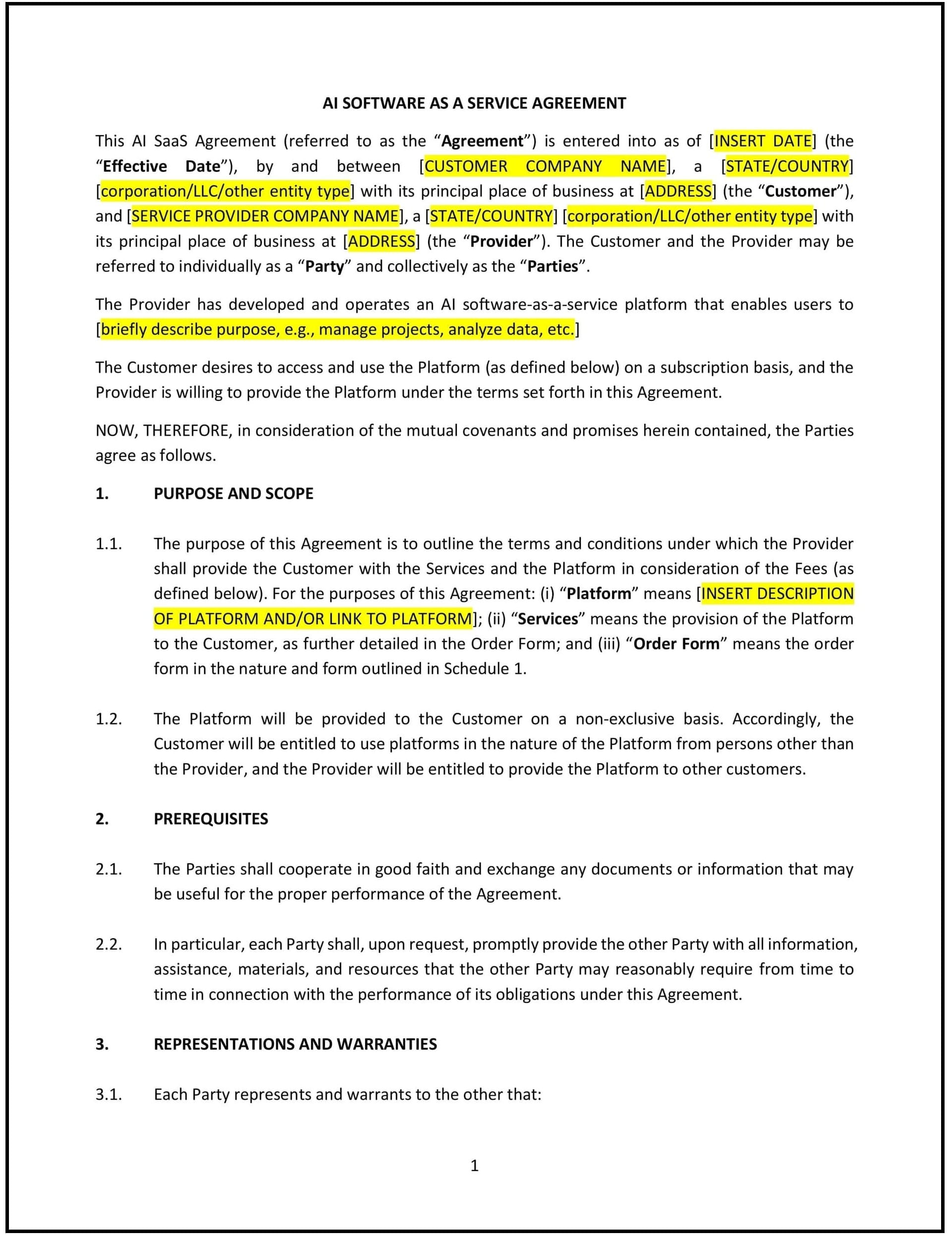
Defines AI SaaS service terms in Tennessee, including scope, performance, payment, IP rights, confidentiality, data security, termination, and compliance.
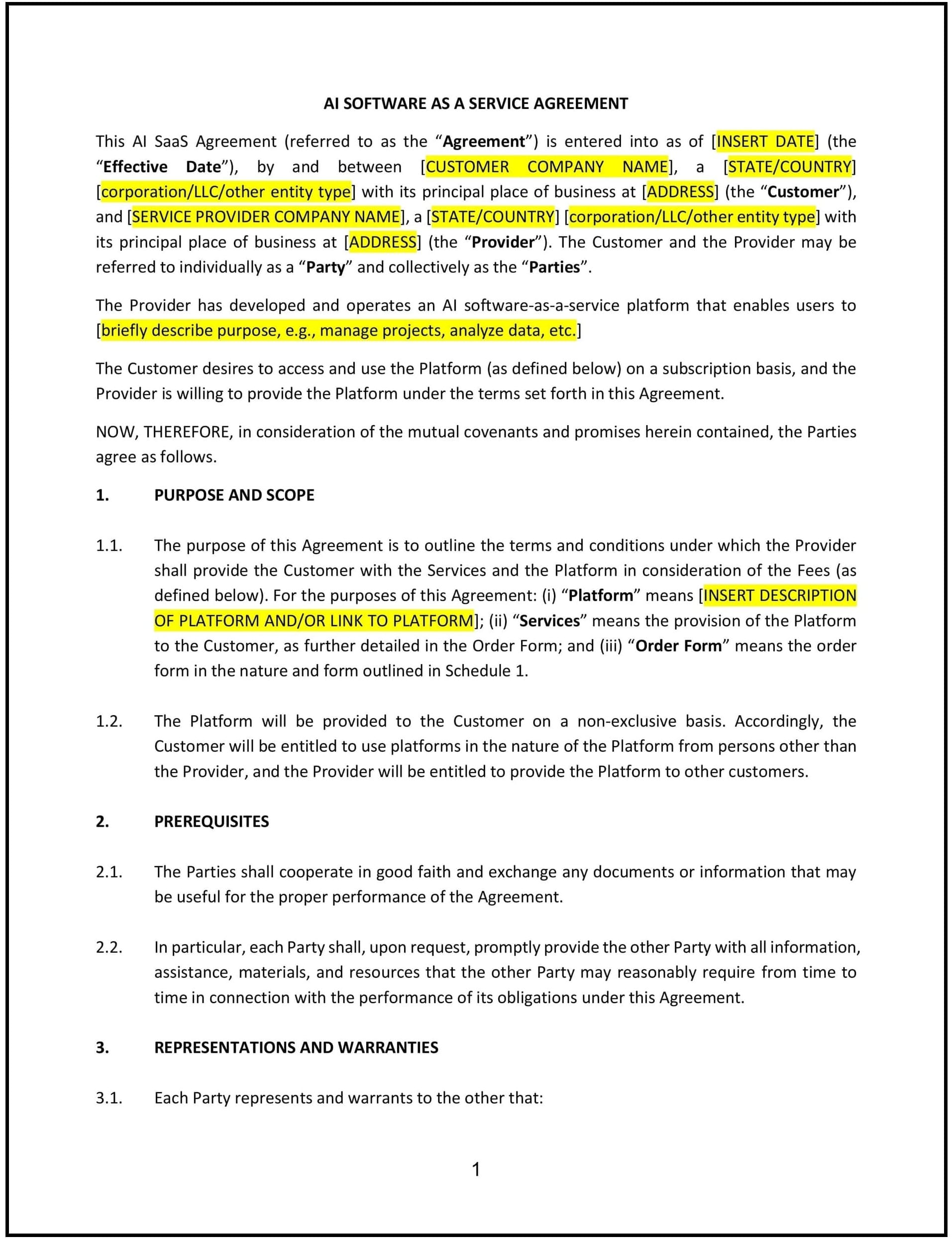
Defines terms for accessing an AI SaaS platform in Illinois, covering services, subscription, data security, performance, termination, IP, and legal compliance.
Establishes terms for delivering AI SaaS in Alaska, covering service scope, performance, payment, data security, IP rights, compliance, and termination.
Defines AI SaaS service terms in Arkansas, covering scope, performance, payment, IP rights, confidentiality, data security, termination, and compliance.