Consultancy Agreement (Pro-Customer) (Tennessee): Free template
Customize it in Cobrief, send it for signature, and move straight to payment once it's approved.
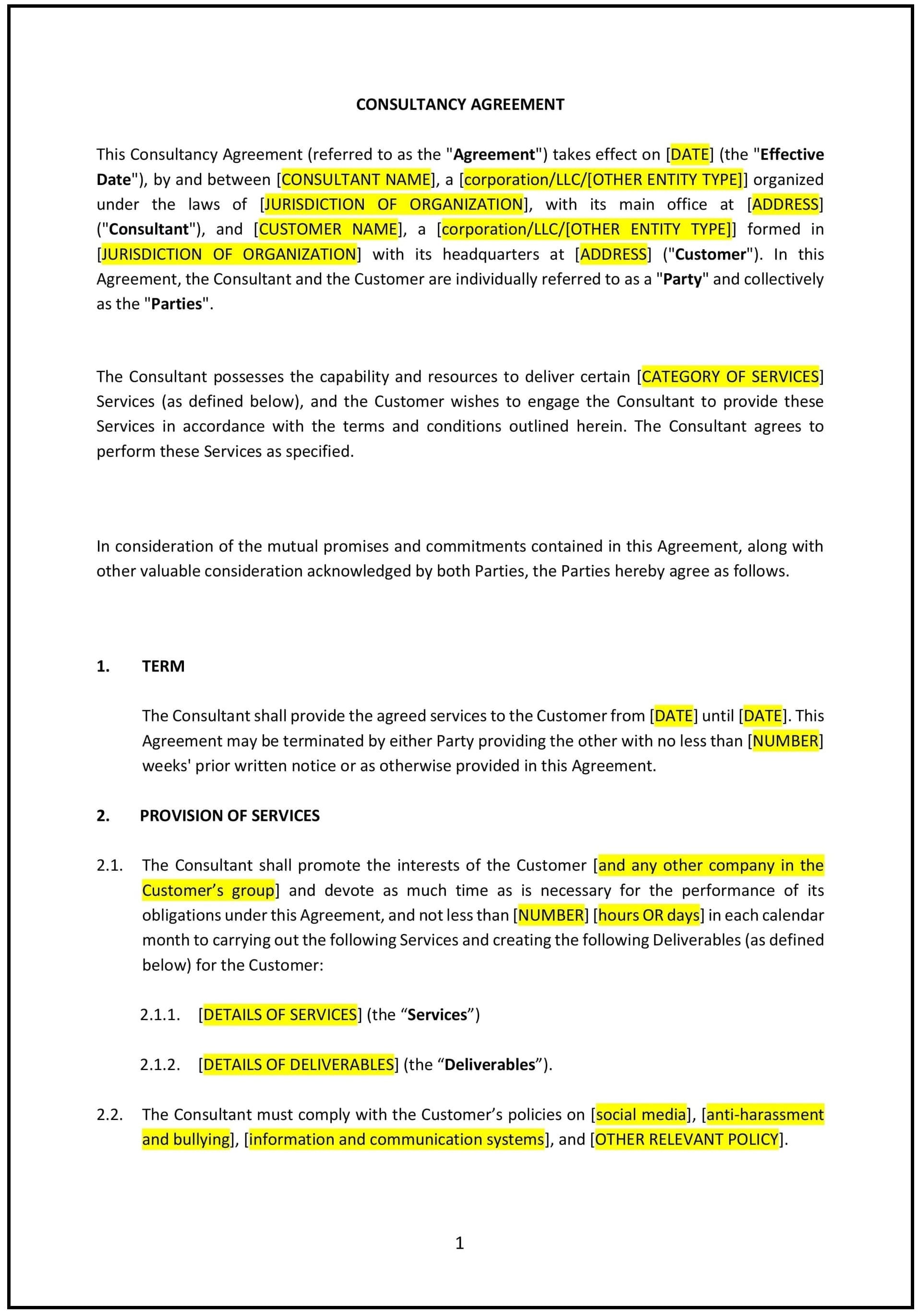
Customize this template for free
TL;DR
A consultancy agreement template designed for Tennessee businesses to outline the terms of service between a consultant and the hiring company, emphasizing protections for the business. It addresses key aspects such as service expectations, payment structures, confidentiality, and intellectual property ownership, ensuring compliance with state labor laws. Commonly used by companies in various sectors, this agreement helps mitigate risks and clarify roles in consulting engagements.
Consultancy Agreement (Pro-Customer) (Tennessee)
A Consultancy Agreement (Pro-Customer) in Tennessee is a contract that establishes the terms under which a consultant provides services to a business while prioritizing protections for the hiring company. This agreement ensures that the consultant delivers services according to clear expectations, reducing risks related to performance, confidentiality, and liability.
Tennessee businesses use this agreement to define service expectations, payment structures, confidentiality terms, and ownership of intellectual property (IP). It helps businesses ensure compliance with Tennessee’s labor laws, particularly regarding independent contractor classification, and limits exposure to potential legal disputes.
Businesses across various industries—such as technology, finance, and healthcare—rely on consulting agreements to engage specialized expertise while safeguarding their interests. In Tennessee, companies must ensure that the agreement aligns with state contractor laws and does not inadvertently create an employer-employee relationship under Tennessee’s Department of Labor and Workforce Development guidelines.
Tips for drafting and maintaining a Consultancy Agreement (Pro-Customer) in Tennessee
- Clearly define the scope of work to prevent misunderstandings and scope creep, particularly for long-term consulting engagements.
- Specify payment terms, including hourly rates, fixed fees, invoicing procedures, and any applicable Tennessee sales tax obligations on professional services.
- Include a strong independent contractor clause to avoid misclassification under Tennessee labor laws, which could expose businesses to penalties.
- Protect confidential information by including a non-disclosure provision, ensuring that proprietary business details remain secure.
- Clarify ownership of intellectual property (IP), ensuring that any work product created during the engagement belongs to the business, in line with Tennessee contract law.
Frequently asked questions (FAQs)
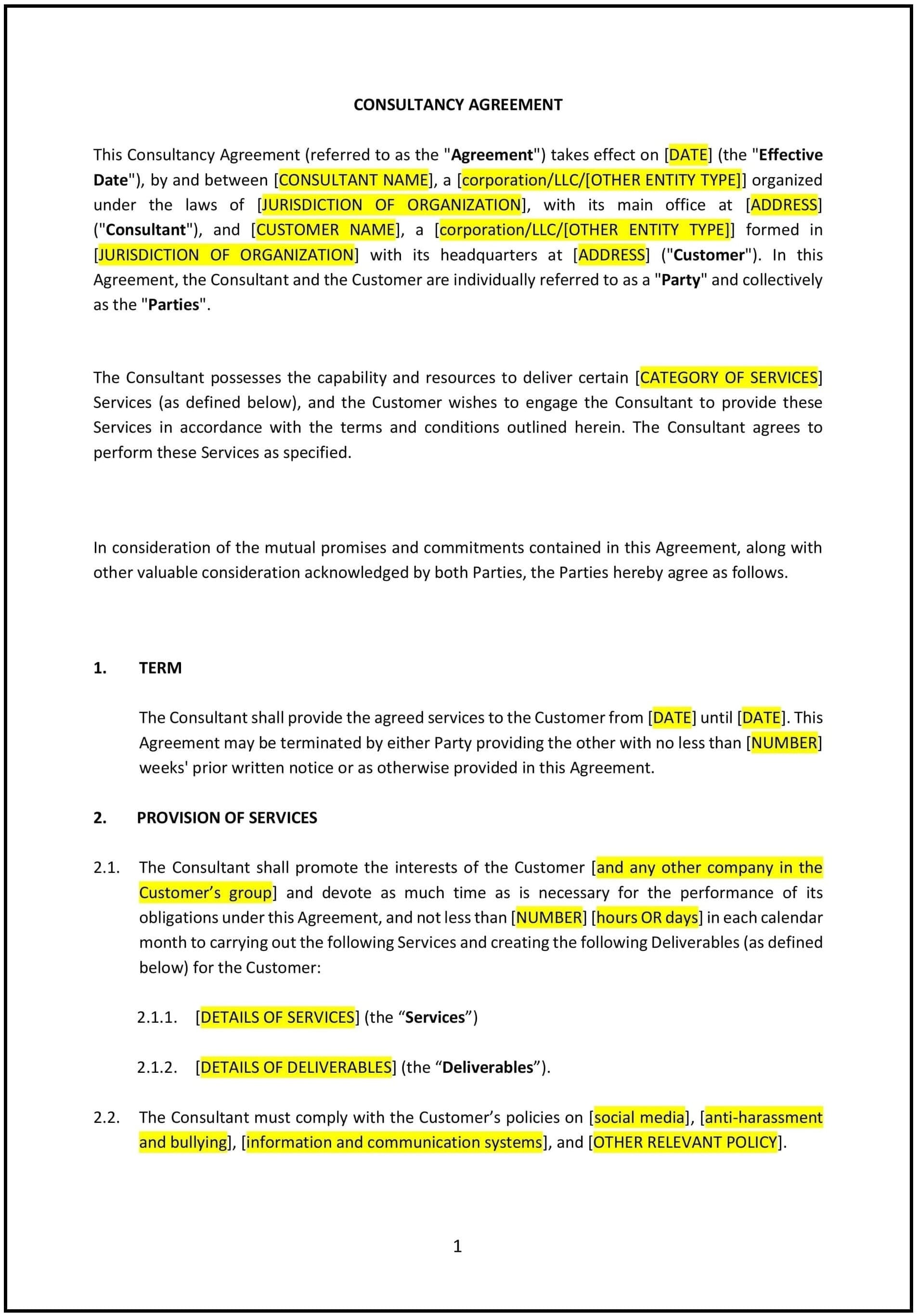
Learn how a Pro-Customer Consultancy Agreement in Kentucky protects businesses with clear terms on services, payments, confidentiality, and liability management.
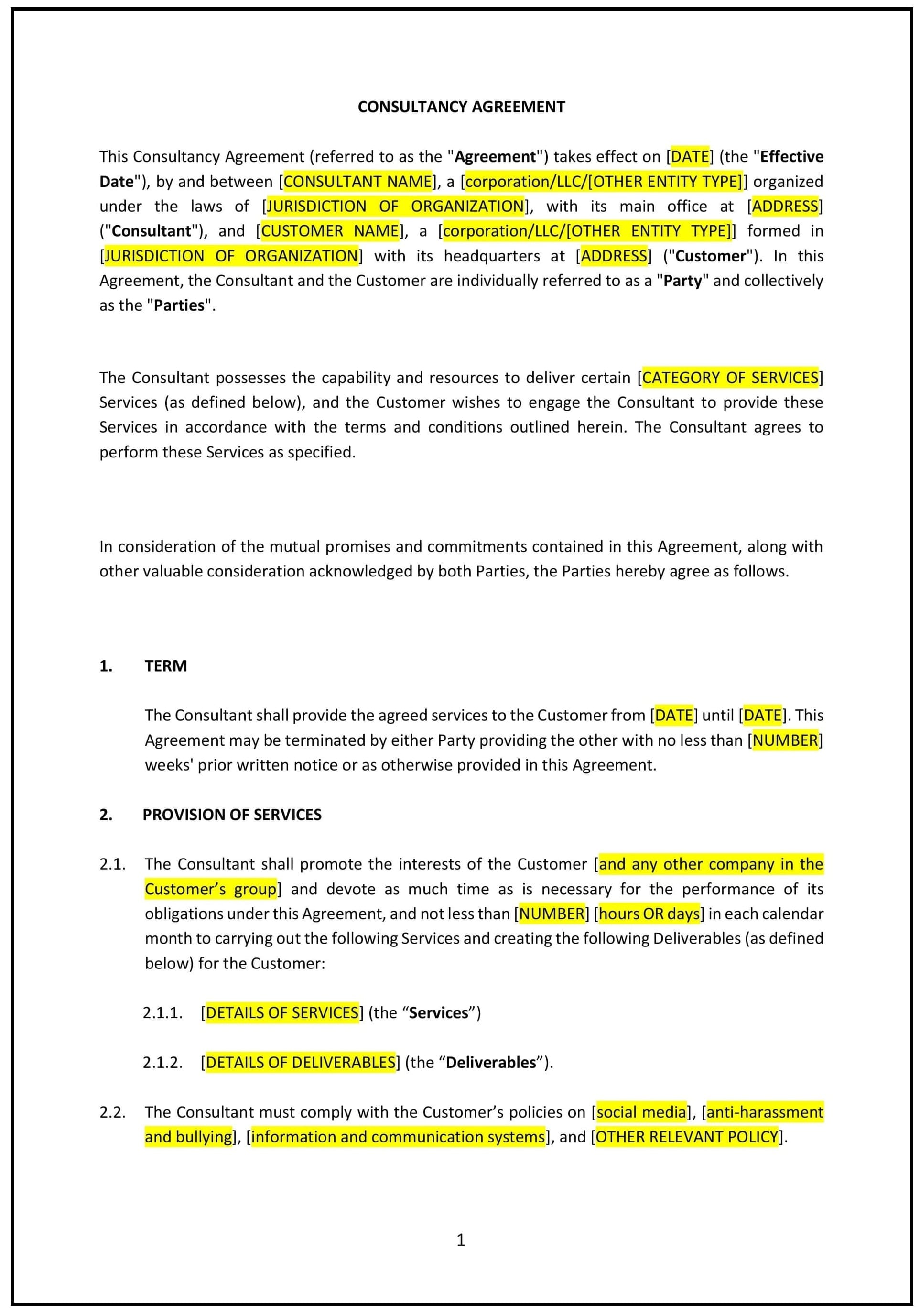
Learn how a Pro-Customer Consultancy Agreement in Arkansas protects businesses by clearly defining terms, payment, confidentiality, and liability for consulting services.
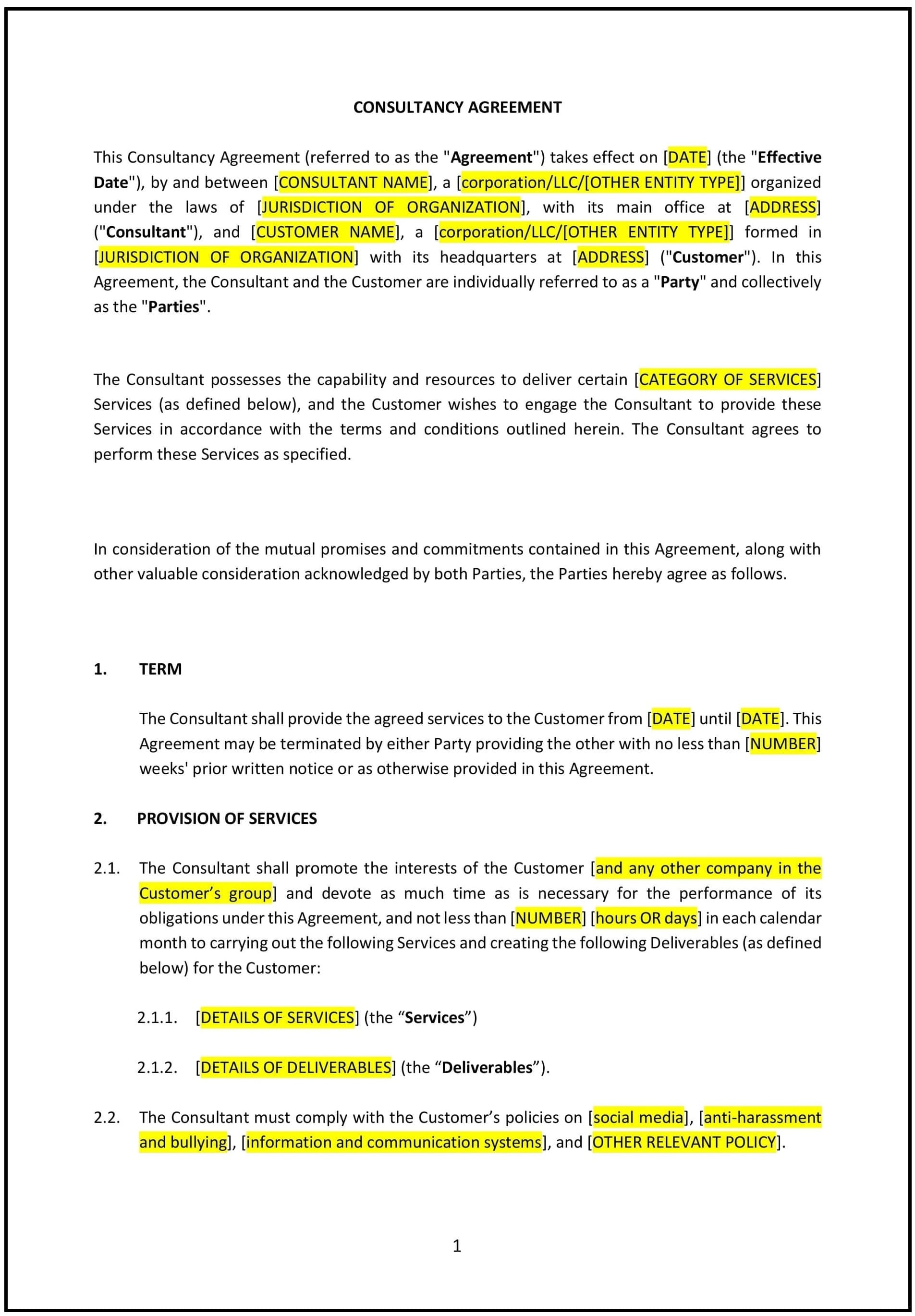
Learn about Arizona's Pro-Customer Consultancy Agreement, focusing on service terms, payment, confidentiality, and liability to protect businesses effectively.
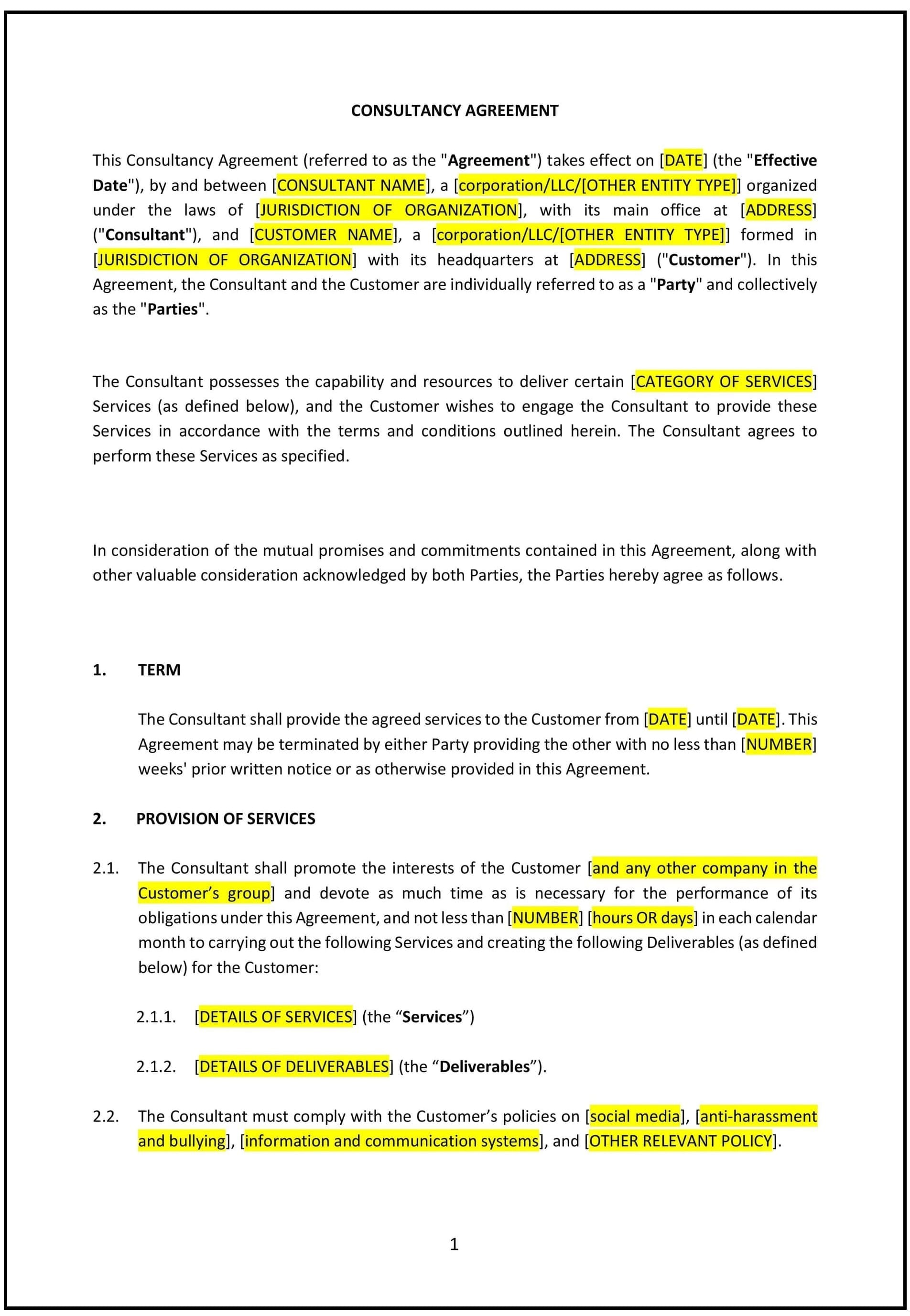
Learn how a Consultancy Agreement in Alabama protects businesses with clear deliverables, payment terms, and legal compliance for successful consultant engagements.
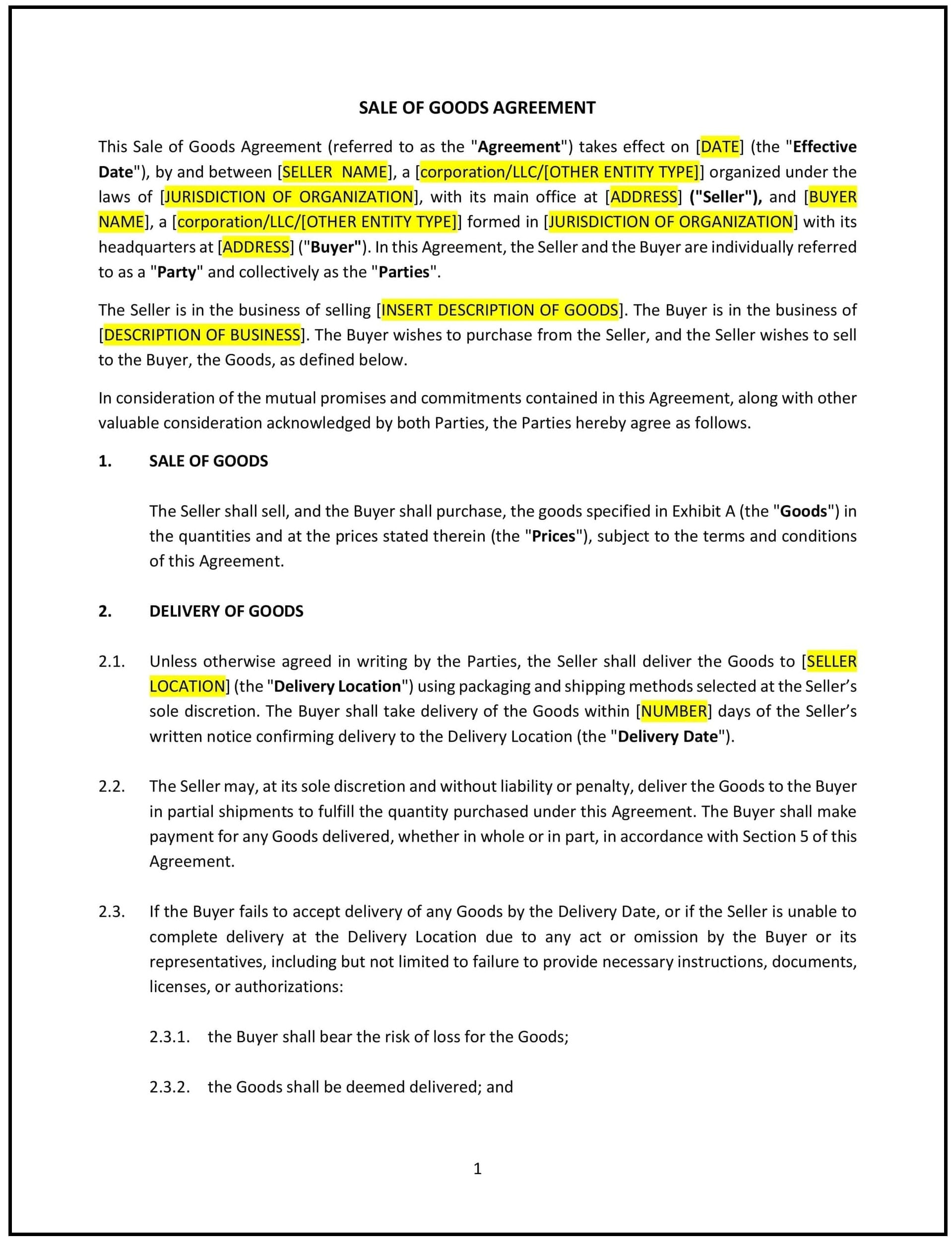
Establishes terms for selling goods in Tennessee, covering payment, delivery, risk, liability limits, warranties, and return policies to protect sellers.