Independent Contractor Agreement (Kentucky): Free template
Customize it in Cobrief, send it for signature, and move straight to payment once it's approved.
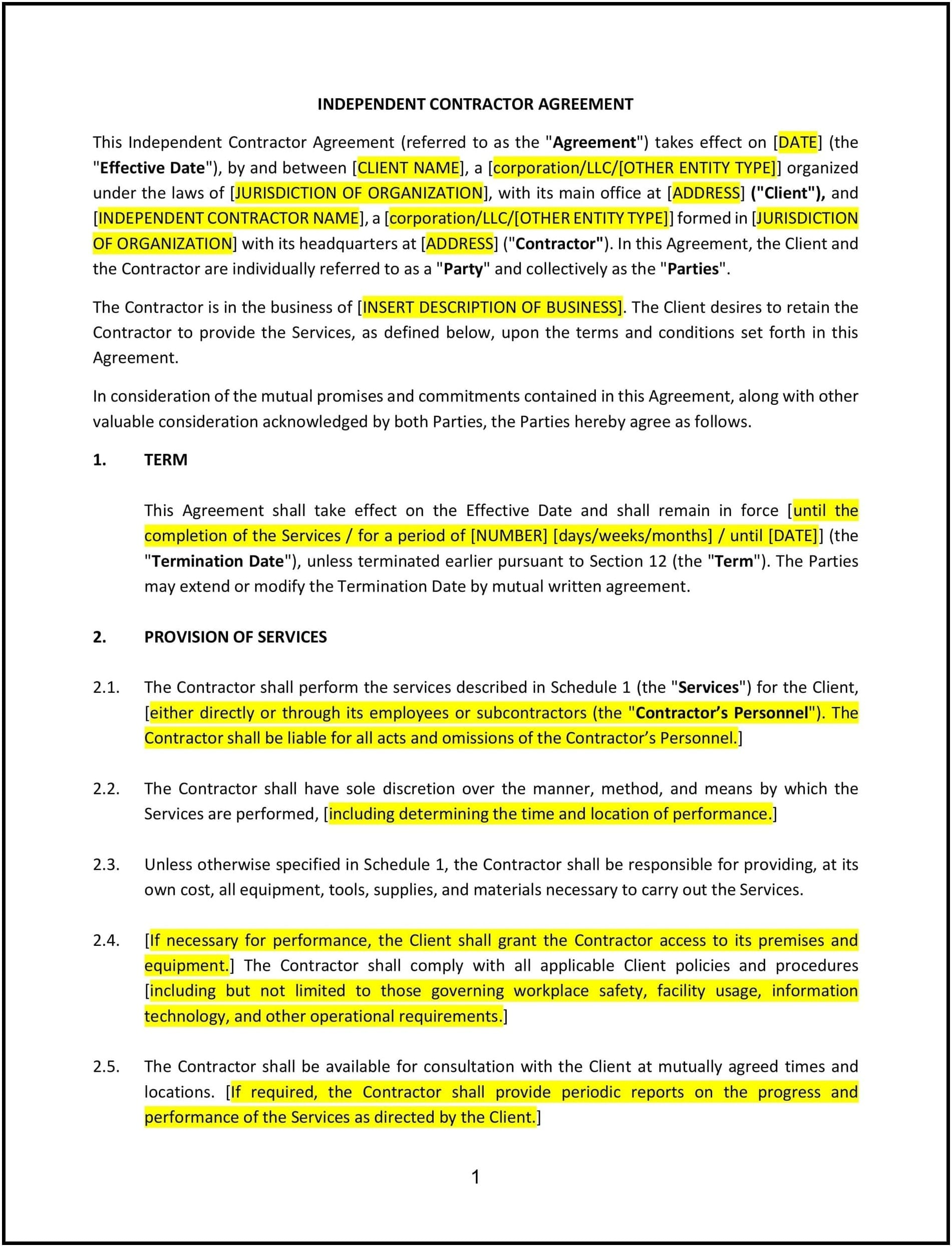
Customize this template for free
TL;DR
An Independent Contractor Agreement tailored for Kentucky businesses, detailing the terms of engagement with freelancers or consultants. It clarifies the scope of work, payment terms, and compliance with state labor laws, helping to mitigate risks associated with worker misclassification. Commonly used by companies in various sectors, such as logistics and marketing, to formalize their relationships with independent contractors.
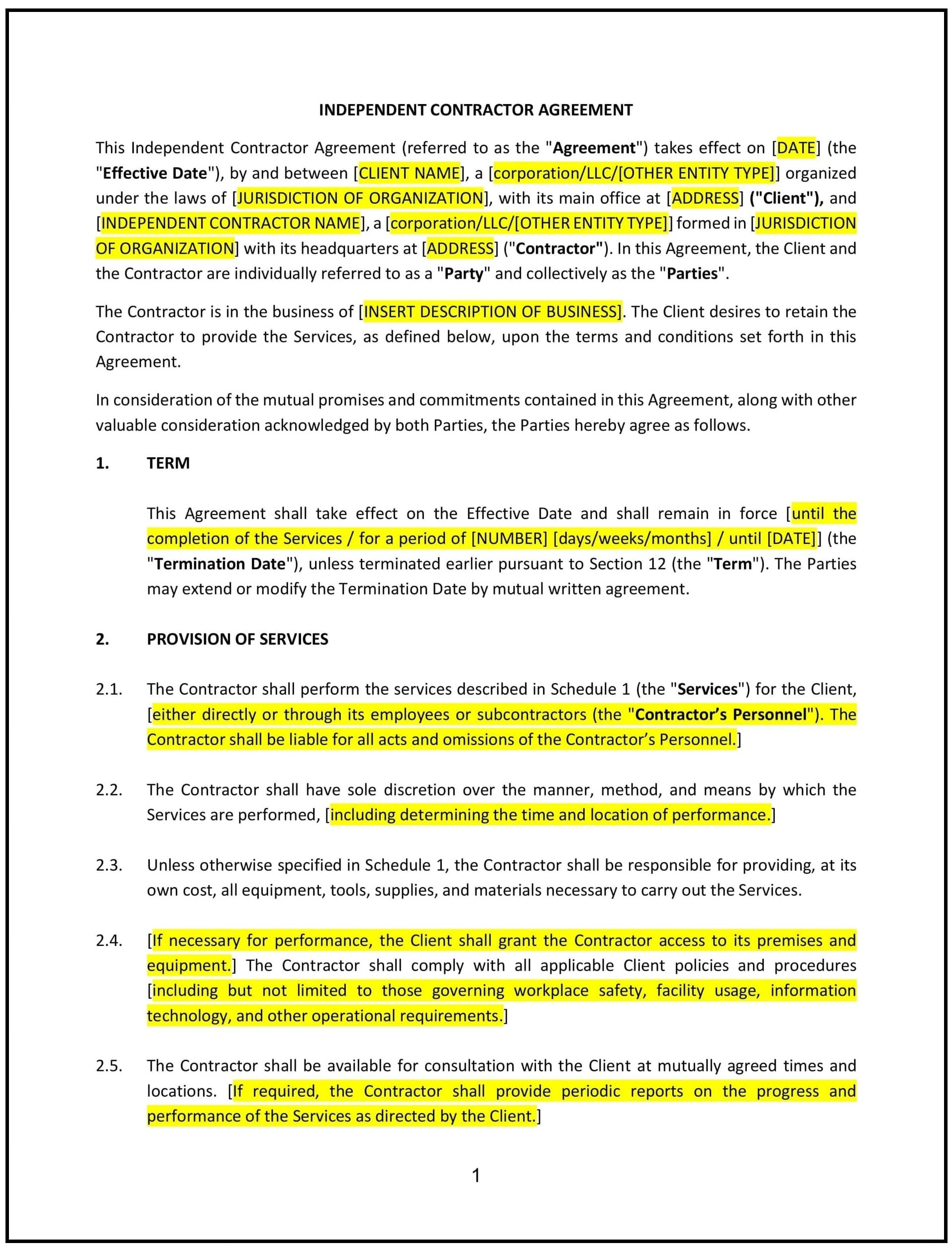
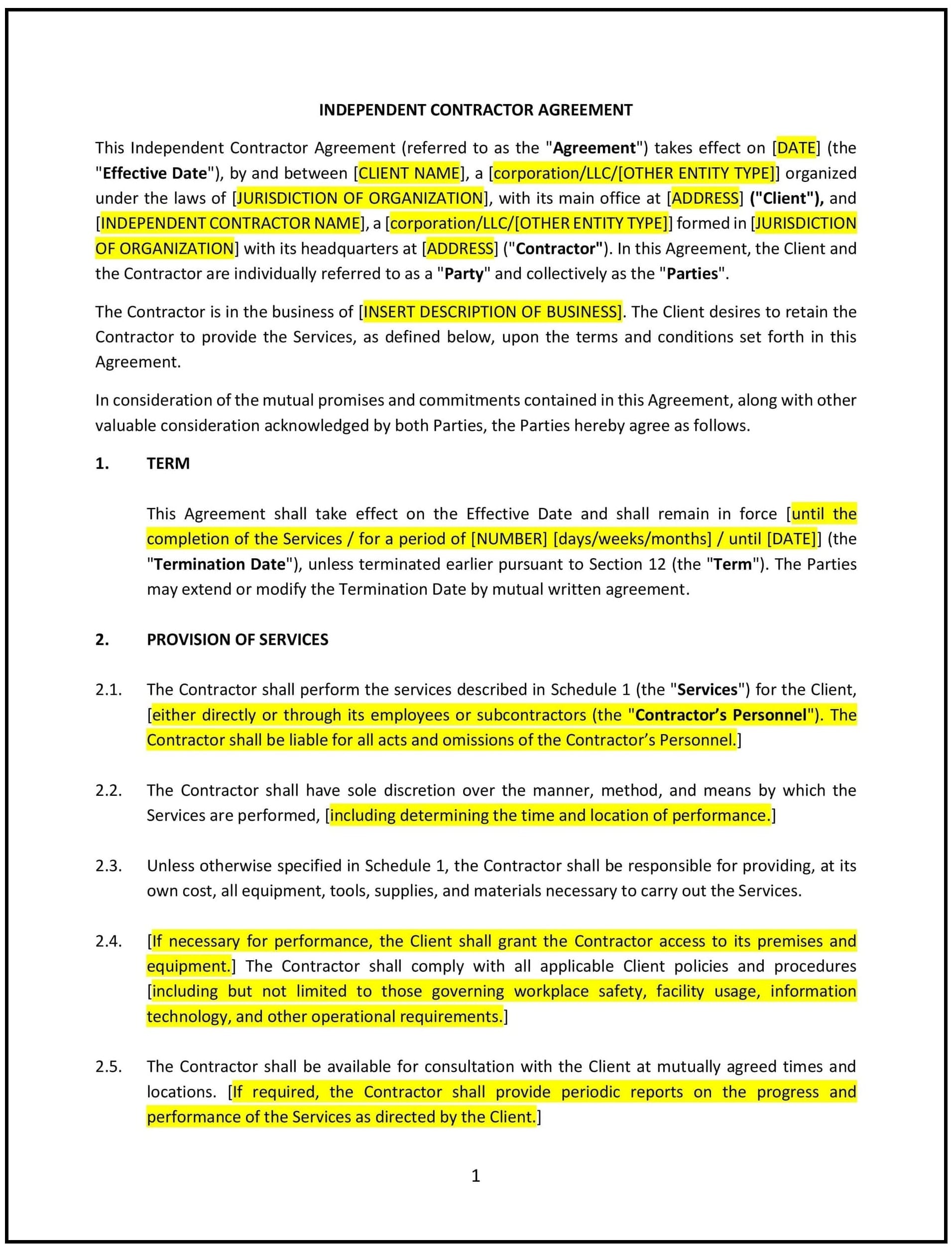
Independent Contractor Agreement (Kentucky)
An Independent Contractor Agreement is a legally binding contract between a business and an independent contractor, outlining the terms of their working relationship. In Kentucky, this type of agreement is essential for businesses that rely on freelancers, consultants, or specialized service providers to complete projects or tasks. The agreement ensures clarity regarding the scope of work, payment terms, timelines, intellectual property rights, and alignment with state-specific labor laws.
Understanding Kentucky’s labor laws, including those governing worker classification under the Kentucky Labor Cabinet guidelines, is critical. Misclassifying an employee as an independent contractor can result in significant penalties, including back wages, fines, and legal disputes. A well-drafted Independent Contractor Agreement not only protects both parties but also strengthens adherence to these laws.
For example, a Kentucky-based logistics company might use an Independent Contractor Agreement to hire a truck driver for specific deliveries, while a marketing agency might engage a freelance copywriter. This type of agreement is particularly valuable for businesses looking to maintain flexibility in their workforce while minimizing risks associated with misclassification.
Tips for drafting and maintaining an Independent Contractor Agreement in Kentucky
- Clearly define the scope of work: Specify the tasks, deliverables, and deadlines expected from the contractor. For instance, if hiring a graphic designer, detail the number of design revisions included and the final delivery date.
- Include detailed payment terms: Outline how and when the contractor will be paid. For example, specify whether payment will be made upon completion of the project or in installments tied to milestones. Include any late payment penalties if applicable.
- Address intellectual property rights: Clearly state who owns the intellectual property created during the project. For example, specify that all work product becomes the company’s property upon full payment.
- Strengthen alignment with Kentucky labor laws: Ensure the agreement explicitly states that the contractor is not an employee. Include provisions that align with Kentucky’s worker classification laws, such as the absence of employee benefits, withholding taxes, or employer control over how the work is performed.
- Include termination clauses: Define how either party can terminate the agreement and what happens upon termination, such as returning materials or completing outstanding tasks.
- Regularly review and update: Periodically review the agreement to ensure it remains aligned with changing laws or reflects updates to your business operations. For example, if new regulations regarding remote work or data privacy are enacted, update the agreement accordingly.
Frequently asked questions (FAQs)
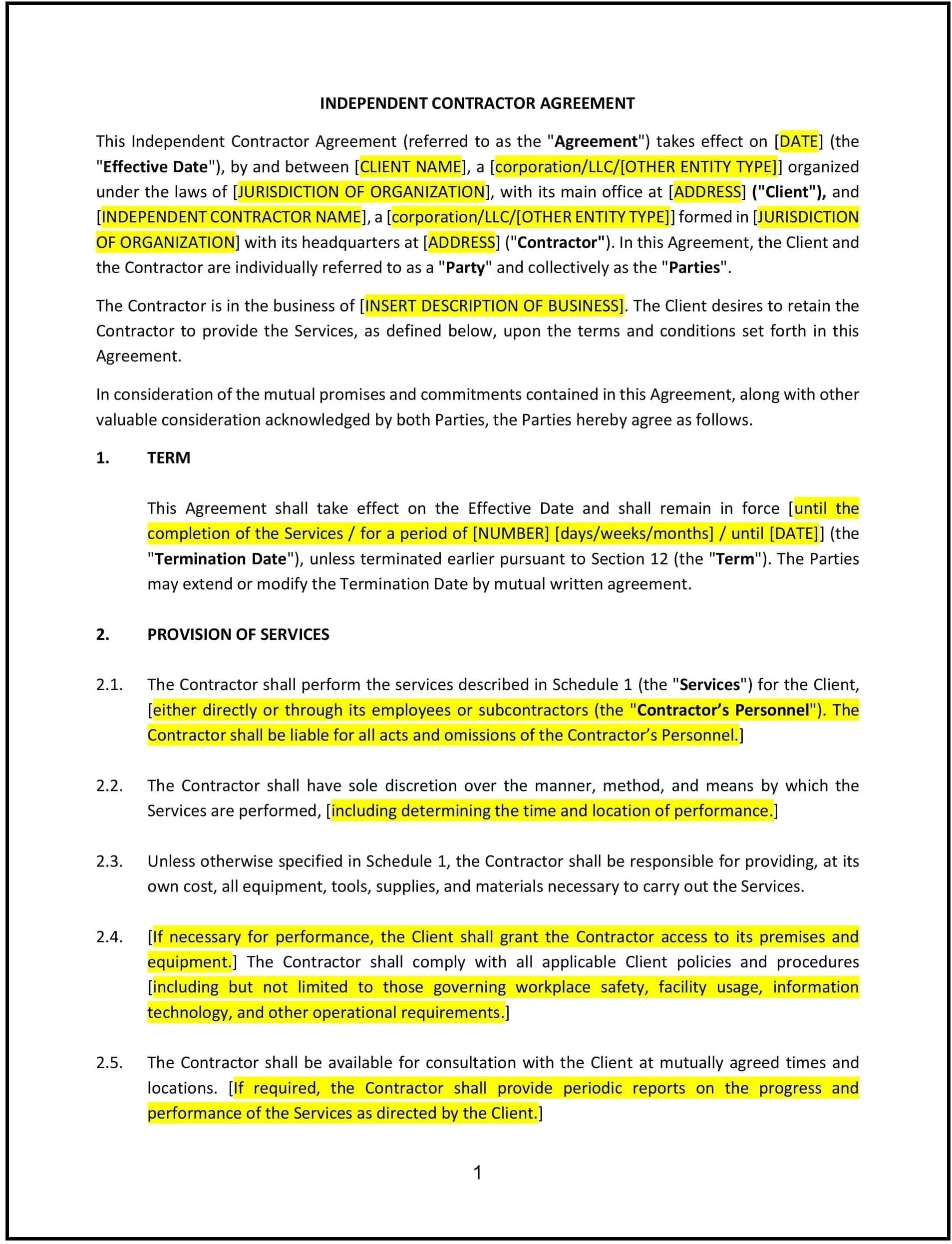
Defines terms for hiring independent contractors in Kansas, covering scope of work, payment, intellectual property, labor law compliance, and termination.
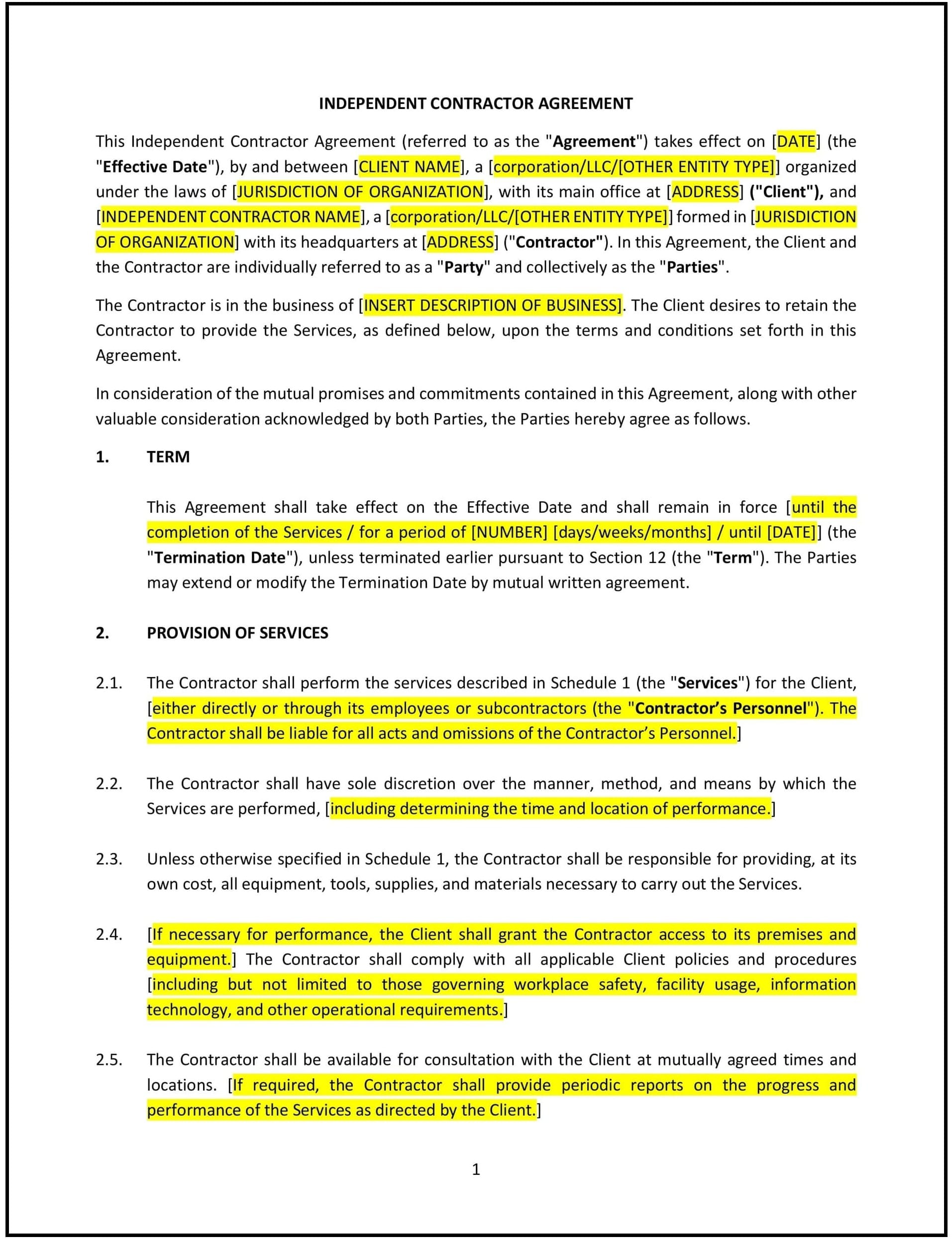
Defines terms for an Ohio independent contractor relationship, covering roles, payment, intellectual property, classification, and termination conditions.
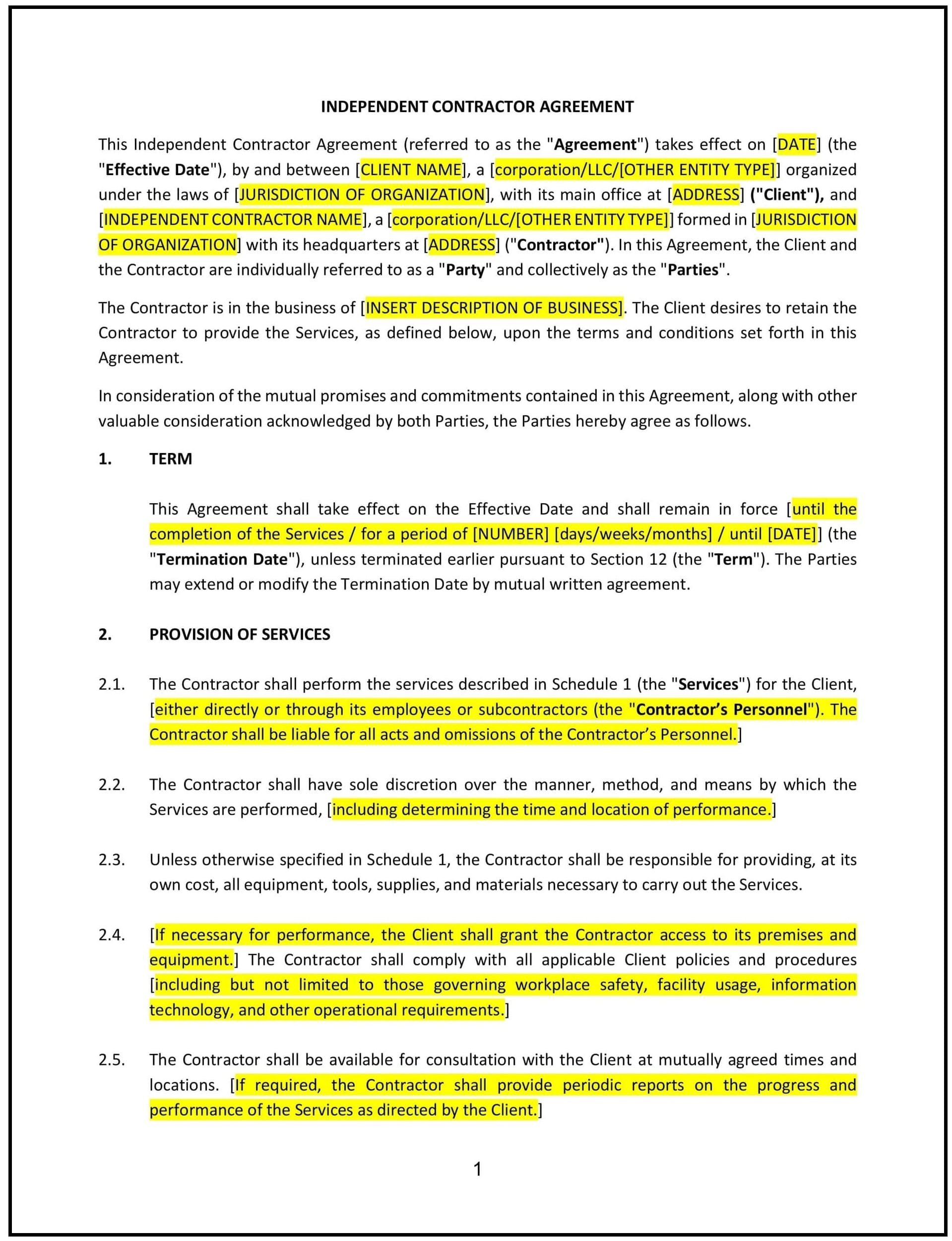
Defines terms for engaging independent contractors in Arkansas, covering scope of work, payment, confidentiality, IP ownership, and dispute resolution.
Establishes terms for independent contractor services in Arizona, covering work scope, payment, confidentiality, IP ownership, and dispute resolution.
Defines terms for engaging independent contractors in Alabama, covering work scope, payment, contractor status, confidentiality, IP, and dispute resolution.