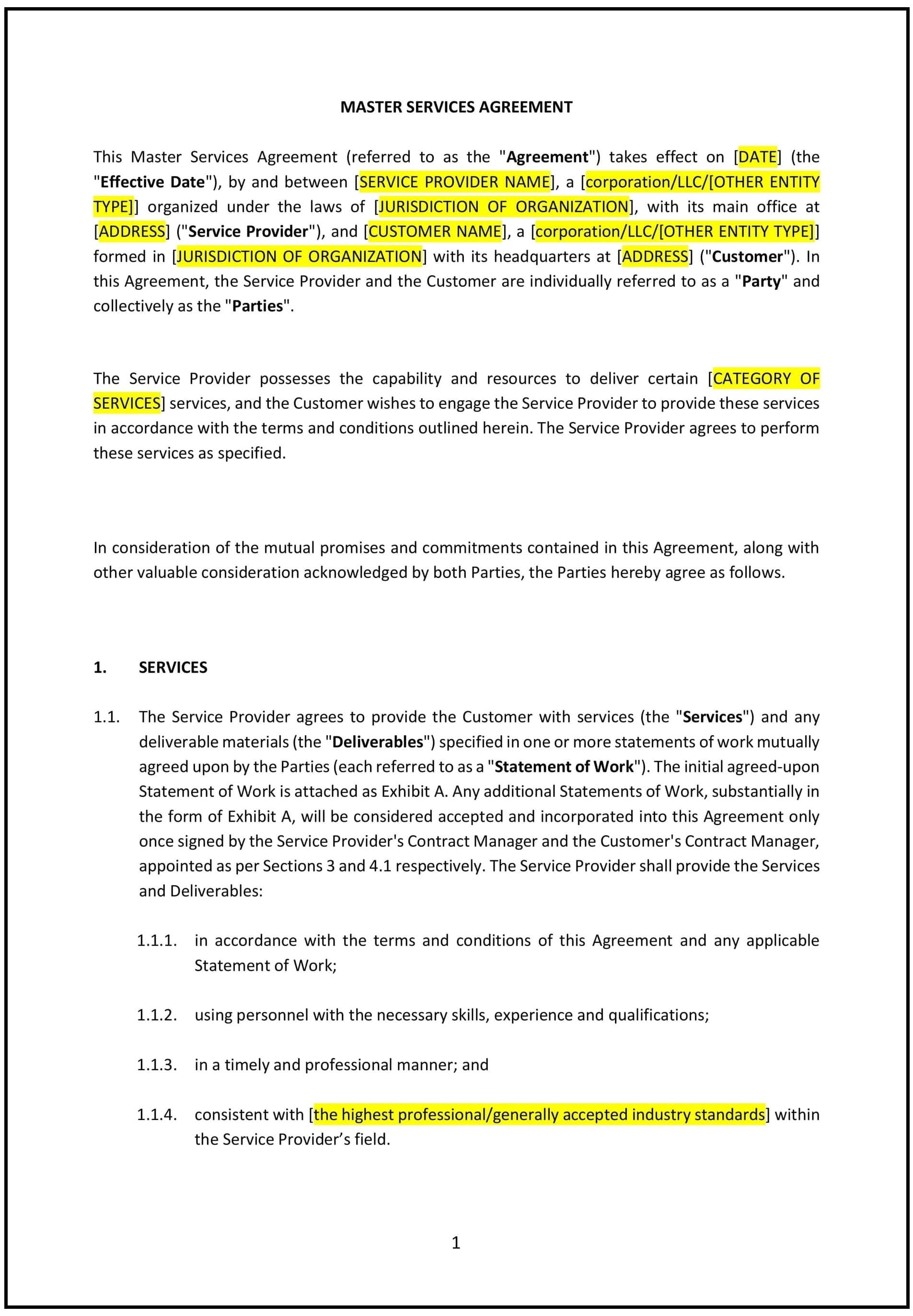
Master Services Agreement (California): Free template
Learn how a Master Services Agreement in California streamlines projects, defines obligations, and prevents disputes with key terms and FAQs.
- Contracts
- California
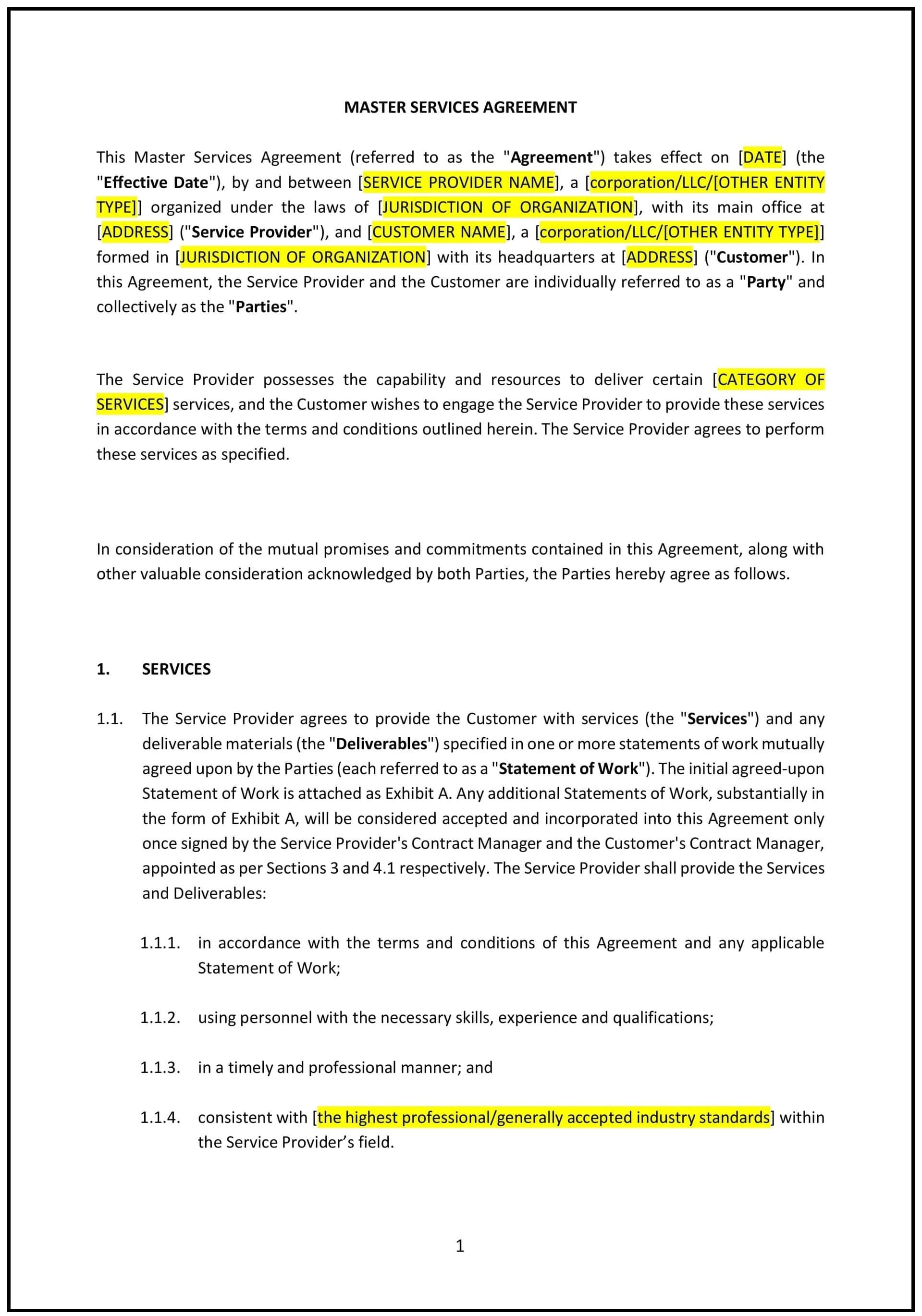
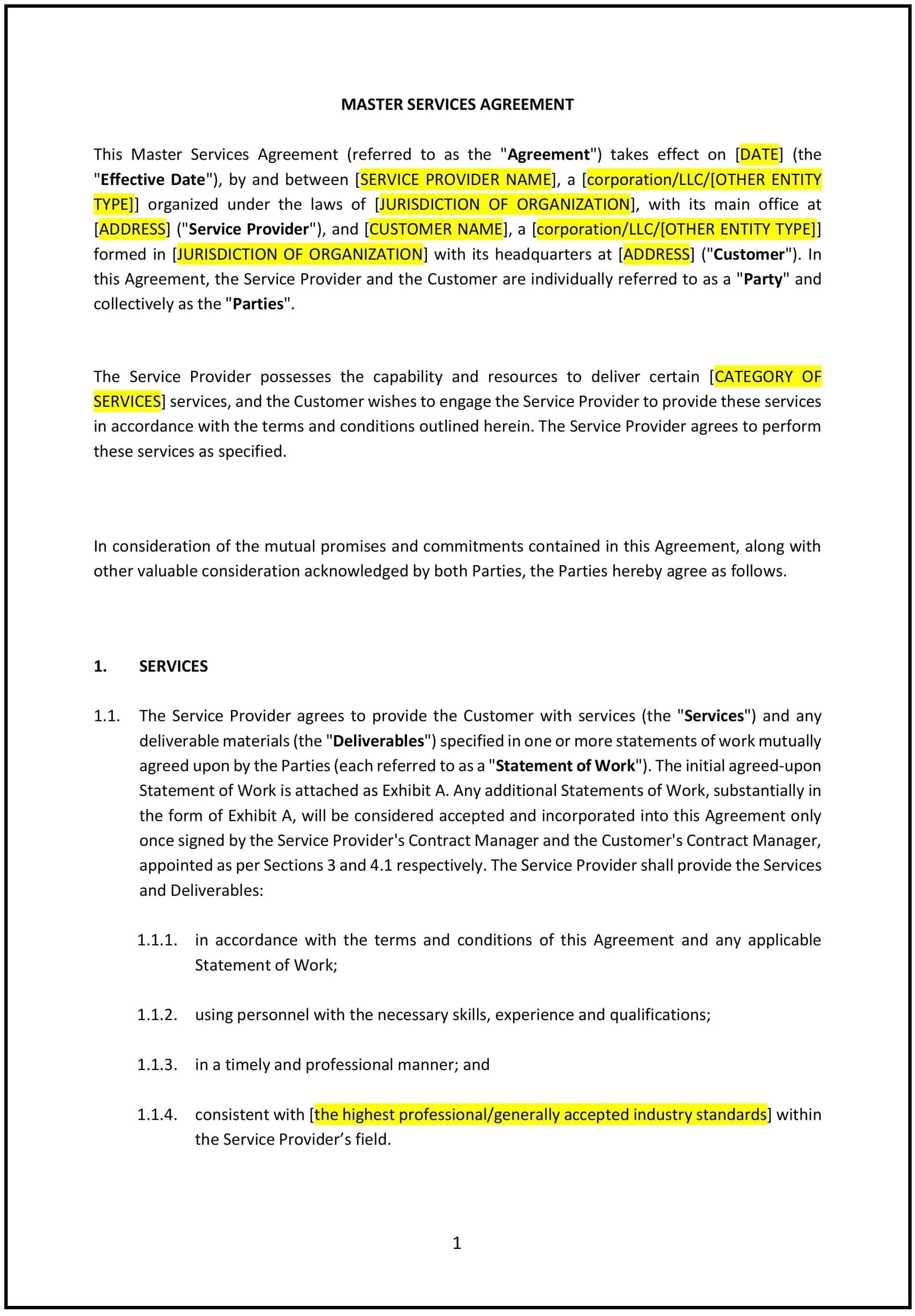
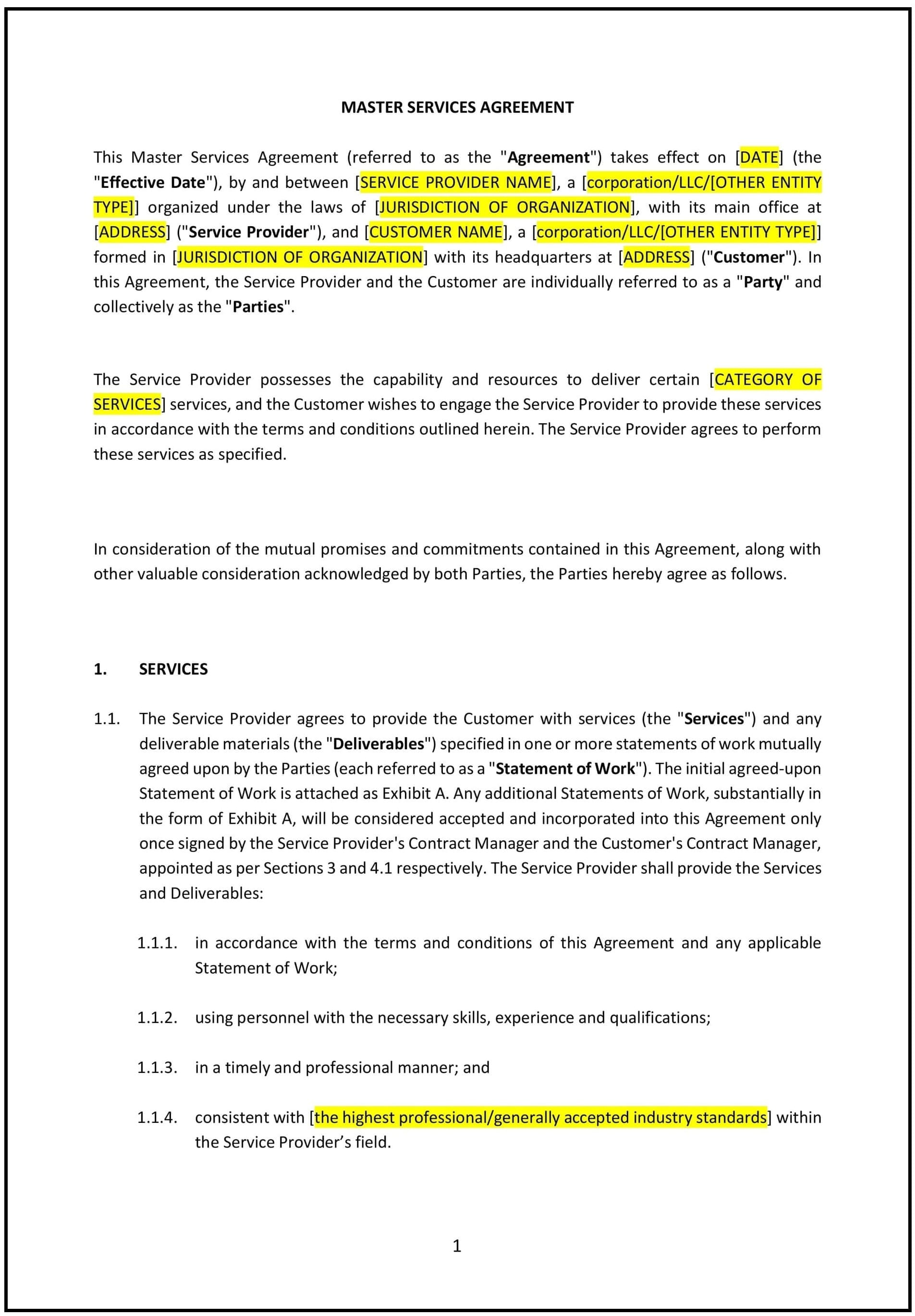
Master Services Agreement (California)
A Master Services Agreement (MSA) in California is a contract that sets the foundational terms between a service provider and a client for ongoing or multiple projects. This agreement helps streamline future engagements by establishing clear expectations for service delivery, payment terms, liability limitations, and dispute resolution. Businesses commonly use an MSA in industries such as technology, consulting, and construction, where long-term service relationships are common.
Businesses in California use an MSA to reduce negotiation time, ensure contract consistency, and define each party’s rights and obligations. This agreement helps prevent disputes by standardizing key terms while allowing specific project details to be addressed in separate statements of work (SOWs).
Tips for drafting and maintaining a Master Services Agreement in California
- Clearly define the scope of services to prevent misunderstandings and disputes.
- Establish payment terms, including invoicing procedures, late fees, and payment schedules.
- Include limitation of liability clauses to minimize financial exposure.
- Specify intellectual property (IP) ownership, ensuring clarity on who owns deliverables.
- Address dispute resolution, including whether arbitration, mediation, or California courts will handle conflicts.
Frequently asked questions (FAQs)
Similar templates
Where deals go from offer to paid
