Customize it in Cobrief, send it for signature, and move straight to payment once it's approved.
Customize this template for free
TL;DR
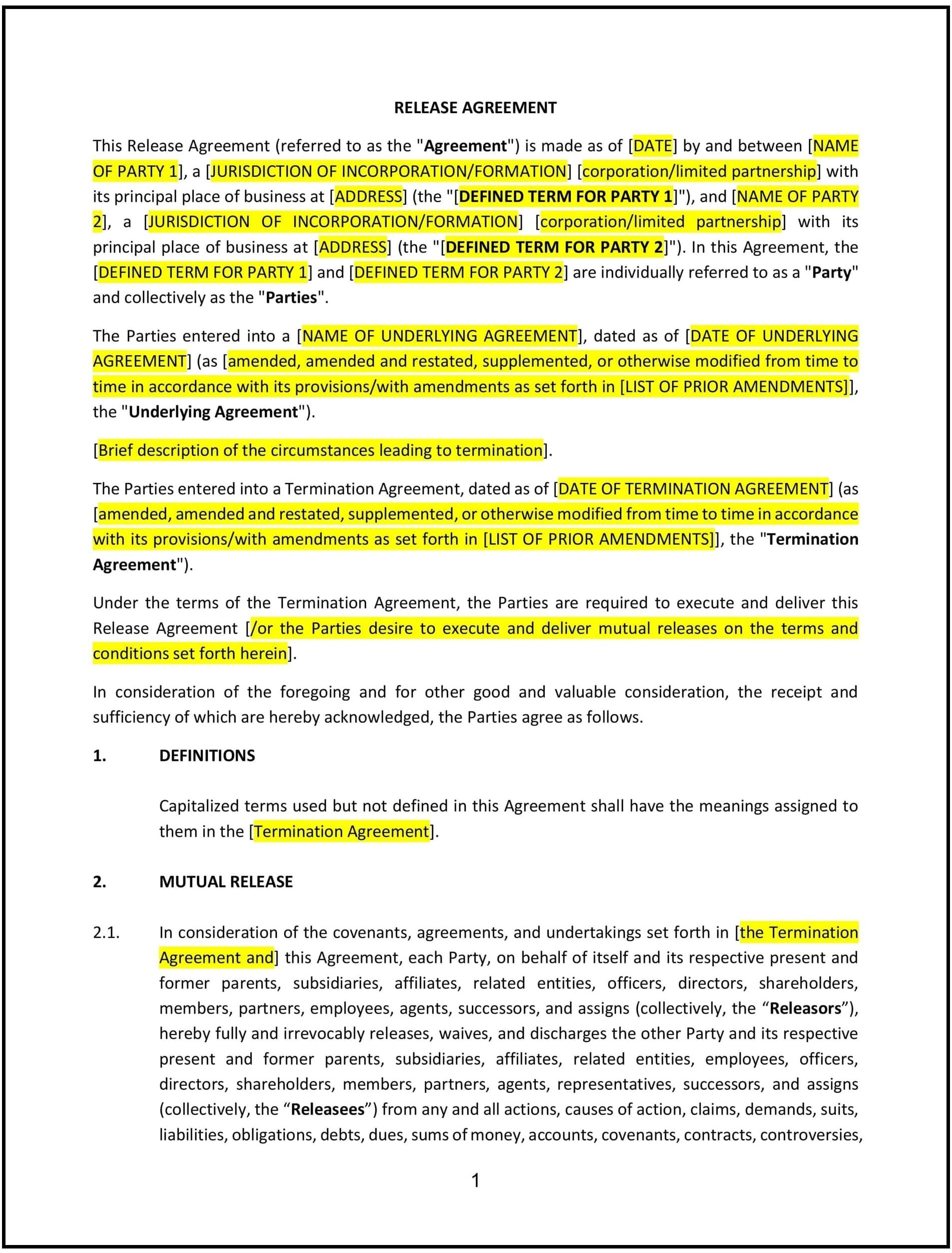
A mutual release agreement that allows two or more parties to release each other from liability concerning specific actions or transactions in Iowa. Commonly used by businesses or partnerships to amicably resolve disputes and dissolve relationships, it clarifies the terms of the release and minimizes future conflicts.
Release Agreement (Mutual) (Iowa)
A Release Agreement (Mutual) is a legal document in which two or more parties agree to release each other from liability related to specific actions, events, or transactions. In Iowa, these agreements are governed by state contract laws and must align with federal regulations regarding fairness and enforceability. A well-drafted mutual release agreement clarifies the terms of the release, protects all parties involved, and aligns with Iowa’s legal standards.
For example, a Des Moines-based partnership might use a mutual release agreement to resolve disputes and dissolve their business relationship amicably. A clear Release Agreement (Mutual) helps define the scope of the release and minimizes the risk of future conflicts.
Tips for drafting and maintaining a Release Agreement (Mutual) in Iowa
- Identify the parties involved: Clearly specify the names, addresses, and roles of all parties entering into the agreement.
- Example: “This Release Agreement (Mutual) is entered into by [Party A Name], located at [Address], and [Party B Name], residing at [Address].”
- Define the purpose of the release: Describe the reason for the agreement and the specific claims or liabilities being released.
- Example: “The purpose of this agreement is to mutually release and discharge any and all claims, demands, or liabilities arising out of [specific event, transaction, or relationship].”
- Specify the scope of the release: Clarify what is being released, including known and unknown claims.
- Example: “Each party hereby releases the other from any and all claims, whether known or unknown, related to [specific matter].”
- Outline permitted exceptions (if applicable): Specify any claims or liabilities that are excluded from the release.
- Example: “This release does not apply to claims related to [specific exclusions, such as ongoing obligations or future disputes].”
- Include confidentiality clauses (if applicable): Protect sensitive information shared during the process.
- Example: “The parties agree to keep the terms of this agreement and any related discussions confidential.”
- Address compensation or consideration (if any): State whether any payment, benefits, or other forms of consideration are involved.
- Example: “In consideration of this mutual release, [Party A] agrees to pay [Party B] the sum of [amount] within [timeframe].”
- Include termination terms (if applicable): Specify conditions under which the agreement may be terminated or modified.
- Example: “This agreement may only be amended or terminated in writing, signed by all parties.”
- Outline governing law and jurisdiction: Ensure the agreement specifies that it aligns with Iowa law and identifies the appropriate courts for dispute resolution.
- Example: “This agreement aligns with the laws of the State of Iowa. Any disputes arising under this agreement shall be resolved in the courts of [County], Iowa.”
- Include signatures: All parties must sign and date the agreement to make it legally binding.
- Example: “IN WITNESS WHEREOF, the parties have executed this Release Agreement (Mutual) as of the date first written above.”
Frequently asked questions (FAQs)
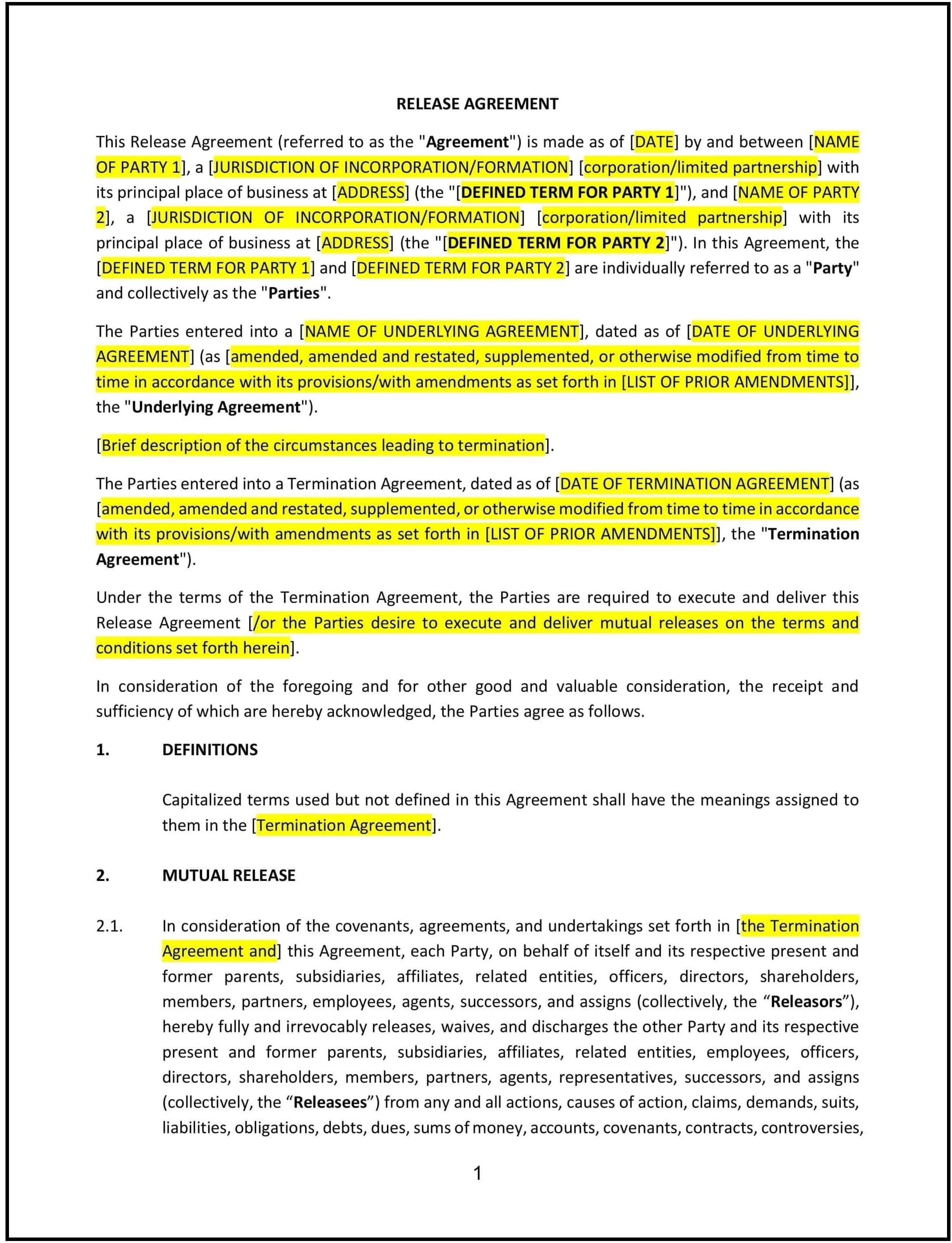
Establishes mutual release terms between parties, detailing waived claims, exceptions, confidentiality, compensation, governing law, and signatures in Illinois.
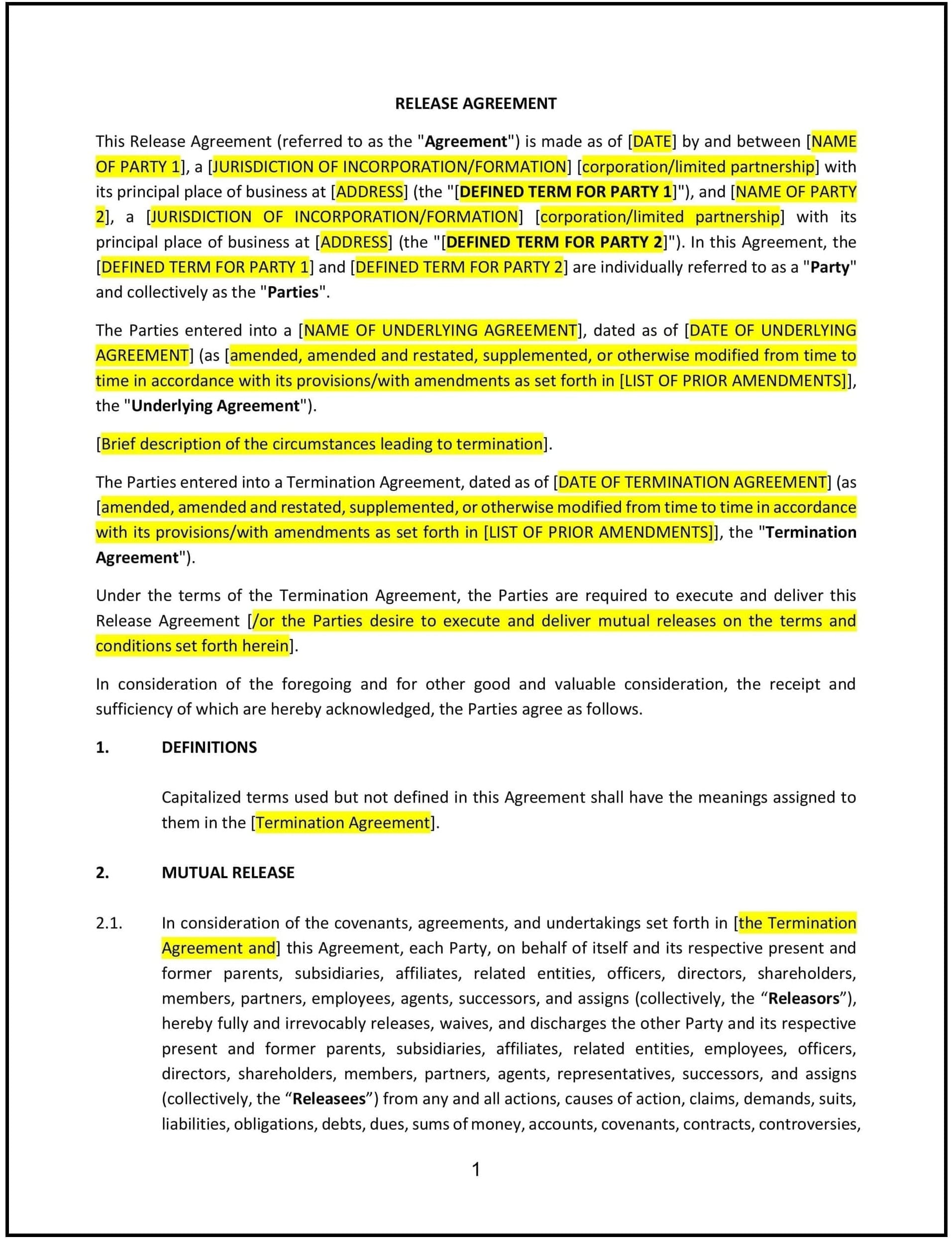
Establishes a mutual release of liability between parties, detailing scope, exceptions, confidentiality, compensation, termination, and Idaho law.
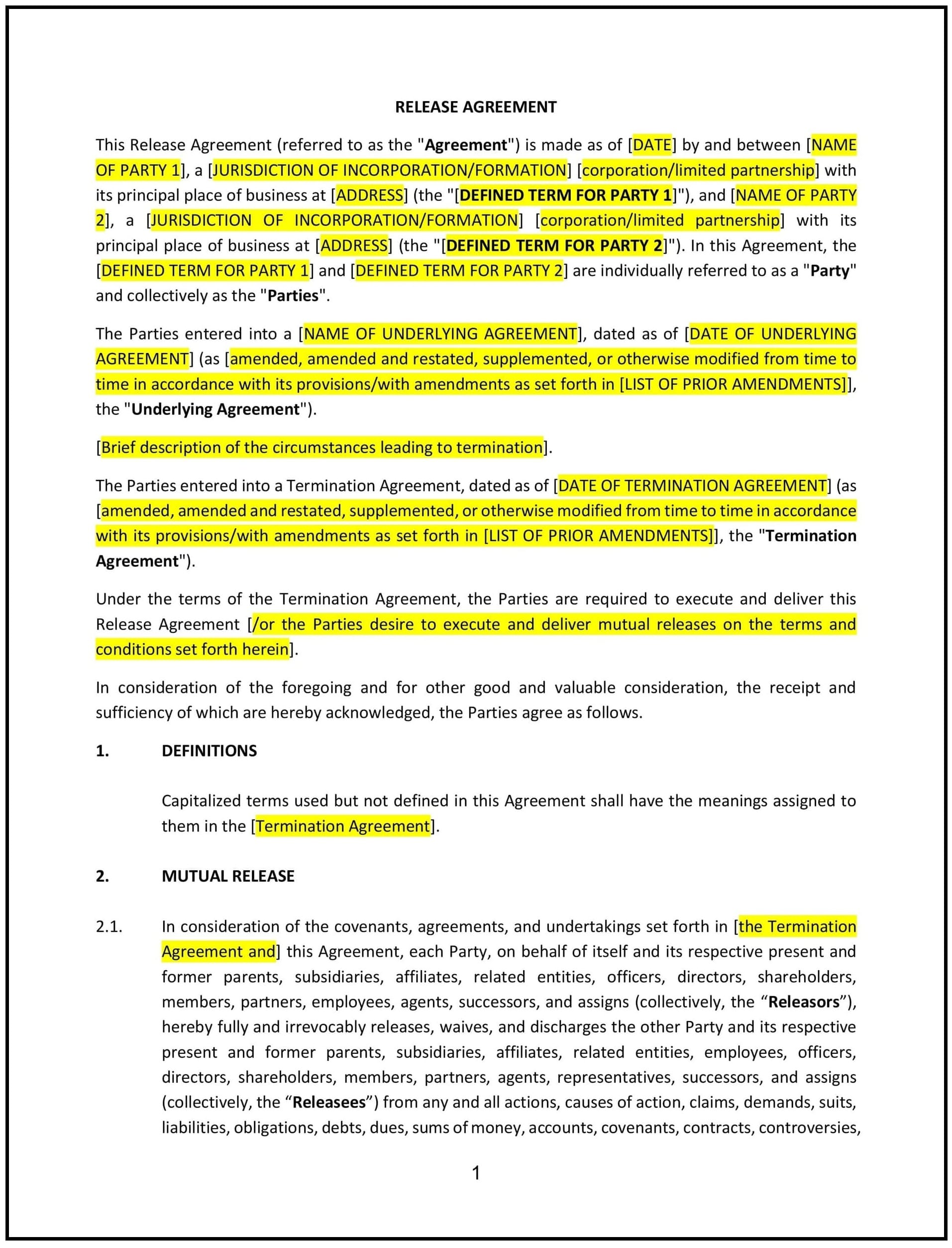
Defines mutual release terms between parties in Missouri, detailing claims released, exceptions, confidentiality, compensation, governing law, and signatures.
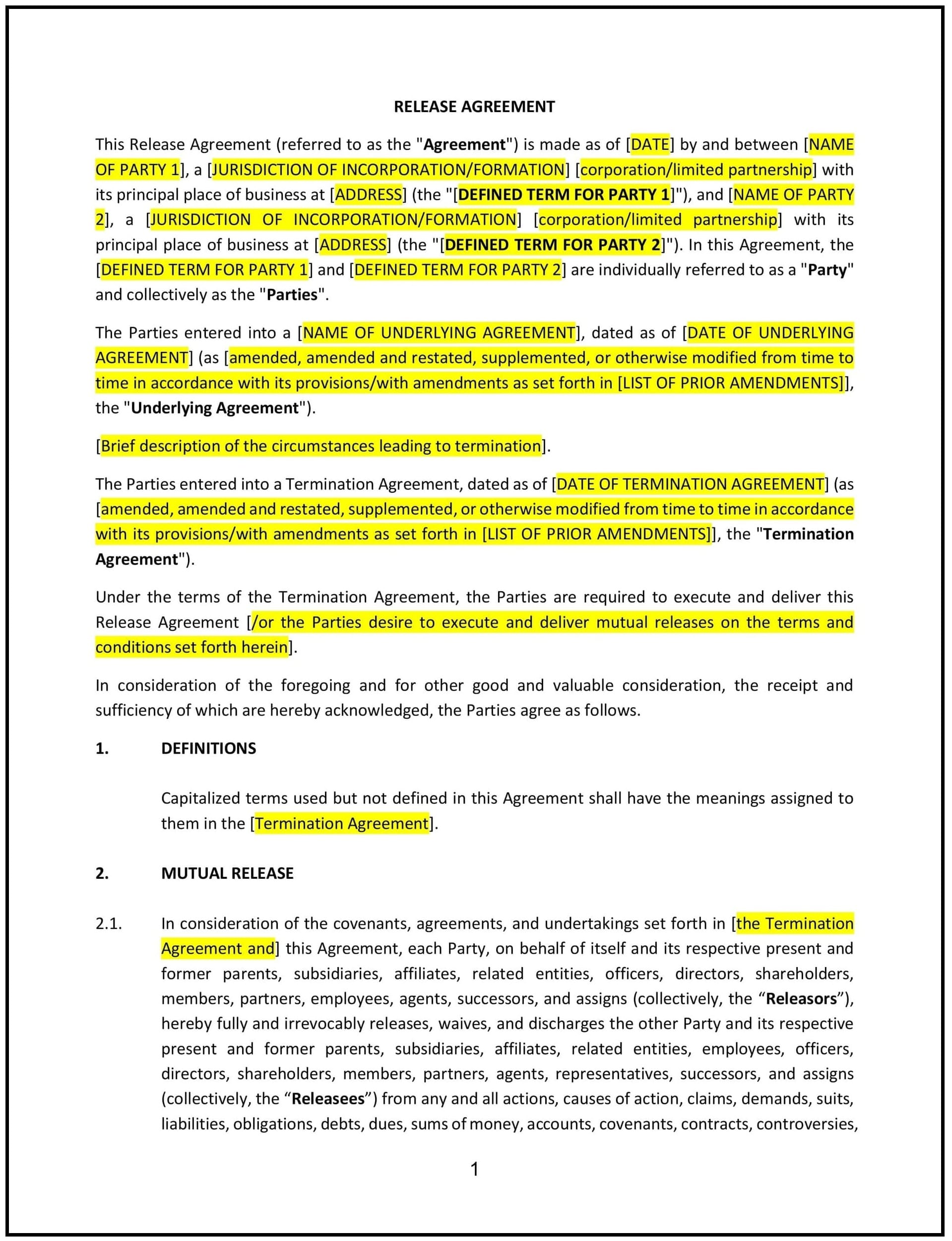
Establishes mutual release terms between parties in Arizona, detailing scope, exceptions, confidentiality, compensation, governing law, and signatures.
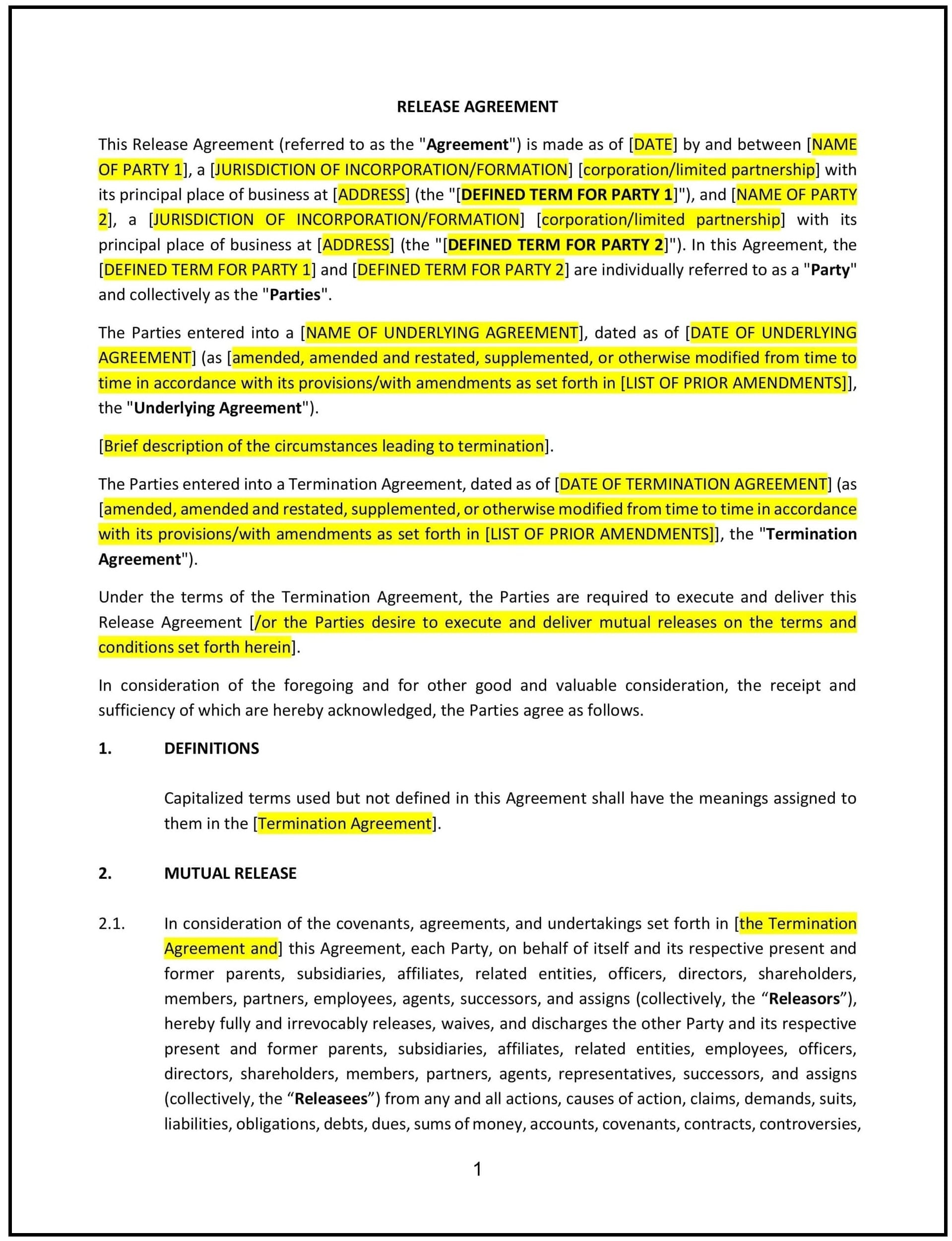
Establishes mutual release terms in Michigan, detailing scope, exceptions, confidentiality, compensation, governing law, and signatures for liability discharge.