Service Level Agreement (SLA) (Georgia): Free template
Customize it in Cobrief, send it for signature, and move straight to payment once it's approved.
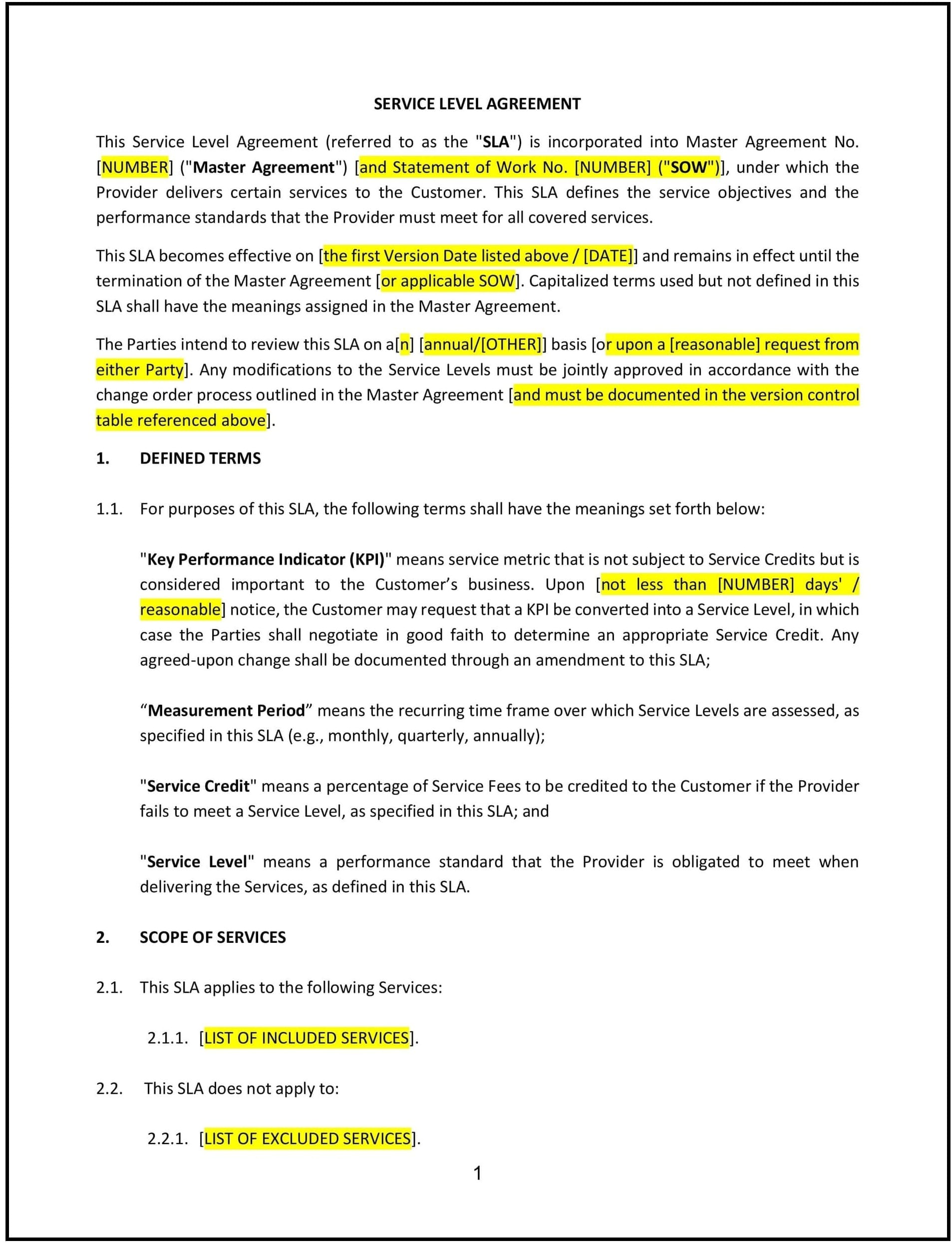
Customize this template for free
TL;DR
A Service Level Agreement (SLA) template tailored for businesses in Georgia, establishing clear expectations between service providers and clients. It outlines measurable performance standards, remedies for unmet targets, and compliance with local regulations, making it essential for industries like logistics, healthcare, and IT services to ensure accountability and protect against disputes.
Service Level Agreement (SLA) (Georgia)
A Service Level Agreement (SLA) is a formal contract that establishes clear expectations between a service provider and a client. For business owners in Georgia, an SLA is a critical tool to ensure accountability, build trust, and protect your business from misunderstandings or disputes. Whether you’re in technology, logistics, healthcare, or professional services, an SLA sets measurable standards for performance and outlines how issues will be resolved if those standards aren’t met.
In Georgia, industries like manufacturing, logistics, healthcare, and IT services rely heavily on SLAs to maintain high-quality service delivery and meet client expectations. For example, an Atlanta-based logistics company might use an SLA to define delivery timelines and performance benchmarks, while a healthcare provider could guarantee patient portal uptime and support availability. A well-crafted SLA not only helps you meet client expectations but also ensures compliance with Georgia’s regulatory environment, including its focus on consumer protection and data privacy.
By clearly outlining what you’ll deliver, how performance will be measured, and what happens if things go wrong, an SLA provides a roadmap for success. This clarity is particularly valuable in Georgia’s competitive business environment, where clients expect transparency and reliability.
Tips for drafting and maintaining a Service Level Agreement (SLA) in Georgia
- Clearly describe the services you’ll provide: Start by explaining the services in simple terms. Avoid technical jargon and make sure your clients understand what you’re offering. For example, if you’re providing IT support, specify whether it includes 24/7 availability, response times, and resolution deadlines.
- Example: “We guarantee a response to critical issues within 2 hours and resolution within 8 hours.”
- Set measurable performance goals: Define specific metrics to evaluate your service quality. These are called Key Performance Indicators (KPIs). For instance, if you’re offering cloud hosting, you might promise 99.9% uptime. If you’re in logistics, you could commit to delivering goods within 48 hours.
- Tip: Be realistic when setting these goals to avoid overpromising and risking penalties.
- Explain remedies for missed targets: Clients want to know how you’ll address service failures. Include provisions for compensating clients, such as refunds, credits, or discounts, if performance falls below agreed-upon standards.
- Example: “If our platform experiences downtime exceeding 0.1% in a month, we’ll issue a 5% credit on the next invoice.”
- Ensure compliance with Georgia laws: Georgia has specific regulations that may impact your SLA, such as data privacy laws and consumer protection statutes. Make sure your agreement aligns with these requirements, especially if you handle sensitive client information.
- Tip: If you’re unsure about legal compliance, consult a lawyer familiar with Georgia business law.
- Include a process for resolving disputes: Disagreements can arise even with the best intentions. Your SLA should outline how disputes will be handled—whether through negotiation, mediation, or arbitration. Specify that Georgia law will govern the agreement to avoid jurisdictional confusion.
- Example: “Any disputes will be resolved through arbitration in Atlanta, Georgia.”
- Keep your SLA updated: As your business evolves or regulations change, your SLA may need adjustments. For example, if you introduce new services or adopt new technologies, update the agreement to reflect these changes. Regularly reviewing your SLA ensures it remains relevant and enforceable.
- Tip: Set a reminder to review your SLA annually or whenever there’s a significant change in your business operations.
Frequently asked questions (FAQs)
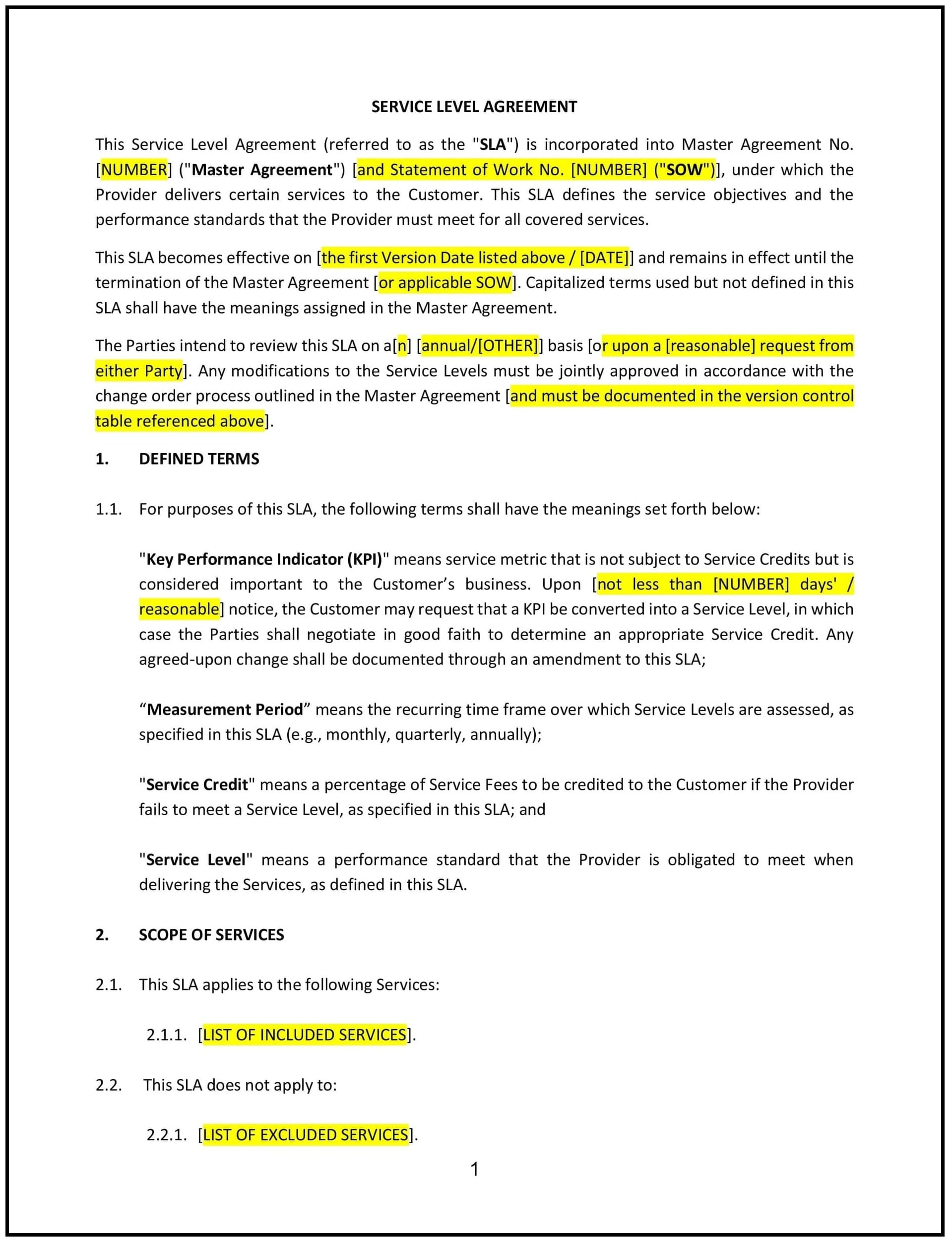
Defines service expectations, performance metrics, remedies, Idaho law compliance, and dispute resolution in a formal agreement between provider and client.
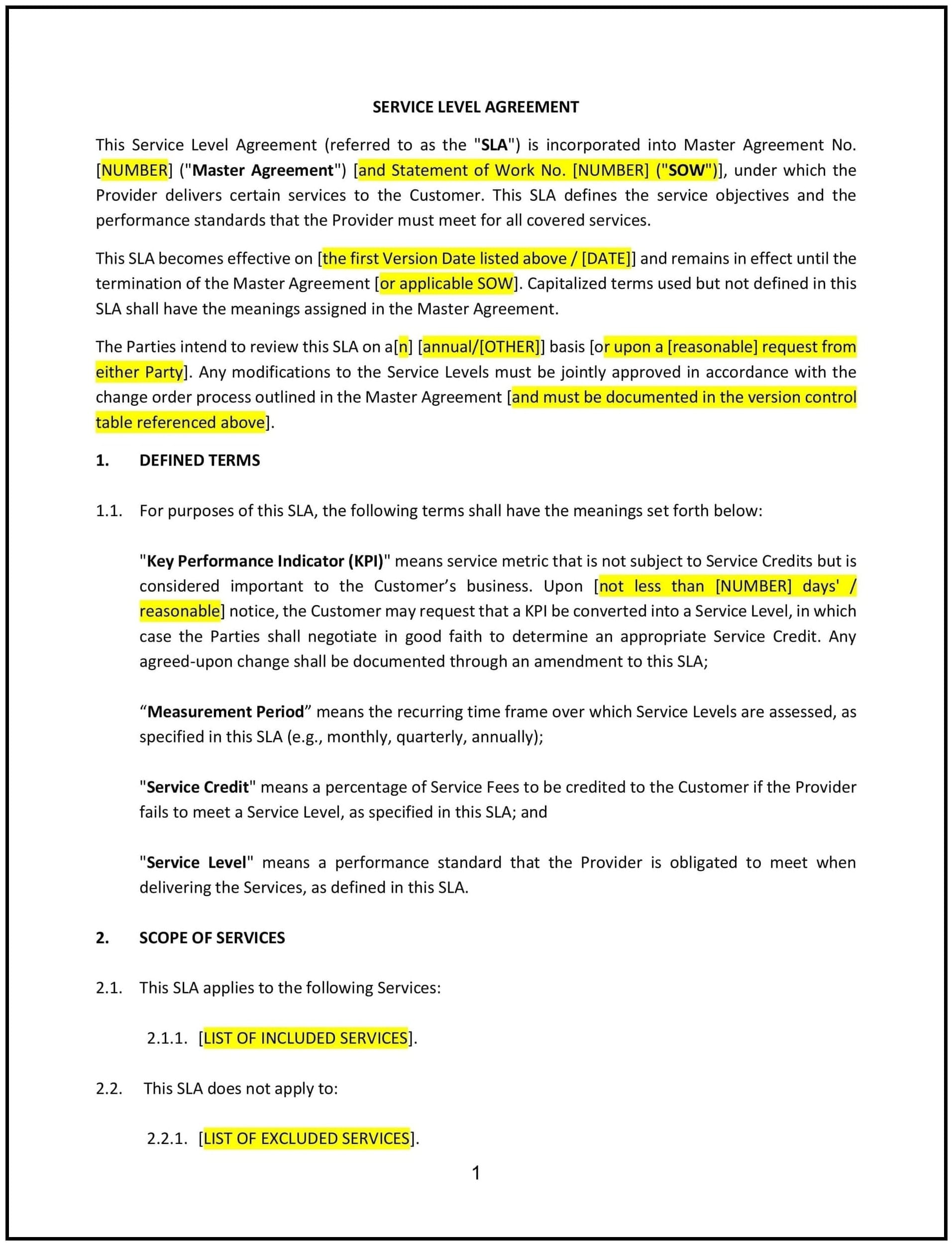
Defines service expectations, performance metrics, remedies, compliance with Florida laws, and dispute resolution processes between provider and client.
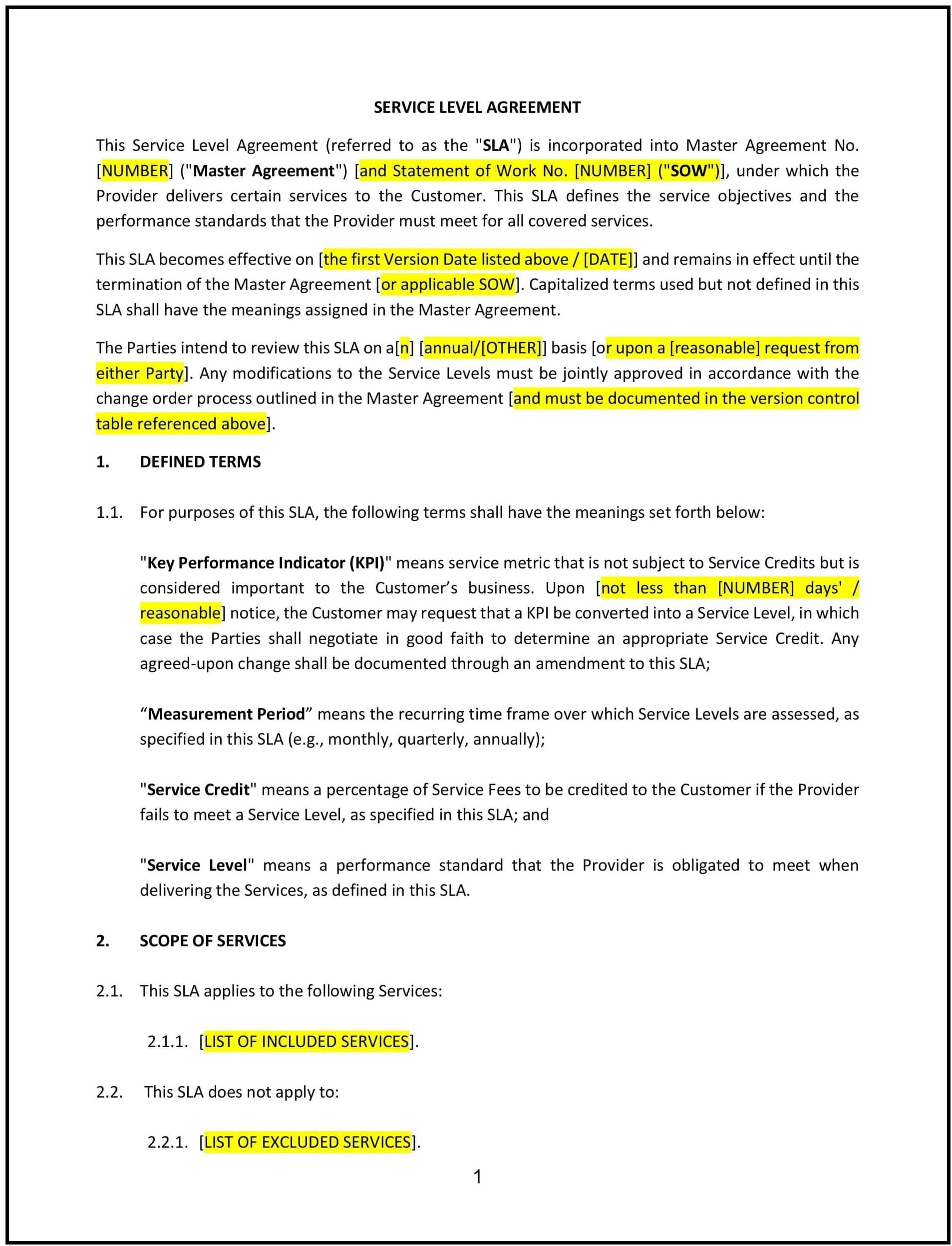
Establishes service expectations, performance metrics, remedies, dispute resolution, and Arizona-specific compliance for service provider and client agreements.
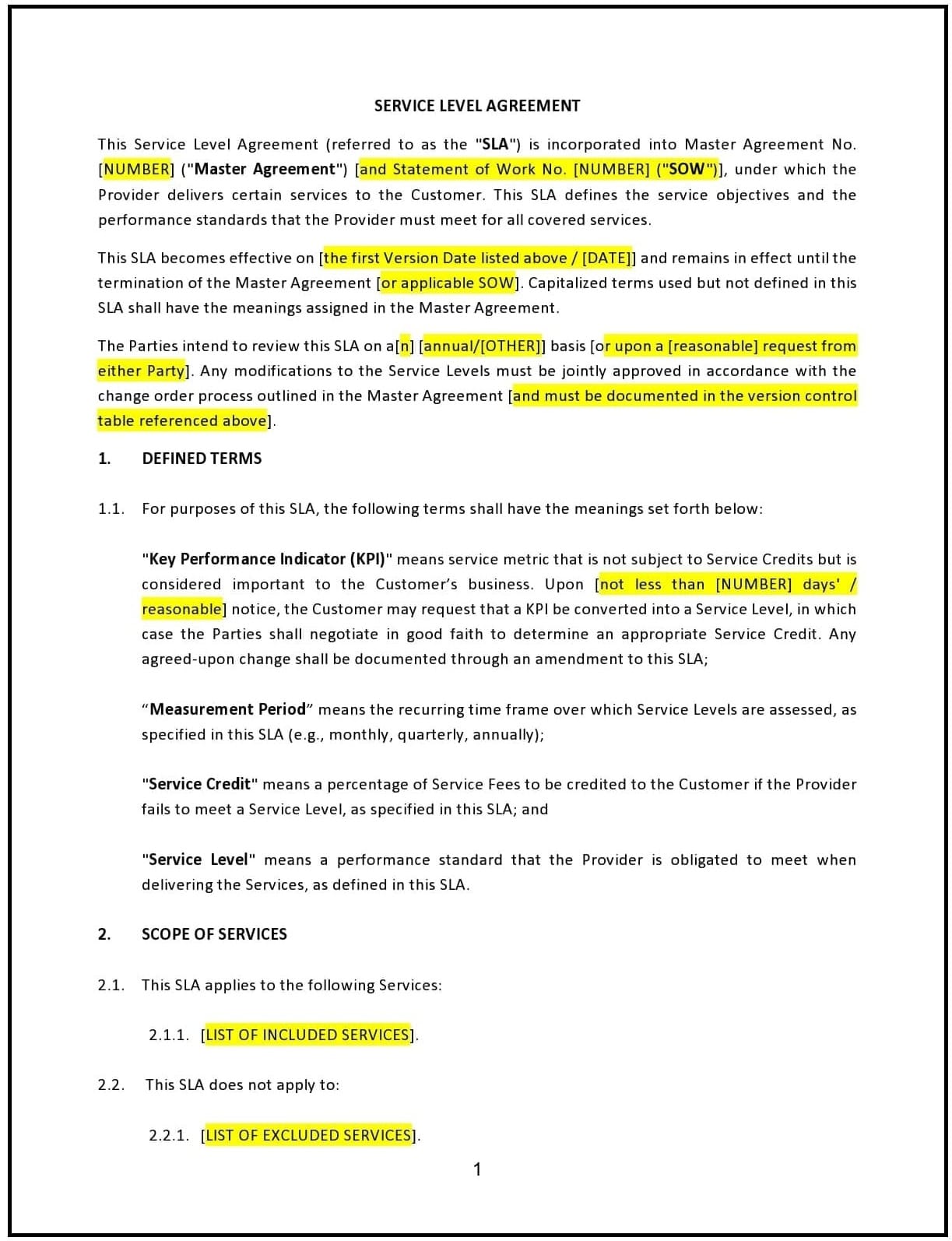
Defines service quality, availability, responsibilities, performance metrics, remedies, and legal compliance for service delivery between providers and clients.
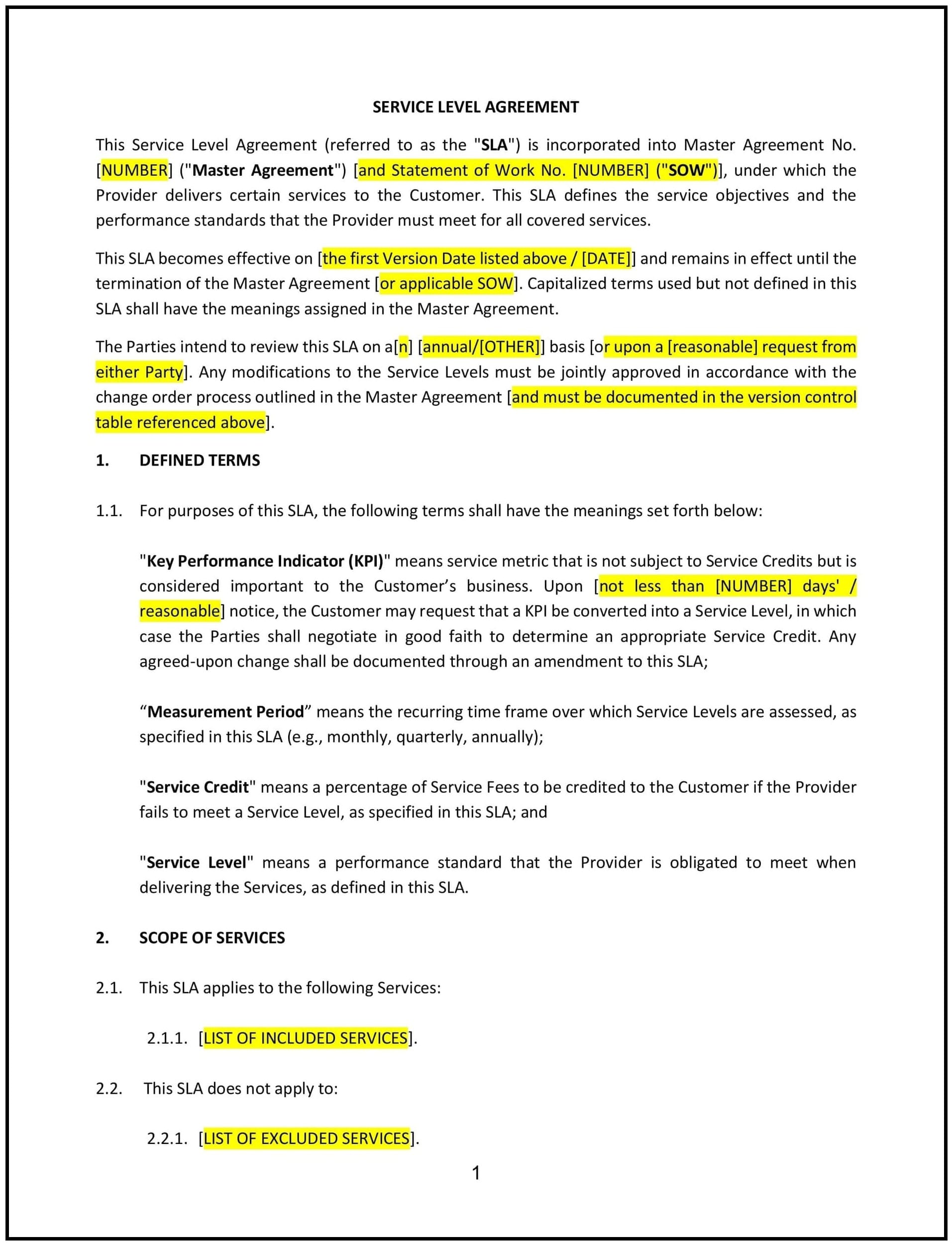
Defines service expectations, performance metrics, remedies, and dispute resolution under Alaska law to ensure clear accountability between provider and client.