Service Level Agreement (SLA) (North Dakota): Free template
Got contracts to review? While you're here for contracts, let Cobrief make contract review effortless—start your free review now.
Customize this template for free
Service Level Agreement (SLA) (North Dakota)
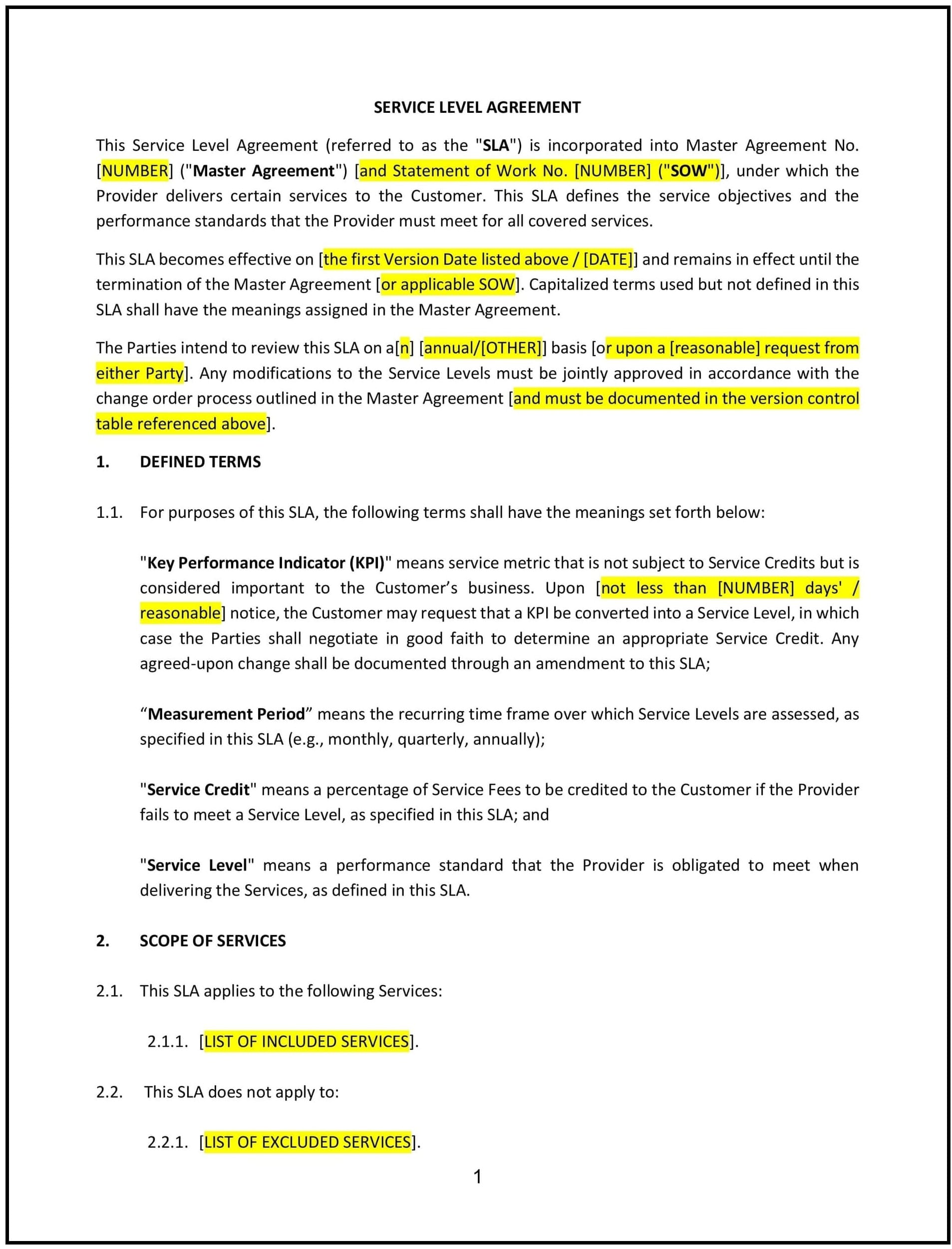
A Service Level Agreement (SLA) is a legally binding contract between a service provider and a client, defining the quality, availability, and responsibilities of the services provided. In North Dakota, SLAs are widely used in industries such as energy, agriculture, healthcare, and technology to ensure clear expectations and accountability. North Dakota’s robust energy sector and growing technology industry make SLAs particularly important for businesses seeking reliable service delivery.
An SLA ensures that both parties understand their obligations, including response times, performance metrics, and remedies for service failures. For example, an energy company in North Dakota might use an SLA to guarantee timely maintenance of equipment, while a healthcare provider might use it to ensure prompt delivery of medical services. A well-drafted SLA protects both the service provider and the client by minimizing misunderstandings and fostering trust.
Tips for drafting and maintaining a Service Level Agreement in North Dakota
- Define the scope of services clearly: Specify the services to be provided, including any exclusions or limitations. For example, if the SLA covers IT support, outline the types of support included (e.g., software troubleshooting) and excluded (e.g., hardware repairs).
- Include measurable performance metrics: Define key performance indicators (KPIs) such as uptime percentages, response times, and resolution times. For instance, state that the service provider will respond to support requests within 2 hours and resolve issues within 24 hours.
- Outline remedies for service failures: Specify the consequences if the service provider fails to meet the agreed-upon standards. For example, include provisions for service credits, refunds, or contract termination.
- Address force majeure events: Include clauses that account for unforeseen events, such as natural disasters or pandemics, that may impact service delivery. This ensures fairness for both parties.
- Comply with North Dakota laws: Ensure the SLA adheres to North Dakota’s contract laws and any industry-specific regulations. For example, healthcare SLAs must comply with HIPAA regulations, while energy-related SLAs must follow state and federal energy guidelines.
- Regularly review and update: Periodically update the SLA to reflect changes in service offerings, client needs, or legal requirements. For instance, if the service provider introduces new services, amend the SLA to include these.