Service Level Agreement (SLA) (Wyoming): Free template
Customize it in Cobrief, send it for signature, and move straight to payment once it's approved.
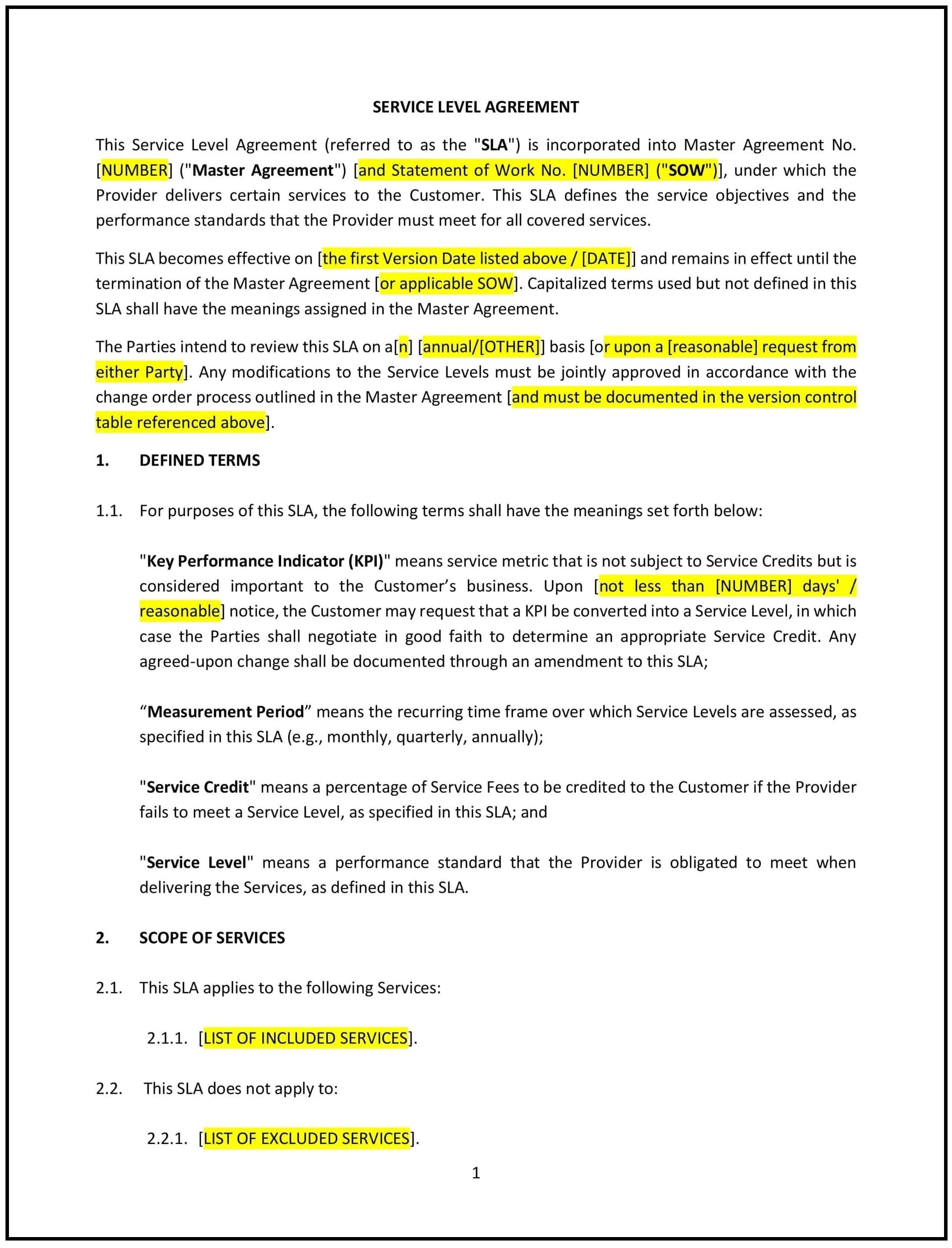
Customize this template for free
TL;DR
Defines a Service Level Agreement (SLA) for businesses in Wyoming, outlining the expectations and performance standards between service providers and clients. It includes guidance on drafting key elements like service scope, performance metrics, and dispute resolution, making it essential for industries such as IT and consulting. Companies in regulated sectors may also find this document useful for compliance purposes.
Service Level Agreement (SLA) (Wyoming)
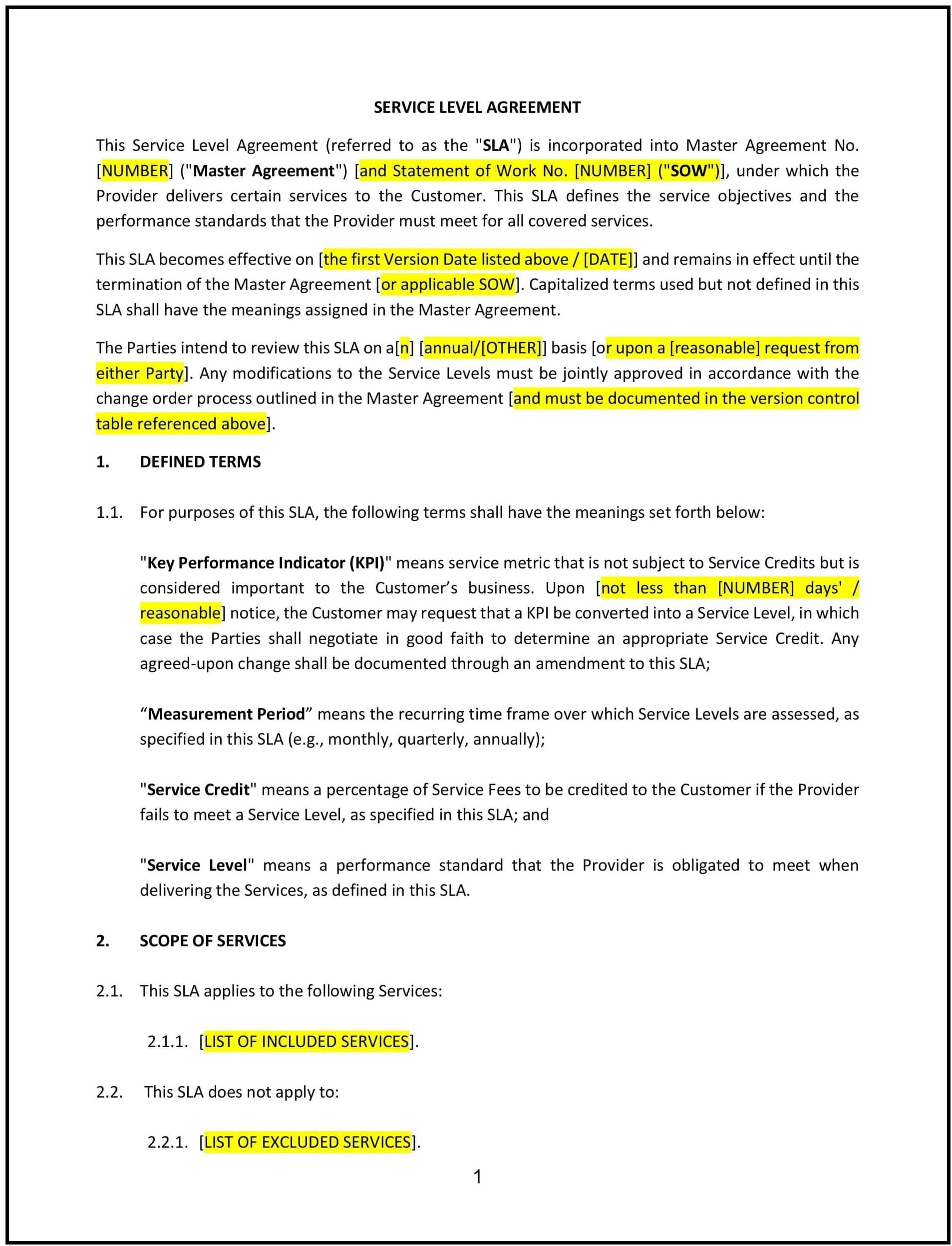
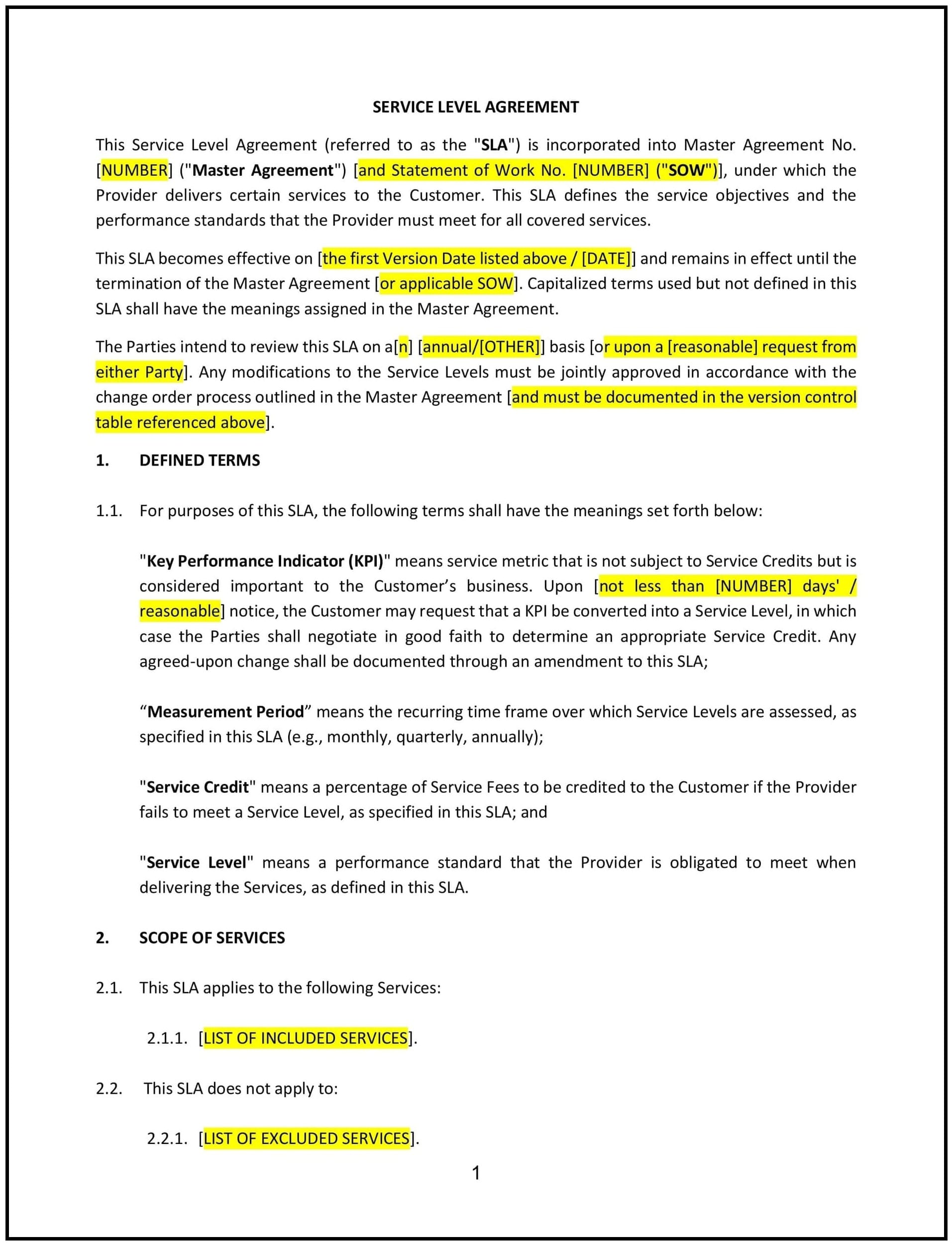
A Service Level Agreement (SLA) in Wyoming is a legally binding contract that defines the expectations, responsibilities, and performance standards between a service provider and a client. This agreement ensures that both parties understand the scope of services, quality benchmarks, response times, and consequences for failing to meet obligations. SLAs are commonly used in industries such as IT services, cloud computing, managed service providers, consulting, and maintenance services.
Wyoming follows general contract law principles when enforcing SLAs. While the state does not impose specific SLA regulations, businesses operating in highly regulated sectors, such as healthcare or financial services, may need to comply with federal and industry-specific requirements. Well-drafted SLAs help mitigate disputes, set clear performance expectations, and provide remedies in case of service failures.
Tips for drafting and maintaining a Service Level Agreement in Wyoming
- Clearly define the services covered by the agreement, including the scope, specifications, and performance expectations to prevent misunderstandings.
- Establish measurable performance indicators, such as uptime guarantees, response times, and issue resolution timelines, to ensure accountability.
- Outline the client’s responsibilities, such as providing necessary access, data, or cooperation needed for the service provider to meet performance obligations.
- Specify penalties, service credits, or termination rights if the service provider fails to meet the agreed-upon performance levels. Wyoming law allows businesses to negotiate these terms freely.
- Include a dispute resolution mechanism, specifying whether conflicts will be resolved through Wyoming courts, arbitration, or mediation. Arbitration is commonly preferred for efficiency.
- Address confidentiality and data security obligations, especially if the service provider handles sensitive information. Businesses should ensure compliance with federal data protection laws where applicable.
- Regularly review and update the SLA to align with business needs, regulatory changes, or evolving service expectations.
Frequently asked questions (FAQs)
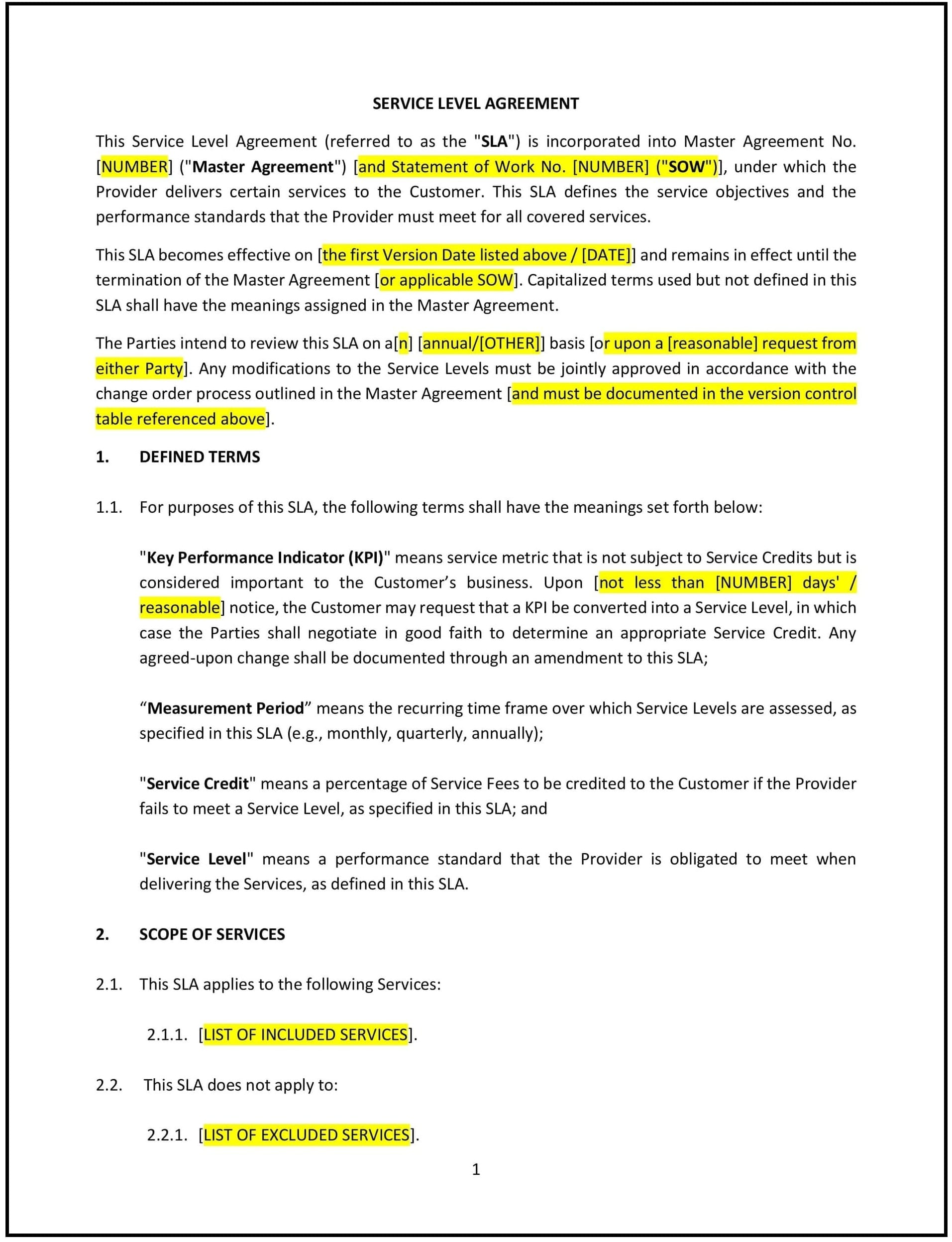
Discover the essentials of a Service Level Agreement (SLA) in Wisconsin, its significance, tips on drafting, and legal compliance in various industries.
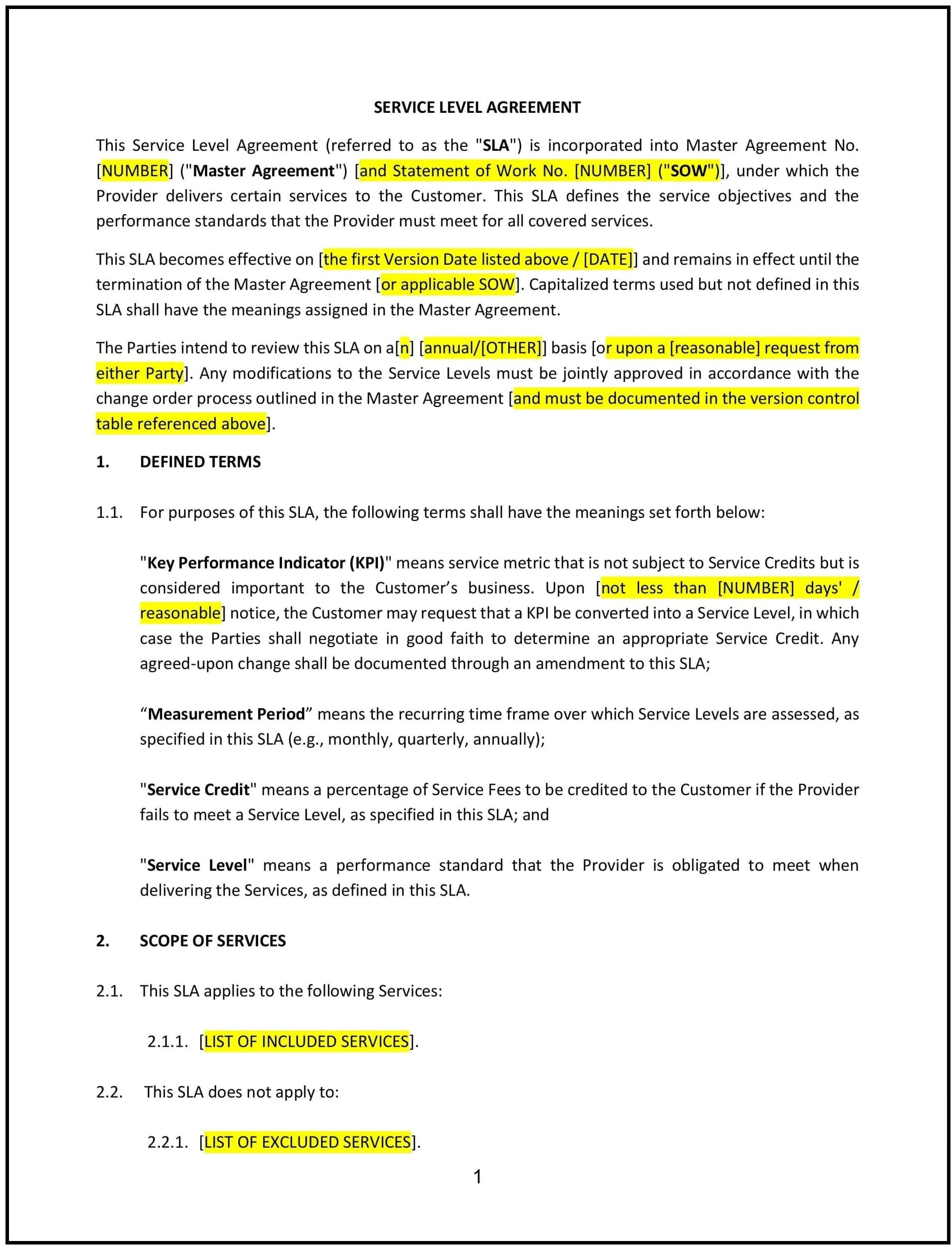
Establishes service expectations and performance standards between providers and clients in Montana, including remedies, compliance, and dispute resolution.
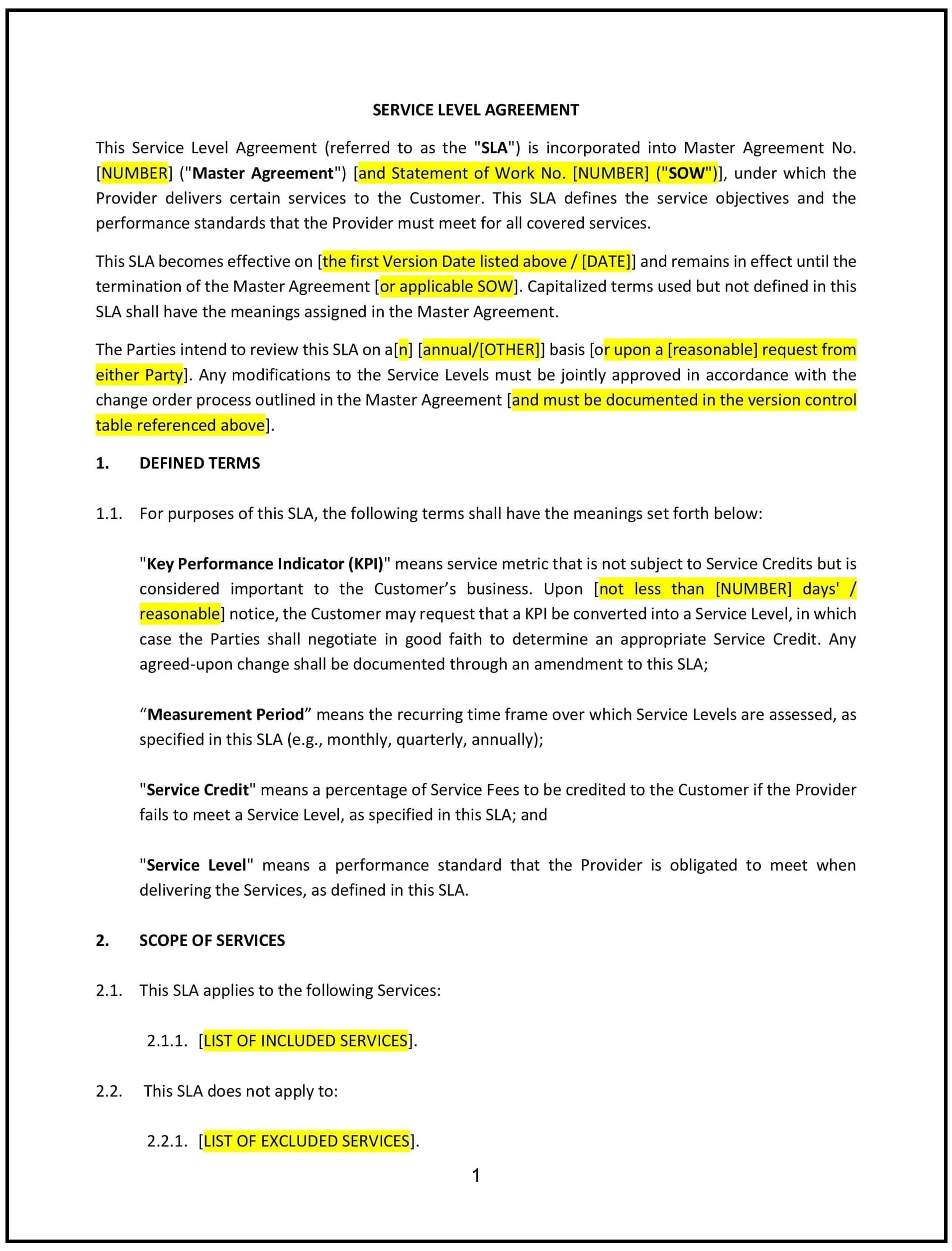
Defines service expectations, performance metrics, remedies, legal compliance, and dispute resolution for Arkansas-based service agreements.
Establishes service expectations, performance metrics, remedies, dispute resolution, and Arizona-specific compliance for service provider and client agreements.
Defines service expectations, performance metrics, remedies, and dispute resolution under Alaska law to ensure clear accountability between provider and client.