Customize it in Cobrief, send it for signature, and move straight to payment once it's approved.
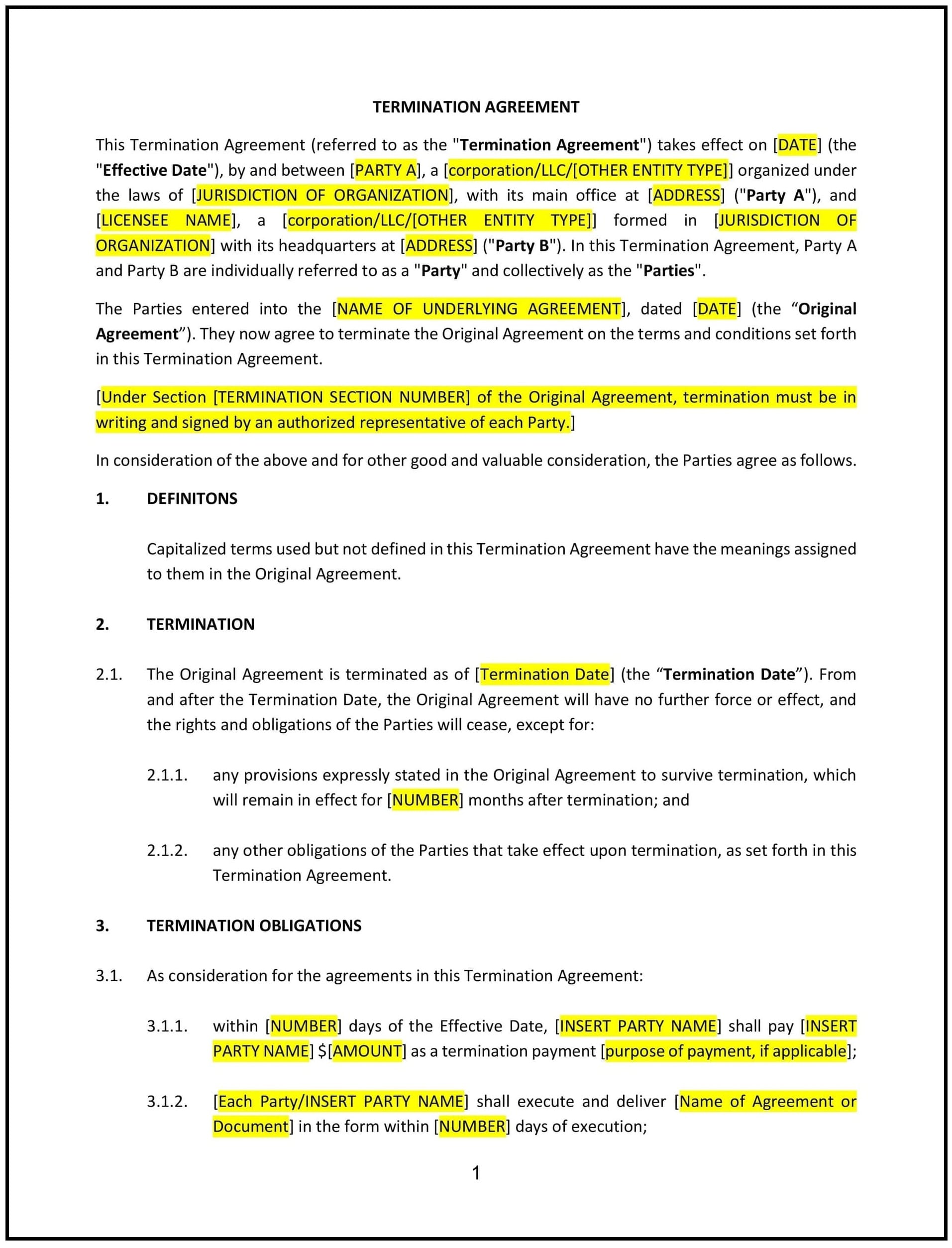
Customize this template for free
TL;DR
A legal contract for formally ending a business relationship or partnership in Kansas, ensuring compliance with state laws. It outlines key elements like final payments, asset transfers, and confidentiality obligations, making it essential for businesses needing to terminate agreements smoothly and clearly.
Termination Agreement (Kansas)
A Termination Agreement is a legal contract between two or more parties that formally ends an existing business relationship, partnership, or contract. In Kansas, this agreement must comply with state laws regarding contracts and business operations. A well-drafted agreement ensures clarity, minimizes disputes, and provides a smooth transition for all parties involved.
For example, a retail company in Overland Park might terminate its partnership with a supplier due to changing business needs. A clear agreement specifies the terms of termination, including final payments, asset transfers, and confidentiality obligations.
Tips for drafting and maintaining a Termination Agreement in Kansas
- Identify the parties: Clearly specify the names, contact information, and roles of all parties involved in the termination.
- Example: “This Termination Agreement is entered into by [Party A Name], located at [Address], and [Party B Name], located at [Address].”
- Define the purpose: Explain the reason for the termination and reference the original agreement being terminated.
- Example: “This agreement terminates the Business Collaboration Agreement dated [Date] between [Party A] and [Party B].”
- Specify the effective date: Define the date on which the termination takes effect.
- Example: “This agreement shall become effective on [Date].”
- Address final obligations: Outline any remaining obligations, such as final payments, asset transfers, or confidentiality requirements.
- Example: “Party A agrees to pay Party B $5,000 as a final settlement within 30 days of the termination date.”
- Include release clauses: Specify that both parties release each other from further claims or liabilities related to the original agreement.
- Example: “Both parties agree to release each other from any further claims, liabilities, or obligations arising from the original agreement.”
- Add confidentiality provisions: Include clauses to protect sensitive information shared during the original agreement.
- Example: “Both parties agree to maintain the confidentiality of all proprietary information disclosed during the original agreement.”
- Outline governing law and jurisdiction: Ensure the agreement specifies that it is governed by Kansas law and identifies the appropriate courts for dispute resolution.
- Example: “This agreement is governed by the laws of the State of Kansas. Any disputes shall be resolved in the courts of [County], Kansas.”
- Include signatures: All parties must sign and date the agreement to make it legally binding.
- Example: “IN WITNESS WHEREOF, the parties have executed this Termination Agreement as of the date first written above.”
Frequently asked questions (FAQs)
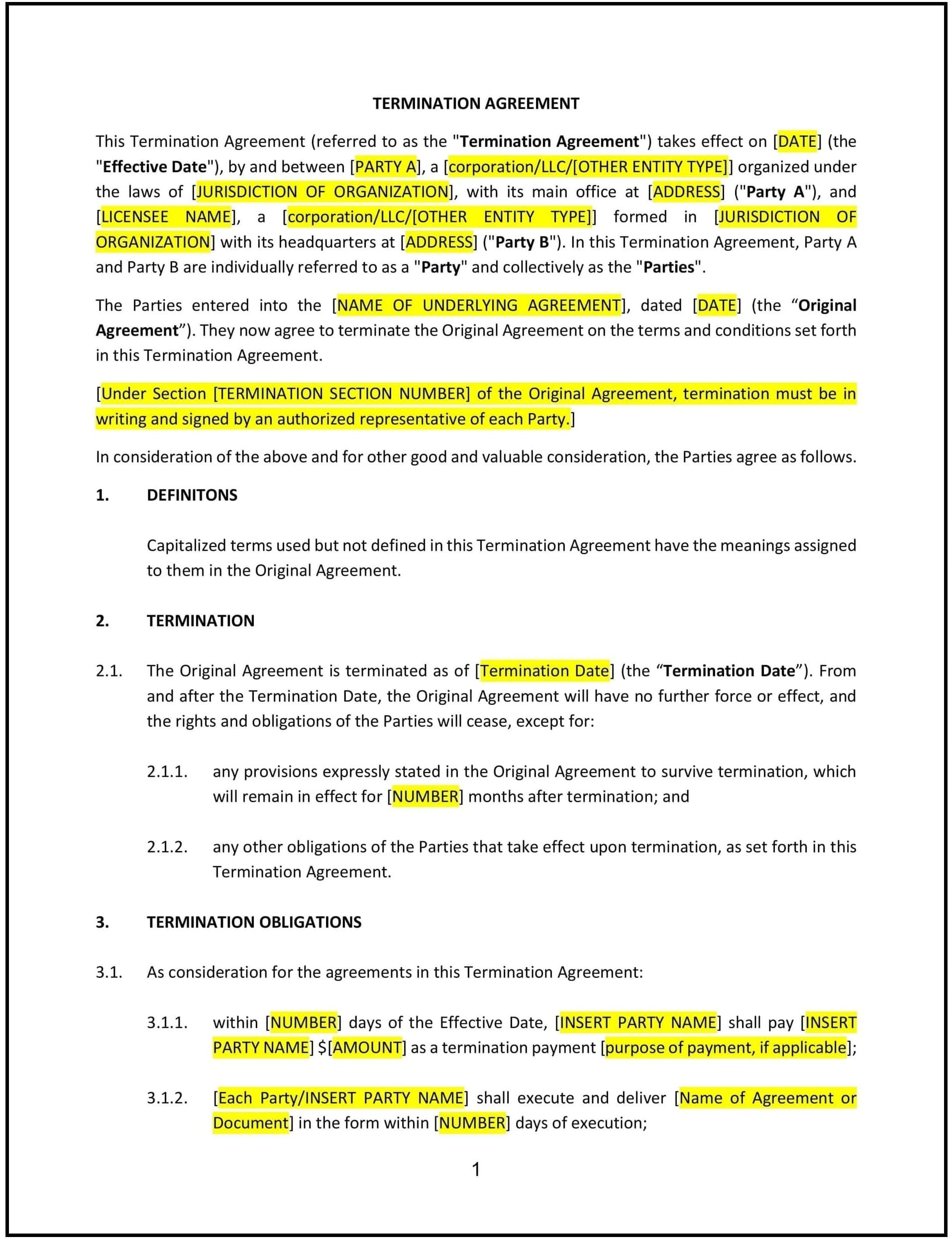
Defines terms to end a business relationship in Kentucky, covering final obligations, financial settlements, confidentiality, IP rights, and dispute resolution.
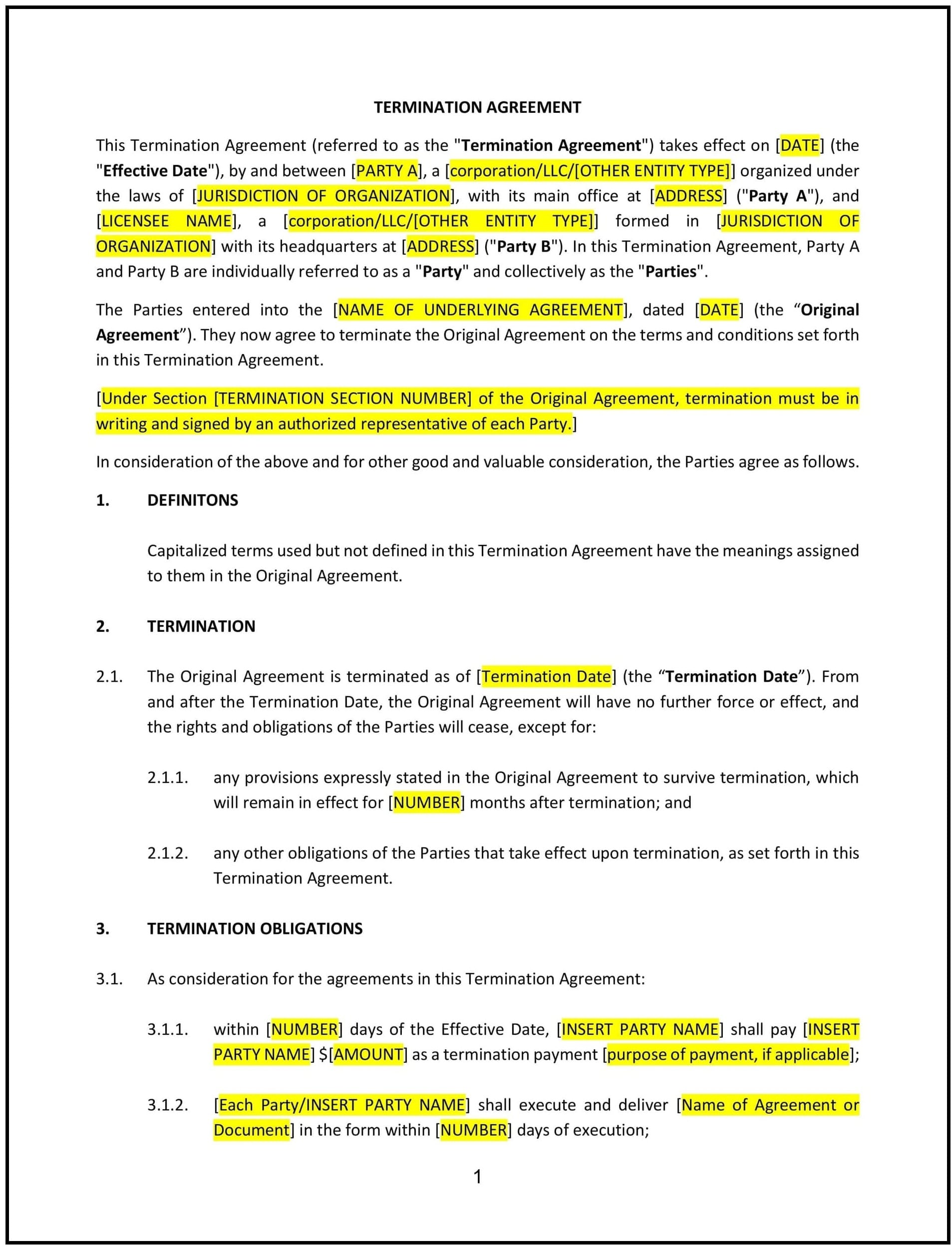
Defines terms to end a business relationship in Missouri, detailing final obligations, settlements, confidentiality, IP rights, and dispute resolution.
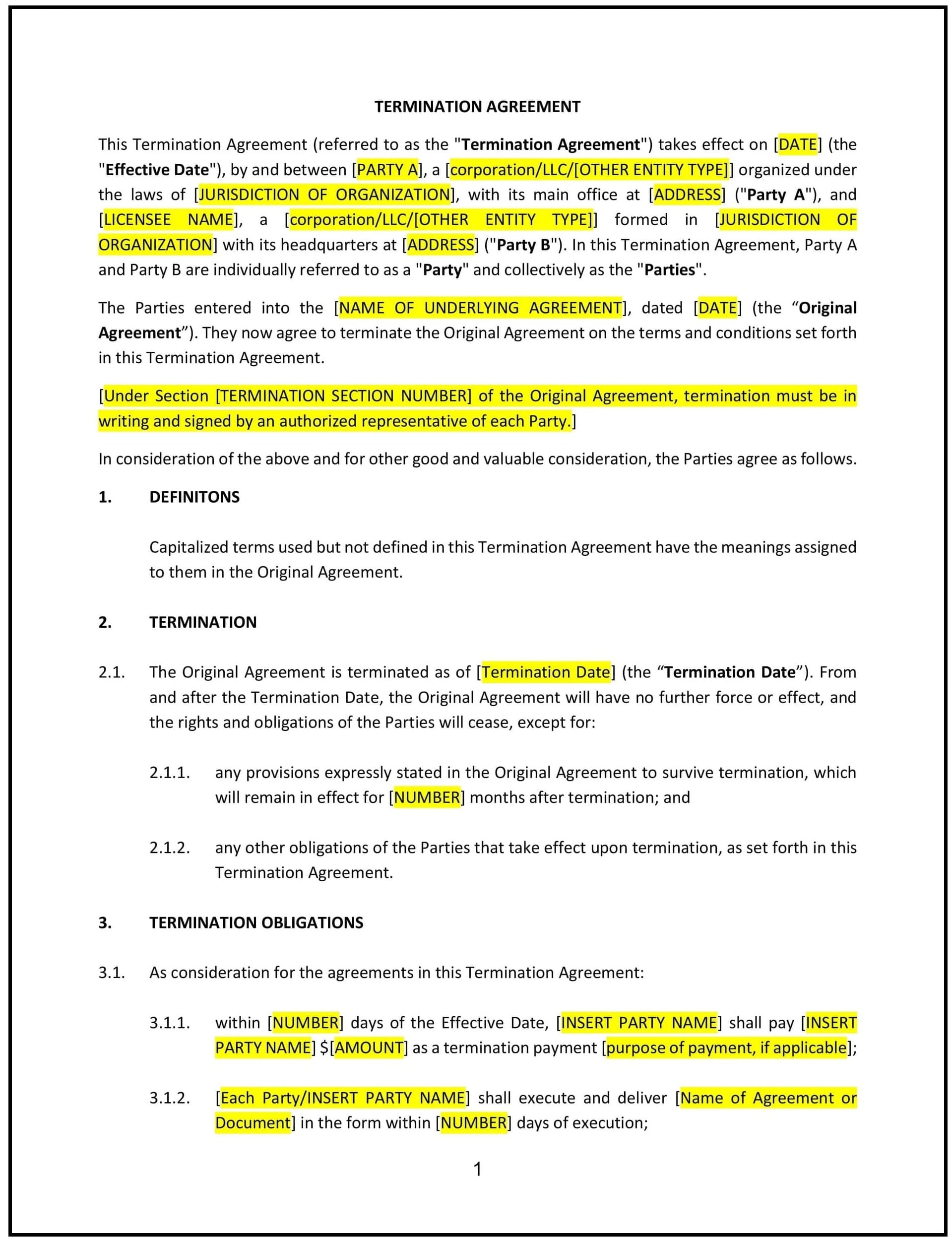
Defines terms to end a California business relationship, detailing final obligations, financial settlements, confidentiality, IP rights, and dispute resolution.
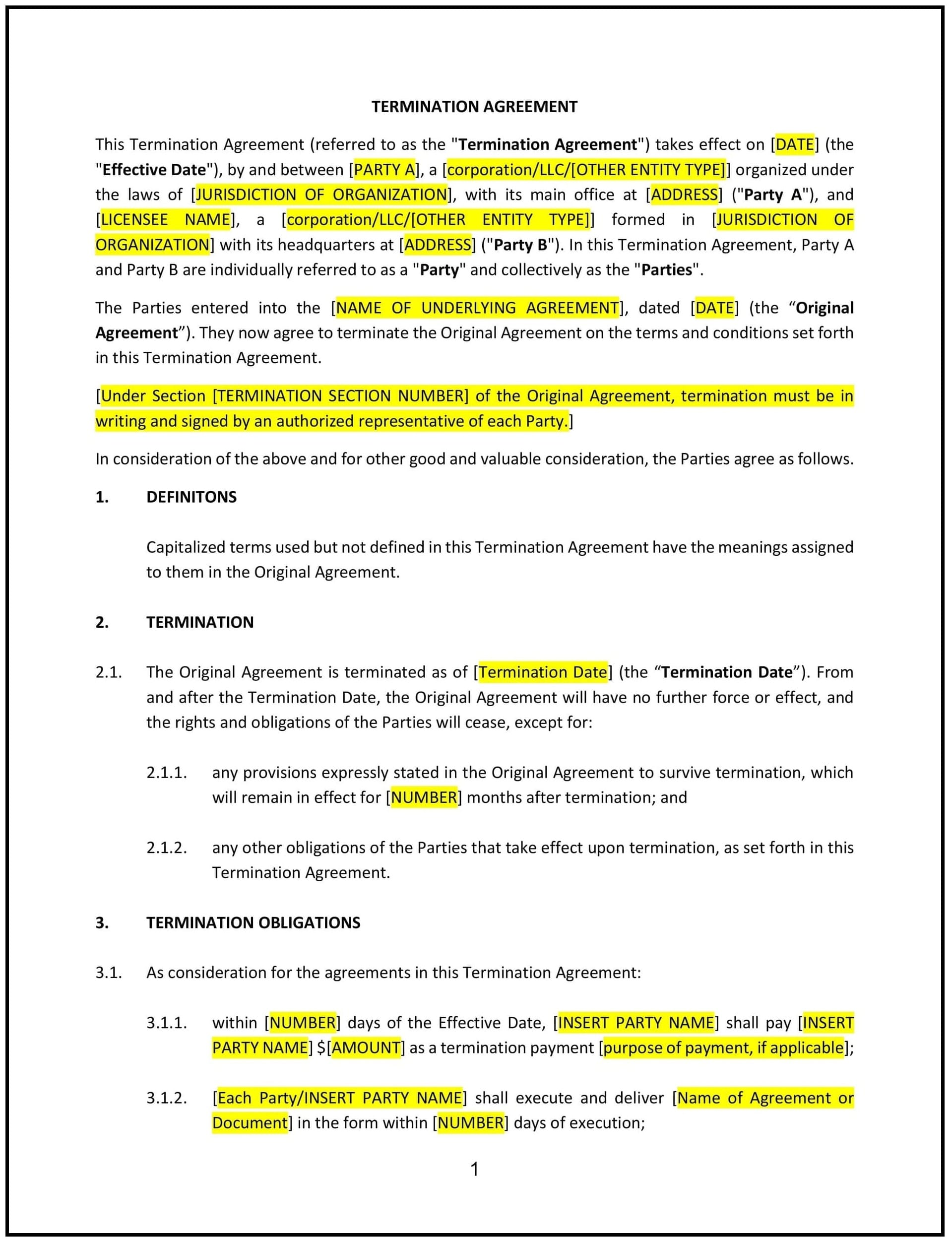
Establishes terms to end agreements in Arizona, covering final obligations, payments, confidentiality, intellectual property, and dispute resolution.
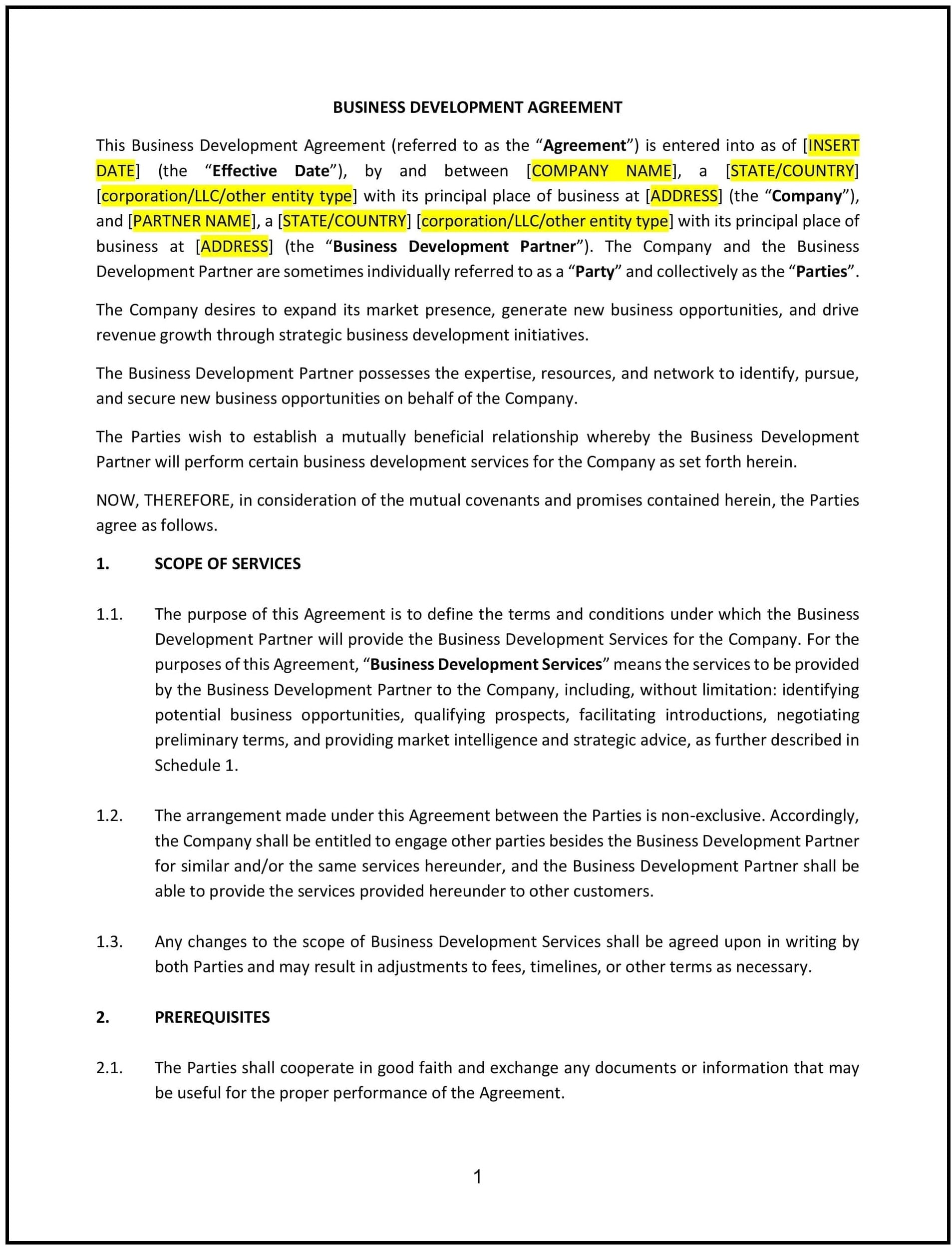
Defines a Kansas business development agreement, covering services, payment, performance metrics, confidentiality, IP rights, and termination terms.